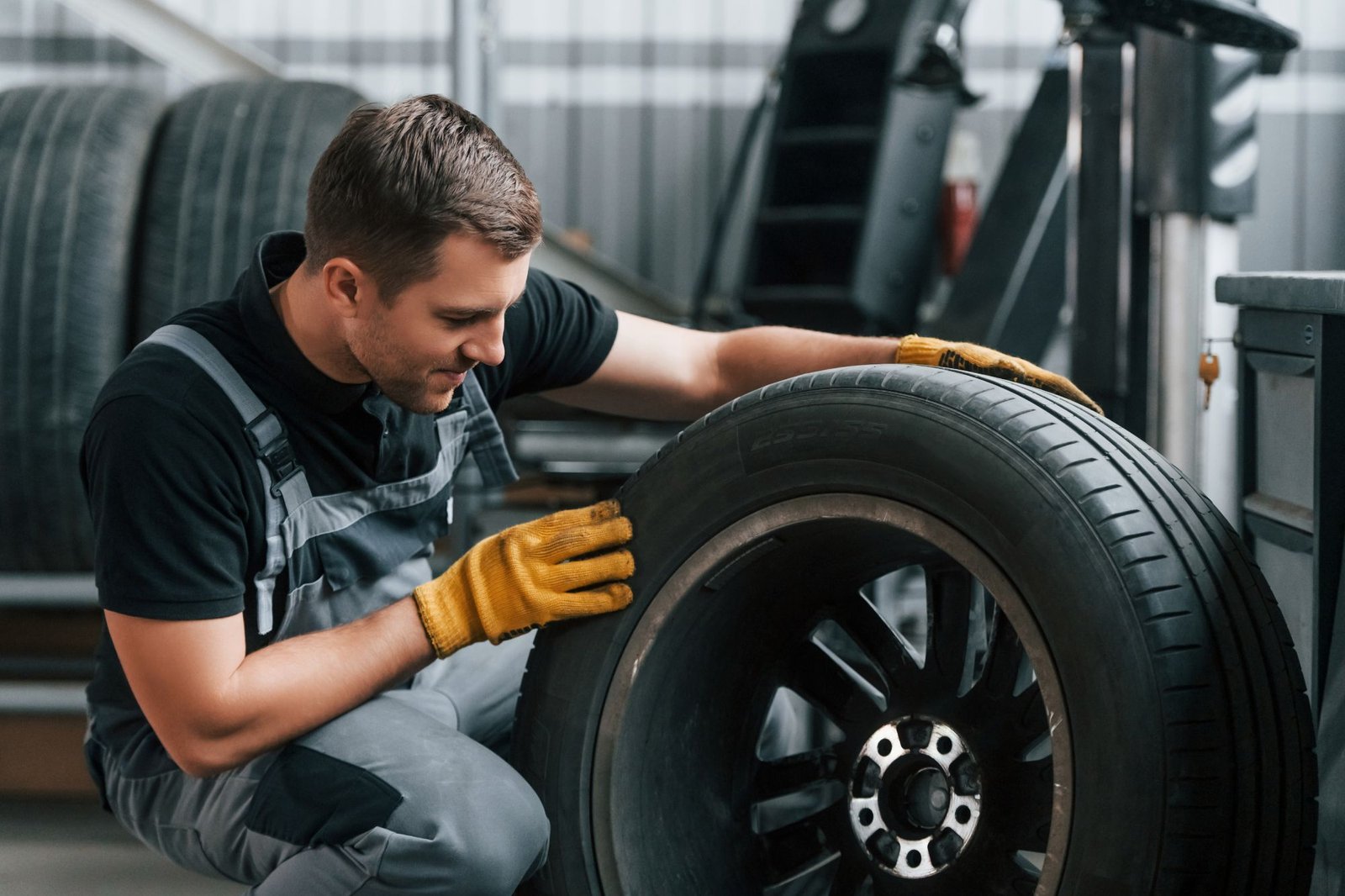
A flat or damaged tire usually turns into the same question fast: should you replace one tire or all four? The right answer depends on your vehicle, drivetrain, tire wear, and how much tread is left on the other tires. Sometimes one tire is fine. In other cases, replacing only one can affect traction, braking, ride quality, and even drivetrain components.
If your other three tires are fairly new and have very similar tread depth, replacing one tire may be completely reasonable. This is most common when a tire is damaged by a road hazard, like a nail, sidewall cut, or impact, but the rest of the set still has plenty of life left.
As a general rule, one tire replacement is most likely to work when the remaining tires are the same brand, model, and size, and their tread is only slightly worn. The closer the new tire matches the others, the better your vehicle will handle and brake.
For many front-wheel-drive or rear-wheel-drive vehicles, replacing one tire can be acceptable if the tread depth difference is small. A commonly used guideline is no more than 2/32 of an inch difference between the new tire and the tire it will be paired with on the same axle. Vehicle manufacturers may have stricter limits, so the safest move is to check your owner’s manual or have the tires measured by a tire professional.
A lot of drivers ask whether they really need all four when only one tire is worn or damaged. Often, the practical middle ground is replacing two tires instead of one.
If the remaining tire on the same axle has noticeably more wear, installing just one new tire can create an imbalance side to side. That can lead to uneven traction and less predictable handling, especially in rain or during hard braking. In that situation, replacing the pair is usually the better choice.
When replacing two tires, the new pair should generally go on the rear axle, even on front-wheel-drive vehicles. That surprises some drivers, but it is a widely accepted safety practice. Better tread on the rear helps reduce the risk of oversteer and loss of control on wet roads. Your vehicle may pull itself with the front wheels, but rear tire grip still plays a major role in stability.
There are times when the answer to replace one tire or all four is clearly all four. If your current tires are already worn close to replacement depth, buying one tire usually does not make financial or safety sense. You would be paying for a partial fix now and likely replacing the rest soon anyway.
All-wheel-drive and four-wheel-drive vehicles need extra attention here. Many AWD systems are sensitive to differences in tire circumference caused by uneven tread wear. If one tire is significantly taller than the others because it is brand new, the system may work harder than it should to compensate. Over time, that can add stress to drivetrain components.
For many AWD vehicles, even a small tread depth difference can be too much. Some manufacturers allow only very limited variation, sometimes as little as 2/32 of an inch or less. If the other tires are too worn to match a new one, replacing all four may be the safest and most cost-effective path.
You should also replace all four if the tires are mismatched in type, age, or performance category and the vehicle no longer feels balanced. Mixing a new winter tire with older all-season tires, for example, is not a setup you want to rely on when road conditions get bad.
More than anything else, tread depth usually determines whether you can replace one tire or all four. A new passenger tire often starts around 10/32 or 11/32 of tread depth, though it varies by tire model. If your existing tires are still close to that number, adding one matching tire may work. If they are down around 4/32 or 5/32, the gap is usually too large.
This matters because tread depth affects how a tire grips the road, clears water, and responds under braking. Even if the tires look similar at a glance, a few thirty-seconds of difference can change how the vehicle behaves, especially in wet weather.
That is why visual inspection alone is not enough. Tires should be measured with a tread depth gauge, and all four should be checked. Uneven wear across the tread can complicate the decision even more. A tire might still look usable on one edge but be far more worn in the center or shoulder.
Wear is not the only factor. Tire age matters too. If your current set is several years old, replacing one damaged tire with a brand-new version of the same model may still not be ideal. The older tires may have hardened with age, reducing traction compared with the fresh tire.
Condition also matters beyond tread depth. If the other tires show cracking, repeated repairs, bulges, or irregular wear from alignment issues, replacing only one tire can leave larger problems unsolved. In that case, it is smarter to address the full set and correct the underlying issue.
In some cases, yes. Tire shaving is the process of trimming a new tire’s tread so its depth more closely matches the other tires on the vehicle. This can be useful on certain AWD vehicles where one tire was damaged early in the set’s life and the other three still have good tread remaining.
Not every tire or shop offers this option, and it is not the right solution for every driver. But when available, it can allow a single replacement while keeping tread depth within the vehicle manufacturer’s tolerance. It is a specialized fix, not a standard one, but it can save money when the rest of the set is still in strong condition.
Even if the size matches, different tire models can perform very differently. Tread pattern, rubber compound, internal construction, and handling characteristics all affect how the vehicle responds. Replacing one tire with a different model than the other three can create inconsistencies you may feel in cornering, braking, or wet-road traction.
That is why matching the brand and model matters whenever possible. If your exact tire is no longer available, replacing at least two tires is often the better move. For some vehicles and wear conditions, all four may still be the right answer.
If one tire is damaged, start with four checks: your vehicle’s drivetrain, the tread depth on the remaining tires, whether the exact same tire is available, and the overall age and condition of the set.
If the vehicle is AWD and the tread gap would be outside the manufacturer’s limit, replace all four or ask whether a shaved tire is an option. If the vehicle is FWD or RWD and the opposite tire on the same axle is worn more than a small amount, replace two. If the other three are nearly new and in excellent condition, one tire may be enough.
This is one of those situations where the cheapest answer is not always the least expensive over time. A single tire may save money today but cost more later if it leads to faster wear, compromised handling, or drivetrain strain.
The safest choice comes from measuring, not guessing. A tire professional can check tread depth, inspect for hidden damage, confirm fitment, and tell you whether one, two, or four tires make the most sense for your vehicle. That is especially helpful if you drive an SUV, crossover, light truck, or AWD vehicle where tolerances matter more.
At Migo Tire Corp., the goal is simple: help drivers find the right tires and keep their vehicles safe and road-ready. If you are dealing with one damaged tire and not sure what comes next, a quick inspection can save you from buying the wrong number of tires or replacing more than you need.
If you are asking whether to replace one tire or all four, the best answer is the one that keeps your vehicle balanced, your traction consistent, and your next trip worry-free.