
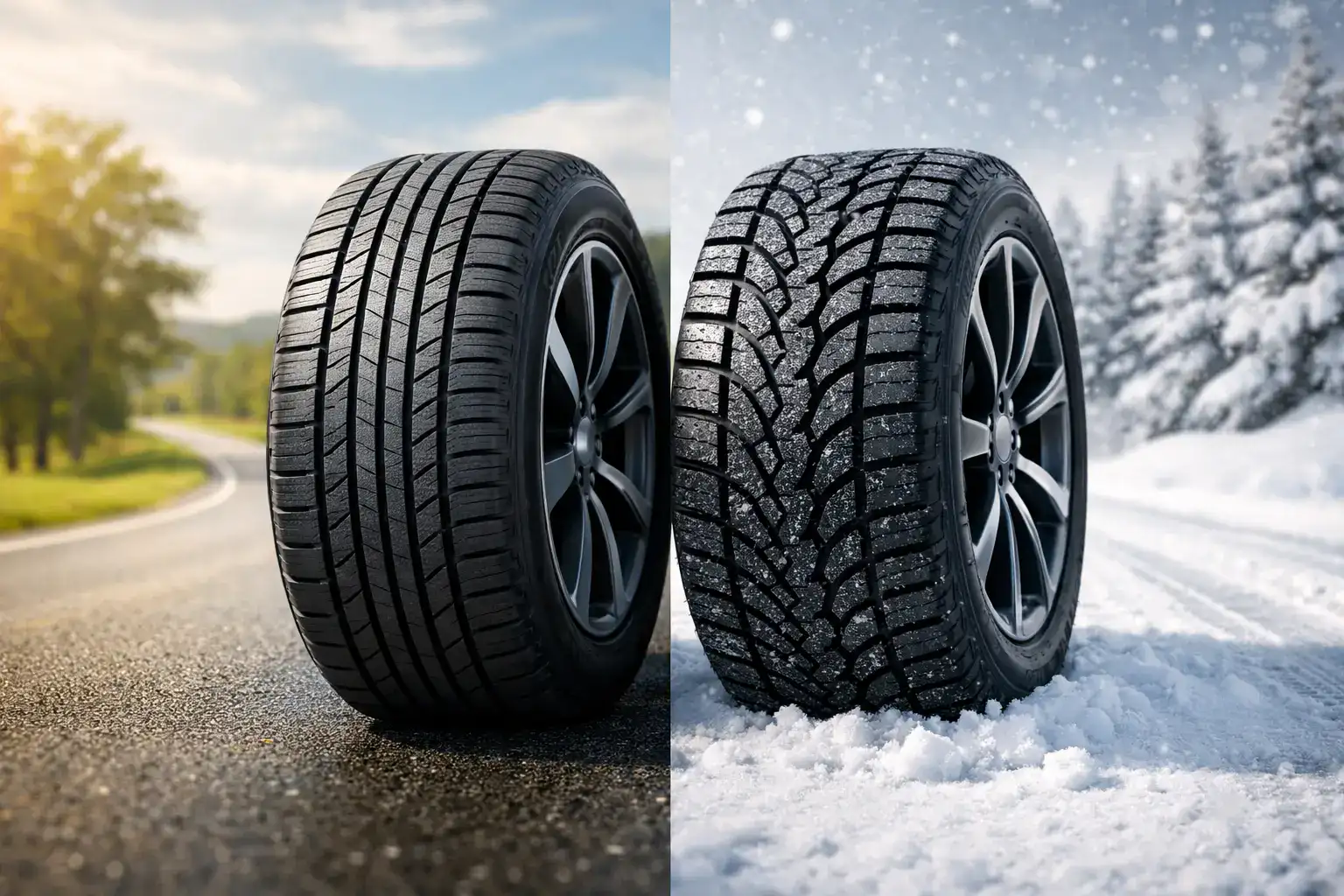
The first cold snap of the season is when tire choices stop feeling theoretical. If you’re comparing all weather vs winter tires, you’re usually trying to answer a very practical question: what will keep your vehicle safe, predictable, and road-ready when temperatures drop and roads turn slick?
For many drivers, the answer depends less on marketing terms and more on where and how they drive. A commuter in a city with occasional snow has different needs than a family that regularly drives on untreated roads, early-morning ice, or packed snow. That is why this comparison matters. Both tire types are built for cold conditions, but they are not built for the same level of winter demand.
All weather vs winter: the core difference
All-weather tires are designed to stay usable year-round, including in cold weather and light to moderate winter conditions. They are meant to bridge the gap between all-season and winter tires. Most carry the three-peak mountain snowflake symbol, which means they meet a recognized standard for snow traction.
Winter tires are built specifically for severe cold, snow, slush, and ice. Their rubber compounds stay more flexible at low temperatures, and their tread patterns are more aggressive for biting into snow and evacuating slush. In simple terms, all-weather tires are a year-round compromise for drivers who still need winter capability, while winter tires are a dedicated seasonal solution for drivers who face real winter conditions on a regular basis.
That difference affects braking, acceleration, and control. It also affects convenience, cost, and how often you need to switch tires during the year.
When all-weather tires make sense
All-weather tires are a strong option for drivers who want one set of tires on the vehicle all year and live in an area with moderate winters. If your roads are usually plowed quickly, snowfalls are occasional, and you spend most of your time on maintained city streets or highways, all-weather tires can be a practical fit.
Their biggest advantage is simplicity. You avoid seasonal tire changeovers, storage concerns, and the added planning that comes with running a dedicated winter set. For busy households and daily commuters, that convenience matters.
They also work well for drivers who see mixed conditions. If fall is cool, winter brings some snow, and spring warms up gradually, an all-weather tire can handle those transitions better than a winter tire left on too long. Winter tires perform best in cold temperatures, but they wear faster in warmer conditions. All-weather tires are designed to stay on the vehicle through the full calendar year.
That said, convenience comes with limits. In severe snow and ice, all-weather tires generally cannot match the grip of a true winter tire. They may be good enough for some drivers, but not all.
When winter tires are the better choice
Winter tires are the better choice when winter is not occasional – it is part of daily driving. If you live where roads stay snow-covered, side streets go untreated, hills are common, or morning temperatures regularly sit well below freezing, winter tires give you a clear safety advantage.
This shows up most during braking and cornering. Many drivers focus on getting moving in snow, but stopping is just as important. Winter tires are built to keep traction when temperatures fall hard and the road surface becomes polished, icy, or packed. That extra grip can shorten stopping distances and help maintain control during emergency maneuvers.
They are also the right call for drivers who cannot afford weather-related uncertainty. That includes long-distance commuters, families transporting children, people who leave before plows are out, and anyone whose work requires reliable mobility in poor weather.
The trade-off is that winter tires are not meant for year-round use. Once temperatures rise consistently, they wear more quickly and can feel less stable than a non-winter tire in warm conditions. They also require a second set of tires, and sometimes a second set of wheels, plus seasonal installation and storage.
How climate should guide your decision
The most reliable way to choose between all weather vs winter tires is to look honestly at your local climate, not just the occasional storm forecast.
If winter in your area means cold rain, a few snow events, and roads that return to clear pavement quickly, all-weather tires may be enough. They give you cold-weather confidence without turning tire ownership into a seasonal routine.
If winter means repeated snow accumulation, icy intersections, frozen back roads, or long stretches below 45 degrees, winter tires are usually worth it. They are built for those exact conditions, and the performance difference becomes more noticeable as conditions get worse.
There is also an in-between category. Some drivers live in regions with inconsistent winters – mostly manageable, but with several heavy storms each season. In that case, your route matters. If you drive short distances on well-maintained roads, all-weather tires may still work. If you regularly travel outside town, drive on hills, or cannot stay home during storms, winter tires are the safer choice.
Driving habits matter as much as weather
Two neighbors in the same ZIP code may need different tire types. One may work from home and wait out storms. The other may commute before sunrise on untreated roads. Climate matters, but so does exposure.
All-weather tires fit lower-risk driving patterns well. They are often the right match for drivers with flexible schedules, urban routes, and limited snow exposure. They can also make sense for vehicles in moderate climates where the main goal is avoiding the weakness of standard all-season tires in cold weather.
Winter tires fit higher-demand driving. If your daily route includes bridges, shaded roads, steep grades, rural roads, or heavy snowfall, a dedicated winter tire gives you more margin when road conditions change quickly.
Vehicle type also plays a role, but it does not replace tire choice. All-wheel drive can help with acceleration, but it does not change the fact that your tires handle braking and steering. A capable vehicle on the wrong tire still has limits.
Cost, convenience, and long-term value
At first glance, all-weather tires usually look like the cheaper and easier option. One purchase, one installation cycle, and no storage issue. For many drivers, that is a meaningful advantage.
Winter tires usually require a higher upfront commitment because you are buying a dedicated set for part of the year. But that does not automatically mean they cost more over time in every case. When you rotate between winter tires and another set for warmer months, each set is used for only part of the year, which can spread out wear.
The real value question is not just what costs less today. It is what level of performance you need for the conditions you actually face. If all-weather tires fit your climate and driving habits, they can be the more efficient choice. If they leave you under-equipped during the worst part of winter, the convenience may not be worth the compromise.
What to ask before you buy
Before choosing, think through your typical winter week, not your best-case day. How often do you drive before roads are cleared? Do you deal with packed snow or ice? Are your routes mostly city streets, highways, or rural roads? Do you need one tire solution year-round, or are you comfortable with seasonal changes?
It also helps to consider how long you keep your vehicle and how much confidence you want in poor conditions. Some drivers want acceptable winter performance with minimal hassle. Others want the strongest possible grip when weather turns bad. Neither goal is wrong, but the right tire category is different.
If you are unsure, getting fitment help from a tire professional can save time and prevent a mismatch between your vehicle, your climate, and your expectations. A retailer that can help with selection, installation, and ongoing tire service makes the process much easier, especially if you are balancing budget, safety, and convenience.
The right choice depends on your winter, not someone else’s
There is no universal winner in the all weather vs winter debate. All-weather tires are a practical year-round option for drivers in milder winter regions or on well-maintained roads. Winter tires are the better answer for severe cold, repeated snow, and drivers who need stronger traction with fewer compromises.
The best tire is the one that matches your real conditions and gives you confidence every time the forecast gets worse. If your goal is to keep your vehicle safe and road-ready all season, start with an honest look at where you drive, when you drive, and how much winter your tires really need to handle.


