
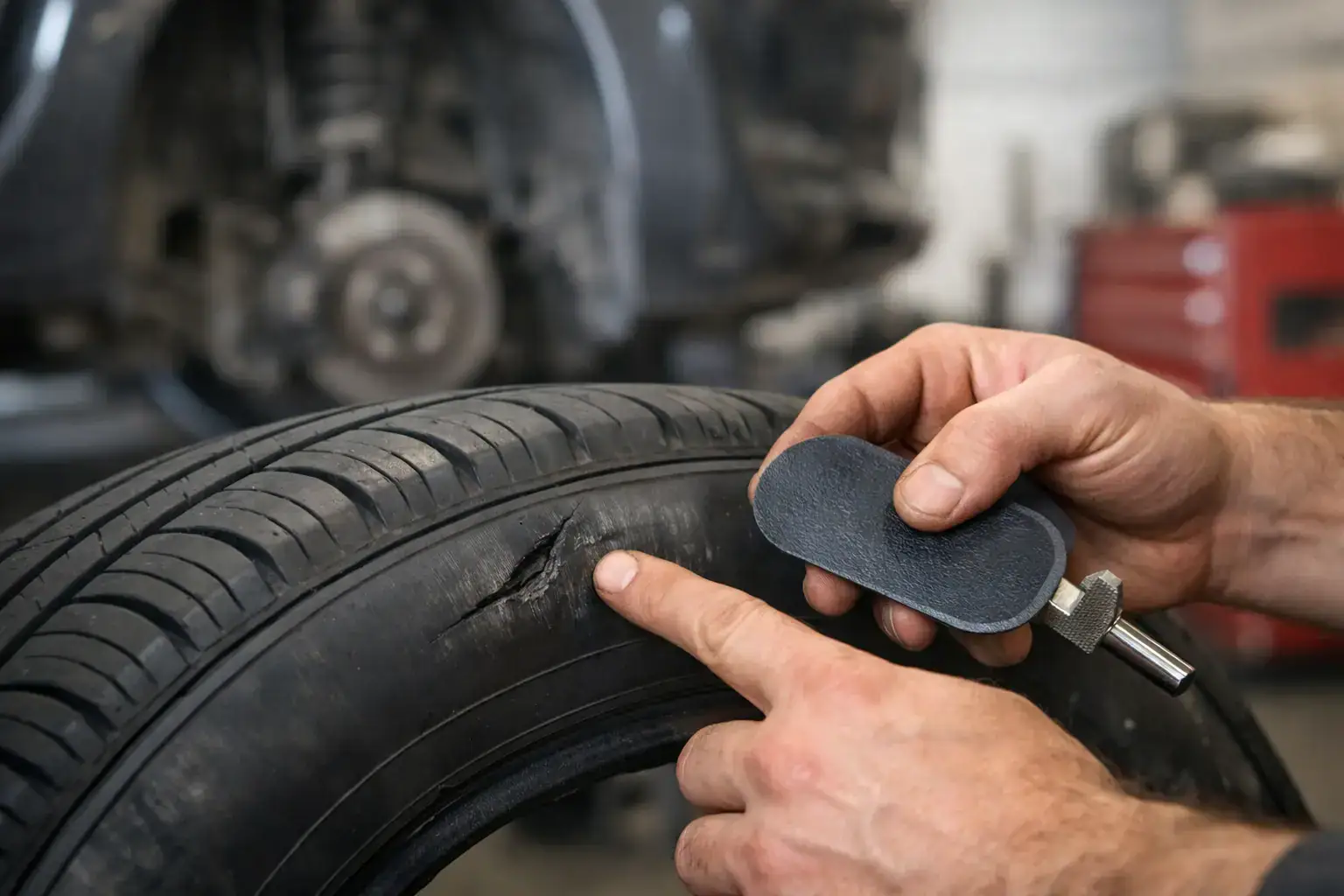
A tire with damage on the side can look minor at first glance, especially if the cut or puncture seems small. But if you’re asking can you patch sidewall damage, the short answer is usually no. In most cases, sidewall damage is not considered safely repairable, and replacement is the recommended option.
That answer can feel frustrating when the tread still looks good and the tire is fairly new. But sidewall damage is treated differently for a reason. The sidewall flexes constantly while you drive, and that movement creates a very different repair situation than a puncture in the tread area.
Can you patch sidewall damage safely?
For most passenger vehicles, the answer is no. Industry repair standards generally do not allow repairs to the sidewall because that part of the tire handles continuous bending, load support, and heat buildup. A patch applied to a sidewall is far more likely to fail than a repair in the tread area.
A proper tire repair works best in the crown of the tread, where the structure is more stable. In the sidewall, every rotation of the tire puts stress on the damaged area. Even if a patch seems to hold air for a while, that does not make it a safe long-term repair.
This is why reputable tire shops usually will not patch or plug sidewall damage. It is not about being overly cautious. It is about avoiding a repair that can suddenly let go at highway speed.
Why sidewall damage is a bigger problem than tread damage
The sidewall is not just the smooth rubber area between the tread and the wheel. It is a structural part of the tire that helps carry the vehicle’s weight, absorb road impacts, and maintain shape under pressure. When that area is cut, punctured, or weakened, the tire’s strength can be compromised.
Unlike the tread, the sidewall flexes every time the tire rolls. That repeated movement makes sealing a damaged spot much harder. It also means the cords inside the tire may already be injured, even when the outer damage looks small.
A tread puncture from a nail is often straightforward because it is in a repairable zone and the surrounding structure remains stable. Sidewall damage is different. Once the internal construction is affected, the tire may be at risk for a bulge, a blowout, or rapid air loss.
What counts as sidewall damage?
Sidewall damage can show up in a few ways. Sometimes it is obvious, like a slice from road debris or a gash after hitting a curb. Other times it is less clear, such as a bubble, a scuff that goes deeper than surface rubber, or a slow leak near the shoulder and side area.
The most common examples include punctures, cuts, cracking, bulges, and impact damage. A bulge is especially serious because it often means the internal cords have been broken. That tire should be replaced, not repaired.
It is also worth noting that damage near the edge of the tread can be a gray area for drivers, even if it is not for technicians. What looks like tread damage may actually fall into the shoulder area, which is also commonly outside safe repair limits.
When a tire can be repaired instead
A tire is usually repairable only when the injury is in the central tread area, within size limits, and the internal condition of the tire is still sound. The tire also cannot have been driven flat for any meaningful distance, because low-pressure driving can destroy the inside structure even if the outside looks acceptable.
That is why a proper inspection matters. A technician needs to remove the tire from the wheel and inspect the inside, not just the outside surface. A quick look while the tire is still mounted does not tell the whole story.
If the damage is in the tread and meets repair standards, a professional repair can often restore safe service. If the damage is in the sidewall or shoulder, replacement is usually the safer and more responsible choice.
Why plugs and DIY fixes are not the answer
Many drivers search for a quick fix because a replacement tire was not part of the week’s budget. That is understandable. But a sidewall plug or patch is not a reliable shortcut.
DIY tire kits are meant for limited situations, and even then they are generally temporary until the tire can be professionally inspected. Using one on sidewall damage creates more risk because it does not restore the tire’s structural strength. It may reduce air loss for a short time, but it does not solve the real problem.
Spray sealants have similar limits. They can sometimes help in an emergency, but they are not designed to make sidewall damage safe. They can also complicate inspection and cleanup later.
If a shop refuses to patch a sidewall, that is a sign they are following safety standards, not trying to sell a tire unnecessarily.
Signs you should replace the tire immediately
Some sidewall problems leave little room for debate. If you see a bubble or bulge, exposed cords, a deep cut, or a puncture in the sidewall, the tire should be taken out of service as soon as possible. The same goes for any tire that is losing air rapidly from the side area.
You should also be cautious after hitting a pothole, curb, or road hazard. Impact damage can weaken the sidewall internally without creating a dramatic external tear. If the tire starts vibrating, develops a bulge, or loses pressure after an impact, have it inspected right away.
Continuing to drive on a damaged sidewall can lead to sudden failure. That risk goes up with speed, heat, and vehicle load.
What happens if only one tire is damaged?
This is where the answer depends on your vehicle, the remaining tread depth, and whether you drive a front-wheel drive, rear-wheel drive, or all-wheel drive vehicle. If one tire has sidewall damage and the others are still in good condition, you may be able to replace just one tire. But that is not always the best option.
On some vehicles, especially AWD models, mismatched tread depths can create driveline stress. In those cases, replacing two tires or even all four may be recommended depending on the difference in wear.
Even on two-wheel drive vehicles, pairing matters. Tires on the same axle should have closely matched traction and wear characteristics for stable handling and braking. A professional can measure your current tread and help determine the right approach.
Can sidewall damage come from normal use?
Sometimes, yes. Not all sidewall damage comes from a dramatic event. Underinflation, overloading, curb contact, potholes, aging rubber, and road debris can all contribute. A tire that runs low on air flexes more than it should, which builds up heat and stresses the sidewall.
That is one reason routine tire checks matter. Keeping your tires properly inflated and aligned, and inspecting them for cuts, cracks, and bulges, can help catch problems early. Regular maintenance will not prevent every road hazard, but it can reduce the chances of hidden damage getting worse.
The safest next step
If you suspect sidewall damage, the safest next step is to stop guessing and have the tire inspected by a qualified professional. At Migo Tire Corp., the goal is simple: help drivers stay safe and road-ready with clear guidance, quality service, and the right replacement options when repair is not advisable.
A good inspection can tell you whether the tire is truly damaged, whether the issue is repairable, and whether you should replace one tire, a pair, or a full set. That clarity matters, especially when your vehicle is carrying family, work gear, or just the demands of a normal daily commute.
When it comes to sidewall damage, the cheapest fix is not always the lowest-cost decision. A safe replacement today can prevent a much bigger problem on the road tomorrow.


