The first hard frost usually catches people by surprise. One week the roads are just cold and damp, and the next morning bridges, shaded streets, and highway ramps feel very different. If you are wondering when to switch to winter tires, the best answer is before you feel that first loss of grip, not after.
For most drivers, the right time is when daily temperatures are consistently near or below 45 degrees Fahrenheit. That number matters more than the first snowfall. Winter tires are designed to stay flexible in colder weather, which helps them hold the road better during braking, turning, and acceleration. Even on dry pavement, cold temperatures can reduce how well all-season or summer tires perform.
When to switch to winter tires based on temperature
A lot of people wait until snow is in the forecast. That is usually later than ideal. Winter tire timing is really about sustained temperature patterns, not just visible winter weather.
Once mornings and evenings regularly fall below 45 degrees, your tires start operating in a different environment. Rubber compounds react to temperature. Summer tires harden quickly in the cold, which can reduce traction and increase stopping distances. All-season tires handle moderate changes better, but they are still a compromise. Winter tires are built for cold-weather grip first.
That is why the safest window is early to mid-fall in many parts of the US, before winter weather becomes unpredictable. If your commute starts before sunrise, includes highways, or takes you over hills and bridges, it makes sense to switch sooner rather than later.
Why 45 degrees matters more than snow
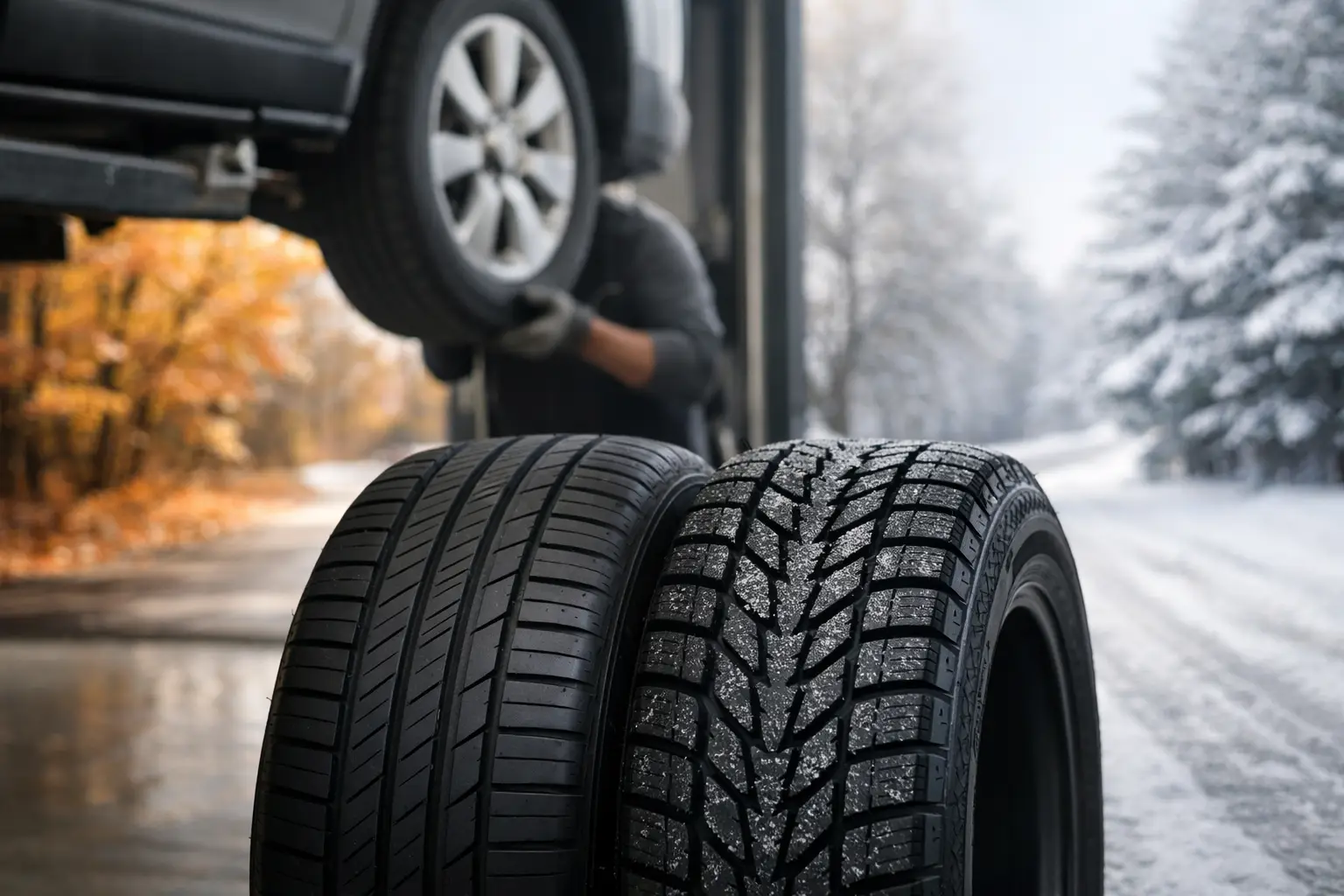
The phrase “winter tire” makes some drivers think these tires are only useful in snow. In reality, cold pavement is the main reason to install them. Winter tires use a softer compound and tread patterns designed to work in lower temperatures. They also use more biting edges, called sipes, to improve traction on cold, wet, slushy, or icy roads.
This helps in three everyday situations that matter to most drivers. First, stopping at intersections becomes more controlled. Second, cornering on cold pavement feels more stable. Third, acceleration from a stop is less likely to trigger slipping when roads are slick or partially frozen.
If your area gets cold rain, black ice, freezing mornings, or packed slush, winter tires can make a noticeable difference even when roads do not look fully snow-covered.
When to switch to winter tires if you have all-season tires
This is where many drivers hesitate. All-season tires are built to cover a wide range of conditions, and for some climates, they may be enough year-round. But “all-season” does not mean “best in every season.” It means balanced performance across several conditions.
If you live in a region with extended cold periods, regular snow, icy mornings, or repeated freeze-thaw cycles, winter tires are usually the better seasonal choice. That is especially true for commuters, families, and anyone who needs dependable traction on a schedule rather than hoping roads are clear before leaving home.
On the other hand, if you live in a milder climate where winter temperatures rarely stay below 45 degrees and snow is uncommon, switching may not be necessary. In those cases, a quality all-season or all-weather tire may fit your needs better. The key is to match the tire to the conditions you actually drive in, not just the label on the sidewall.
Your driving habits matter as much as your ZIP code
Two drivers in the same town may need different answers. A person who works from home and avoids storms can often wait longer than someone who commutes 50 miles before sunrise. The more often you drive in colder low-light conditions, the earlier winter tire installation starts to make sense.
Think about your routine. Do you park outside overnight? Do you drive on untreated local roads? Do you travel through mountain areas or places where weather changes quickly? Do you carry kids, tools, or cargo that make traction and braking even more important? Those details matter.
Light trucks and SUVs also benefit from winter tires. Four-wheel drive helps you move, but it does not help you stop as quickly on cold or icy roads. Tire grip is still the main factor in braking and control.
Signs you waited too long
Sometimes drivers do not realize the season has already outpaced their tires. The warning signs are usually subtle at first.
You may notice longer stopping distances at red lights on cold mornings. The vehicle may feel less settled during lane changes or turns. You might hear the traction control system working more often when starting from a stop. These are not just winter driving annoyances. They can be signs your current tires are no longer performing well in the temperature range you are driving in.
Another practical issue is scheduling. Once the first major storm is forecast, tire shops get busy fast. Waiting until everyone else decides to book service can leave you driving in cold conditions on the wrong tires for longer than planned. Switching earlier gives you more flexibility and less stress.
How early is too early?
There is such a thing as switching too soon. Winter tires wear faster in warm temperatures, especially if daytime highs are still regularly above 60 degrees. Their softer compound is excellent in the cold but not ideal for prolonged warm-weather driving.
That is why consistency matters. A few chilly mornings in early fall are not always enough reason to change immediately. Look for a steady pattern of colder days and nights. In many areas, that means watching the forecast over a couple of weeks instead of reacting to one cold snap.
If your region has unpredictable fall weather, a good rule is to plan your appointment when temperatures are trending down and before your first likely frost or freeze. That balance helps you avoid premature wear while still getting ahead of winter conditions.
Do you need four winter tires or just two?
Winter tires should be installed as a full set of four. Mixing two winter tires with two all-season tires can create uneven traction, which makes the vehicle less predictable. That imbalance can affect braking, cornering, and emergency handling.
Putting winter tires only on the drive axle may sound like a way to save money, but it can lead to oversteer or understeer depending on the vehicle and conditions. For safe, consistent control, all four tires should match in type and seasonal purpose.
Winter tires, all-weather tires, and storage decisions
Some drivers prefer a dedicated winter setup and a separate set for the rest of the year. That is still one of the best options for areas with real winter weather. It gives you better cold-weather performance in season and helps extend the life of your non-winter tires.
Others may prefer all-weather tires, especially if they want one set year-round but still need better snow performance than a standard all-season tire can usually provide. That option can make sense if your winters are moderate and you want to avoid seasonal tire changes. The trade-off is that dedicated winter tires generally provide stronger performance in severe cold, snow, and ice.
Storage is another factor. If you have room to keep an off-season set in a cool, dry place, swapping seasonally is easier. If storage is a concern, it is worth discussing practical options when planning your tire purchase and installation.
Getting the timing right for safer winter driving
If you are still deciding when to switch to winter tires, keep it simple. Watch the temperature, think about your daily driving routine, and make the change before cold-weather traction becomes a problem. For most US drivers in colder regions, that means scheduling service when temperatures are consistently approaching 45 degrees Fahrenheit.
The best time is not the first snowy day. It is the point just before winter starts asking more from your tires than they were built to handle. A little planning goes a long way toward keeping your vehicle safe and road-ready when the season turns.