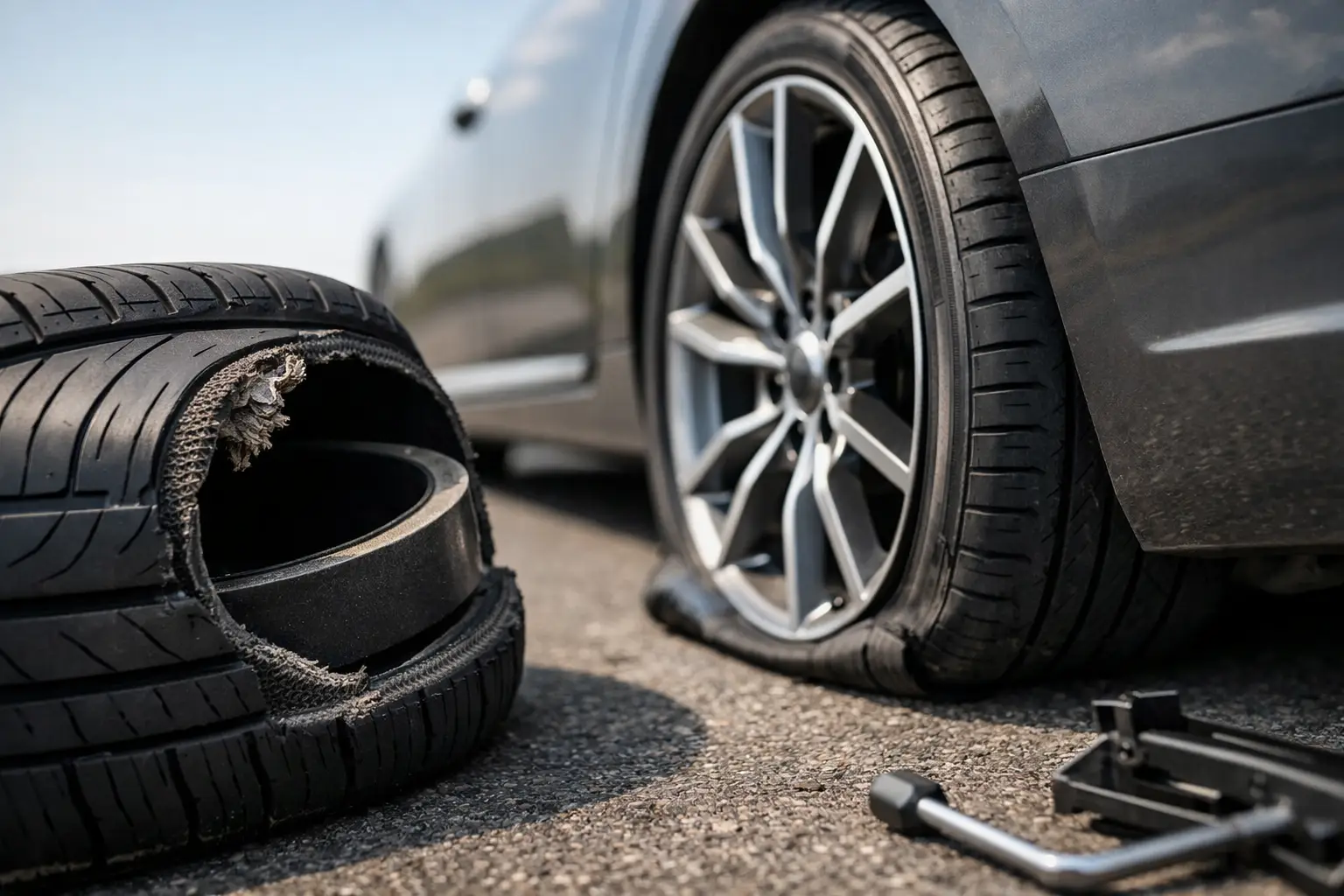
A flat tire on the way to work or during a family trip is never convenient. That is exactly why many drivers ask, what are run flat tires, and are they worth it for everyday driving?
Run-flat tires are built to keep supporting your vehicle for a limited distance after losing air pressure. In plain terms, they are designed to help you stay in control and continue driving long enough to get to a repair shop or a safer place to stop. That extra margin can make a real difference on a busy highway, at night, or in bad weather.
What are run flat tires?
Run-flat tires are tires engineered to keep functioning temporarily after a puncture or sudden loss of pressure. A standard tire relies almost entirely on air pressure to hold its shape and support the vehicle. A run-flat tire uses reinforced sidewalls or, in some designs, a support ring inside the tire to carry the load even when air pressure drops.
Most passenger vehicles equipped with run-flat tires use the self-supporting design. These tires have stiffer, stronger sidewalls that resist collapsing when the tire goes flat. That allows the vehicle to continue moving for a limited distance, usually at reduced speed.
For many drivers, the main appeal is simple. You may not need to pull over immediately on the shoulder of a crowded road, and you may not need to change a tire yourself in an unsafe location.
How do run flat tires work?
The basic job of a run-flat tire is to keep the tire from folding under the weight of the vehicle after air loss. In a conventional tire, a major puncture can quickly leave the tire unable to support the car. The sidewall compresses, the tire shape breaks down, and continued driving can damage both the tire and the wheel.
A run-flat tire is different because its structure is built for that temporary emergency period. Reinforced sidewalls help the tire hold shape long enough for the driver to reach service. That does not mean the tire can be driven normally after a puncture. It means the tire can provide limited mobility so you can avoid being stranded.
Most run-flat systems also depend on a tire pressure monitoring system, or TPMS. Since a run-flat tire may not look obviously flat from the outside, the warning light is often what tells the driver there is a problem. That is one reason TPMS is especially important with this type of tire.
How far can you drive on a run-flat tire?
This depends on the tire manufacturer and the specific tire model, but a common guideline is up to 50 miles at speeds up to 50 mph after a complete loss of pressure. Some models may differ, so the vehicle owner’s manual and tire manufacturer guidance matter.
That range is meant to get you to a tire shop, not to carry on with your normal week. Heat buildup, road conditions, vehicle load, and driving speed all affect how safely and how far the tire can continue operating.
Benefits of run-flat tires
The biggest advantage is safety. If a tire loses pressure at highway speed, a run-flat tire can help maintain better stability and control than a standard tire that rapidly collapses. That can reduce panic and give the driver more time to respond safely.
Convenience is another major benefit. You may not need to stop immediately in a narrow breakdown lane or deal with a roadside tire change. For commuters, parents traveling with children, and drivers who simply do not want to handle a spare on the side of the road, that added flexibility is valuable.
Run-flat tires can also save space. Some vehicles equipped with them do not include a spare tire, which can free up cargo room and reduce vehicle weight. Automakers often use that extra space for storage or packaging efficiency.
There is also a practical ownership benefit for some drivers. If your vehicle came from the factory with run-flat tires, staying with that setup may preserve the driving characteristics the suspension was tuned around.
Drawbacks to consider
Run-flat tires are not automatically the best choice for every vehicle or every driver. One common concern is ride comfort. Because the sidewalls are reinforced, they can feel firmer than conventional tires. Some vehicles manage this well, but others may feel a bit harsher over bumps.
Cost is another factor. Run-flat tires are often more expensive than comparable standard tires. Depending on the brand, size, and category, replacement pricing can be noticeably higher.
Repairability can also be limited. In some cases, a punctured run-flat tire may not be safely repairable, especially if it was driven for some distance after losing pressure. Internal damage is not always visible from the outside, which is why a professional inspection matters.
Availability can vary too. While run-flat options are common for many cars and SUVs, not every size or tread category has the same level of selection. That can matter if you want a specific performance level, seasonal tire type, or price point.
Are run flat tires better than regular tires?
It depends on what matters most to you.
If your priority is added peace of mind after a puncture, run-flat tires offer a clear benefit. They can help you avoid being stranded and make it easier to reach a service location without an immediate tire change.
If your priority is lower cost, a softer ride, or broader replacement options, standard tires may be the better fit. Many drivers are completely satisfied with conventional tires paired with a spare tire or roadside assistance plan.
Neither option is universally better. The right choice depends on your vehicle, your driving habits, and your comfort with roadside emergencies.
What are run flat tires best suited for?
Run-flat tires tend to make the most sense for drivers who spend a lot of time on highways, commute long distances, or regularly drive in areas where stopping immediately could be difficult or unsafe. They also appeal to drivers who prefer the convenience of not carrying a spare.
They may be less appealing for drivers who prioritize ride softness, want the lowest replacement cost, or drive a vehicle that was not designed around run-flat construction. If your vehicle originally came with standard tires, switching to run-flats should be considered carefully because it can affect ride quality and handling.
This is where fitment matters. Tire type should match the vehicle’s requirements, wheel specifications, and intended use. A quick answer online is helpful, but the final choice should be based on your actual vehicle and driving needs.
Can you replace run-flat tires with regular tires?
Sometimes, yes, but it is not always the best move.
Many drivers ask this when they see replacement pricing for run-flat tires. In some vehicles, switching to conventional tires is possible if the size, load rating, and speed rating are correct. But there are trade-offs. The vehicle may lose the emergency mobility benefit it was designed around, and if there is no spare tire included, you will need another backup plan.
Some vehicles are also tuned specifically for run-flat tires, so changing tire type may affect steering feel, ride comfort, or handling balance. Before making that switch, it is smart to confirm compatibility with a tire professional.
How to know if your car has run-flat tires
The easiest place to start is the sidewall. Many run-flat tires include markings that identify them as run-flat, though the wording varies by manufacturer. Your vehicle owner’s manual may also specify whether the car came equipped with them.
Another clue is the absence of a spare tire. Some vehicles that come with run-flats do not have a spare in the trunk because the run-flat system serves as the emergency solution. That said, no spare does not automatically guarantee you have run-flat tires, so it is still worth checking the tire itself.
If you are unsure, a tire shop can confirm the tire type and help you compare replacement options. At Migo Tire Corp., that kind of fitment guidance is part of helping drivers find the right tire without second-guessing the details.
When to replace a run-flat tire
A run-flat tire should be inspected as soon as possible after a puncture or low-pressure warning. Even if it still looks usable, driving on it while underinflated may have caused internal damage. The tire may need replacement rather than repair.
You should also replace run-flat tires when tread depth is worn down, when there is visible sidewall damage, or when uneven wear points to alignment or inflation problems. Like any tire, run-flats still need regular maintenance to perform properly.
That includes checking pressure, rotating at recommended intervals, and addressing balancing or alignment concerns early. Run-flat technology helps in an emergency, but it does not replace normal tire care.
If you are deciding between run-flat and standard tires, the best choice is the one that fits your vehicle and the way you drive every day. A good tire should not just fit your wheel size. It should fit your routine, your safety priorities, and your comfort level when the unexpected happens.