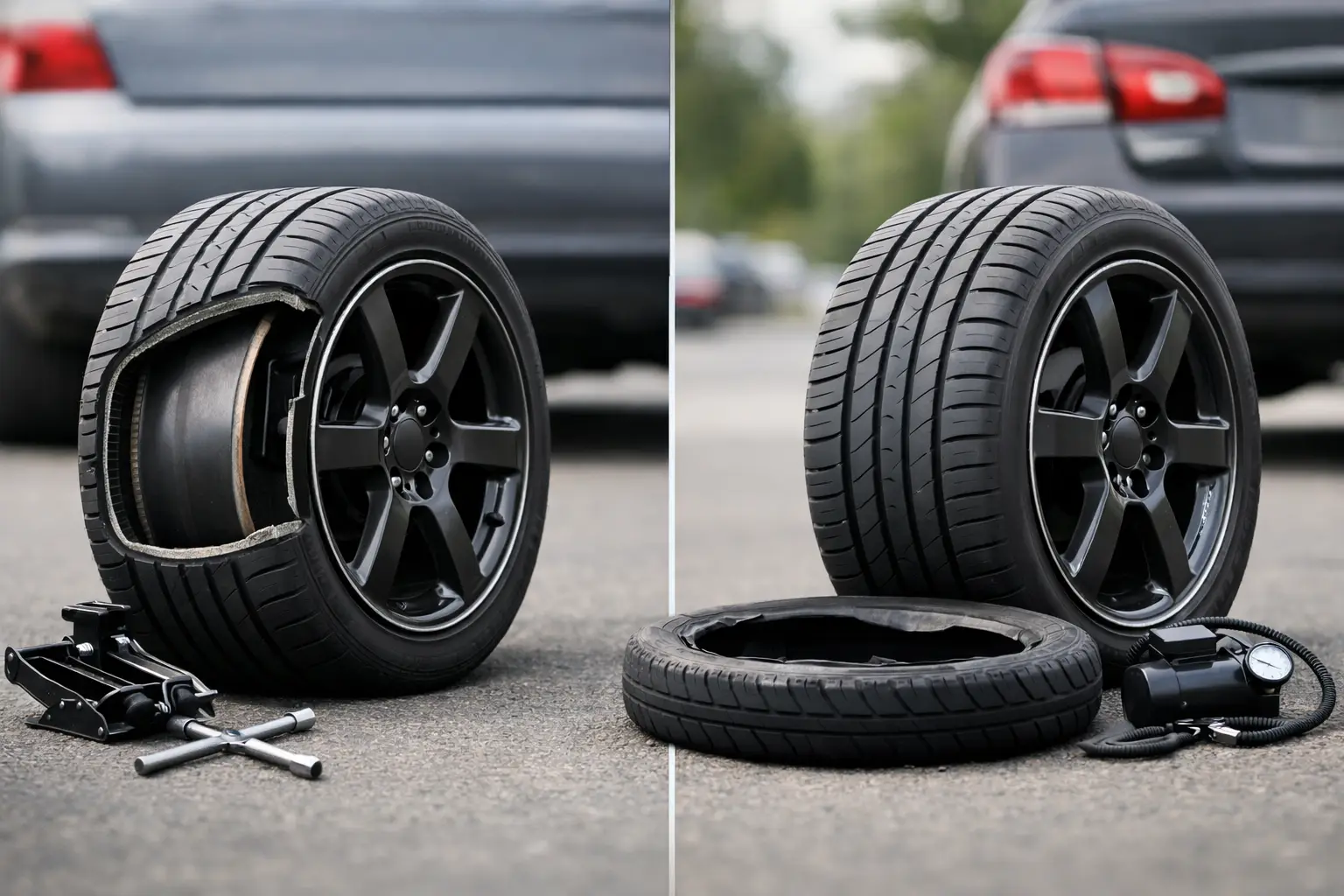
A flat tire rarely happens at a convenient time. It shows up on the way to work, during school pickup, or on a highway shoulder where stopping feels risky. That is why the choice between run flat vs regular tires matters more than it might seem at first. The right option depends on how you drive, what your vehicle is designed for, and how much you value convenience after a puncture.
Run-flat tires are built to keep supporting the vehicle for a limited distance after losing air pressure. In most cases, that means you can continue driving for around 50 miles at reduced speed, often up to 50 mph, after a puncture. That extra mobility can help you get off a busy road and reach a service location instead of changing a tire on the spot.
Regular tires, sometimes called conventional tires, do not have that same reinforced structure. If they lose pressure quickly, you generally need to stop as soon as it is safe. Depending on the damage, the tire may be repairable, or it may need to be replaced.
On paper, run-flat tires sound like the easy winner. In real life, there are trade-offs in ride comfort, replacement cost, repair options, and vehicle compatibility.
Most run-flat tires use reinforced sidewalls. When air pressure drops, those sidewalls are stiff enough to carry the weight of the vehicle for a short period. Some systems use a support ring inside the tire, but reinforced sidewalls are the design most drivers encounter.
Because the tire can still function temporarily with little or no air pressure, run-flats are often paired with tire pressure monitoring systems. That warning is important. A run-flat can look more normal than a regular flat tire, so drivers need the pressure alert to know there is a problem.
This setup is common on certain luxury cars, performance models, and vehicles that were designed without a spare tire. If your vehicle came factory-equipped with run-flats, that is usually a sign the suspension and handling were tuned with that tire type in mind.
Regular tires remain the standard choice for most vehicles on the road. They are widely available, offered across nearly every category, and often provide a more forgiving ride. For commuters, families, and drivers who want broad brand and price options, regular tires are usually the more flexible choice.
They also tend to be easier to replace in a hurry. If you are traveling and need a tire quickly, finding a conventional replacement is often simpler than locating the exact run-flat match your vehicle needs.
That practical advantage matters more than many shoppers expect. Tire decisions are not only about how a tire performs when new. They are also about what happens when one is damaged, worn out, or needs service away from home.
The biggest advantage of run-flats is convenience tied directly to safety. If a puncture happens at night, in heavy traffic, or in bad weather, being able to keep driving for a limited distance can reduce the immediate risk of stopping in a dangerous place.
For many drivers, that is the strongest case for choosing them. Parents carrying kids, commuters on fast highways, and anyone uncomfortable changing a tire on the roadside may see real value in that extra margin.
Regular tires rely more on your backup plan. That might be a spare, a repair kit, or roadside assistance. If your vehicle has a full-size or temporary spare and you are comfortable using it, regular tires may still fit your needs just fine. If it does not, then the convenience gap between the two options becomes more noticeable.
This is where many drivers start leaning back toward conventional tires. Run-flats often ride firmer because of their reinforced sidewalls. That can translate to a harsher feel over potholes, expansion joints, and broken pavement. Some drivers also notice more road noise, though that varies by tire model and vehicle.
Regular tires usually offer a smoother, quieter ride. The sidewalls have more natural flex, which helps absorb impacts and improve day-to-day comfort. If your driving is mostly commuting, errands, and family travel on mixed road surfaces, that difference can be meaningful.
It is not always dramatic, and newer run-flat designs have improved. Still, comfort remains one of the most common reasons drivers prefer conventional tires.
Run-flat tires typically cost more than regular tires. The purchase price is higher, and replacement can be more expensive if you need a specific size, speed rating, or original equipment match. Depending on your area and vehicle, availability can also be narrower.
Repairability is another important difference. Some run-flat tires cannot be repaired after being driven on while deflated, even if the puncture itself looks minor. Once the internal structure has been stressed, replacement may be the safer recommendation. That can raise ownership cost over time.
Regular tires are often less expensive upfront and more likely to be repairable when the damage is within the repairable area and has not compromised the tire structure. That does not mean every flat can be patched, but repair options are generally more straightforward.
If budget is a major factor, regular tires usually have the advantage.
One of the most overlooked parts of the run flat vs regular tires decision is whether your vehicle should switch at all. Some vehicles are engineered around run-flats, including suspension tuning, load support, and onboard expectations like the absence of a spare.
That does not always mean you cannot change to regular tires, but it does mean you should not treat the swap casually. You may need to think about carrying a spare solution, using a repair kit, or adjusting expectations around handling and feel. In some cases, switching away from the original tire type can change how the vehicle responds on the road.
If your vehicle came with regular tires, moving to run-flats also deserves a careful look. The tire must be available in the correct size and specifications, and you should confirm the vehicle has a functioning tire pressure monitoring system. Tire choice should always start with fitment, not just preference.
Run-flat tires make the most sense for drivers who place a high value on mobility after a puncture and who drive vehicles designed to use them. They can be especially useful for highway commuters, drivers in urban areas where stopping on the roadside is difficult, and owners of vehicles that do not have a spare tire.
They also appeal to people who want less roadside hassle. If the thought of changing a tire on the shoulder is a major concern, run-flats offer a practical solution.
The trade-off is that you usually pay more and may give up some comfort.
Regular tires are often the better fit for drivers who want a smoother ride, broader selection, and lower replacement costs. They also make sense for drivers whose vehicles already have a spare or for people who do not mind relying on roadside assistance if needed.
For many households, regular tires are the more balanced choice. They work well for daily commuting, family use, and long-term value. They also leave more room to compare brands and tread styles across all-season, winter, summer, or light truck categories.
If your priority is comfort, affordability, and easy replacement, regular tires usually come out ahead.
Start with your vehicle, not the marketing. Check what tire type your car came with, whether it has a spare, and what your owner manual recommends. Then think honestly about your driving habits. A driver who spends hours on interstate highways has different needs than someone who mostly stays local.
Also consider your tolerance for inconvenience. Some drivers are happy to keep a spare and call for help if needed. Others want the ability to keep moving after a puncture, even if it means paying more.
If you are unsure, a tire professional can help match your vehicle, budget, and driving conditions to the right option. That is usually the fastest way to avoid buying based on one feature while missing the bigger picture.
At Migo Tire Corp., the goal is simple: help drivers find tires that keep their vehicles safe and road-ready without making the process harder than it needs to be. When the choice comes down to run-flats or regular tires, the best answer is usually the one that fits your vehicle and your real-world driving, not just the one that sounds better on paper.
A good tire choice should make daily driving easier, not more complicated. If you focus on fitment, safety, and how you actually use your vehicle, the right answer becomes much clearer.