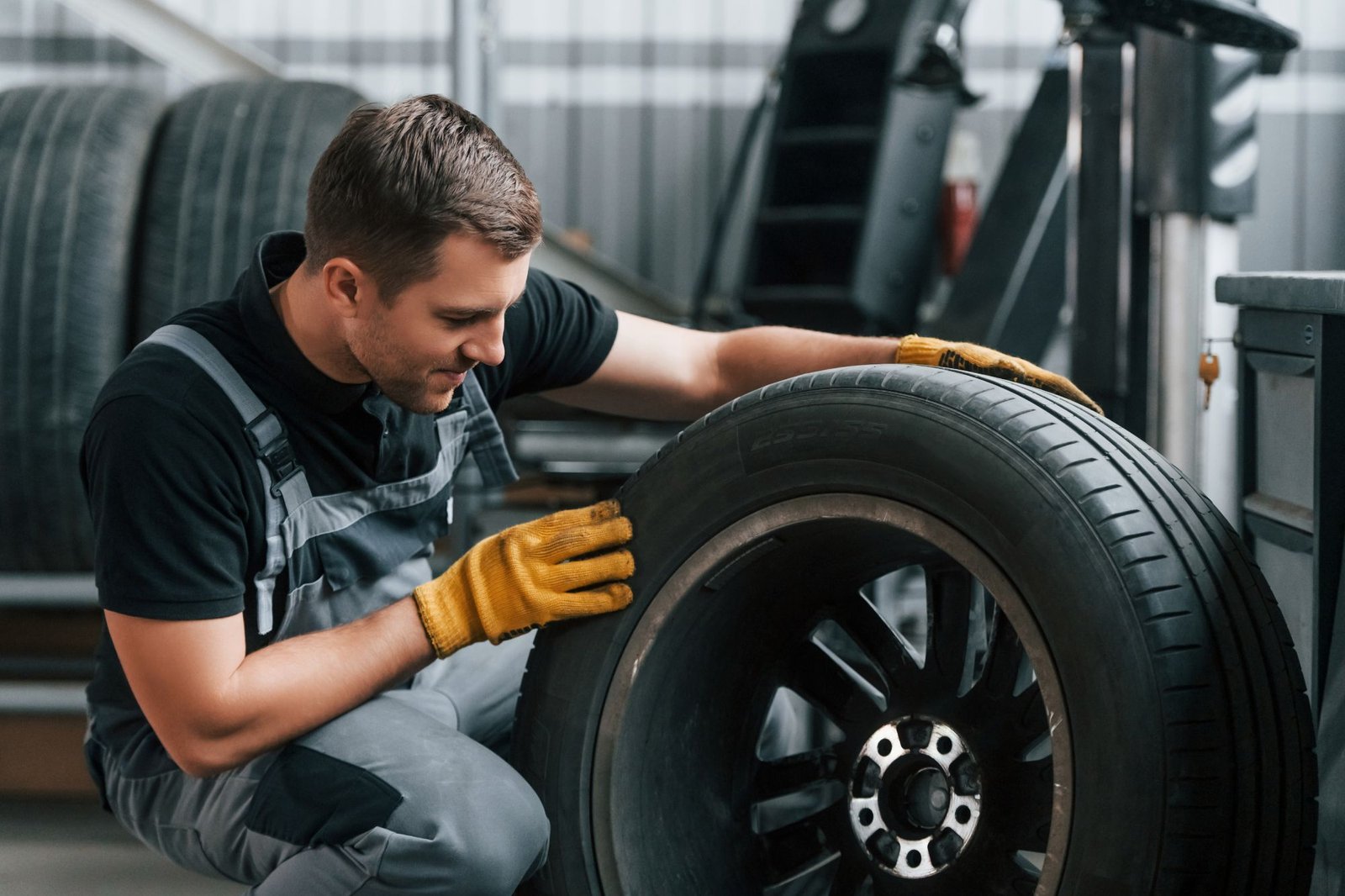
A small nail in the tread can feel like a minor inconvenience until you are standing next to a low tire, wondering whether the safest move is tire repair or replace. The right answer depends on where the damage is, how severe it is, and how much life the tire still has left.
For most drivers, this decision comes down to safety first and value second. A repair can save money and get you back on the road quickly, but only when the tire meets clear repair standards. If the damage is in the wrong spot or the tire is already too worn, replacement is the better choice.
Start with the location of the damage. If a puncture is in the tread area, the tire may be repairable. If the damage is in the shoulder or sidewall, replacement is usually necessary. Those areas flex more under load, and repairs there are not considered a dependable long-term fix.
The size of the puncture matters too. A small puncture from a nail or screw is very different from a cut, split, or blowout. If the hole is too large, if the tire has been driven while flat, or if the internal structure has been compromised, repairing it is not a safe option.
Tread depth also changes the equation. Even if the damage itself looks repairable, a worn tire may not be worth fixing. If the tread is already near replacement range, putting money into a repair may only delay the tire purchase you will need soon anyway.
A tire can often be repaired when the puncture is small, located in the center tread area, and the tire has not been driven long while underinflated. In those cases, a proper internal patch-plug repair can restore the tire for continued service.
This is where professional inspection matters. From the outside, one nail hole may look harmless. Inside the tire, there could be hidden damage from heat, pressure loss, or impact. A trained technician removes the tire from the wheel, inspects the inner liner, and confirms whether the casing is still sound.
A proper repair is not the same as a quick fill-up or an external plug done on the roadside. Temporary fixes can help in an emergency, but they are not a substitute for a full evaluation and approved repair method. If you want confidence in the tire afterward, the repair needs to be done correctly.
Replacement is usually the right call when the puncture is in the sidewall or shoulder, when the tire has a bulge, when cords are visible, or when the tread is already worn down. It is also necessary after a blowout or any impact that damages the tire’s internal structure.
One common issue is driving on a tire after it loses pressure. Even a short distance can damage the inside of the tire because the sidewall is forced to carry load it was not designed to handle without full inflation. From the outside, the tire may still look usable. Internally, it may no longer be safe.
Age can matter as well. If the tire is older, unevenly worn, or already showing cracking, replacement may be the smarter investment. Repairing an aging tire can cost less today but lead to another service visit sooner than expected.
A repair only makes sense if the tire still has useful life left. If the tread is deep and wear is even, repairing one puncture is often a practical decision. If the tire is close to the wear bars, the better move may be replacing it and avoiding another service appointment in a few months.
This is especially relevant on vehicles that need consistent traction for commuting, family driving, or wet-weather travel. Tires with low tread depth lose performance where drivers need it most – braking, cornering, and water evacuation. A tire that can technically be repaired is not always a tire worth keeping.
If one tire is damaged and the others are still in good shape, replacing just one may be possible. But on some vehicles, especially all-wheel drive models, tread differences between tires need to stay within a certain range. If not, the drivetrain can be affected. That is another reason a full inspection helps before making the final call.
Not every tire follows the same repair rules in the same way. Standard passenger tires, light truck tires, run-flat tires, and EV tires can each bring different considerations.
Run-flat tires are a good example. Some run-flats can be repaired, but only after careful inspection and only if they have not been driven beyond their limited-distance capability while flat. Many drivers do not know how far they went on low pressure, which makes replacement the safer option in some cases.
EV tires can also deserve a closer look because of vehicle weight and torque demands. Light truck tires used for hauling, towing, or rougher service may require a more conservative decision too. The basic principle stays the same: the tire has to be structurally sound, not just visually acceptable.
It is reasonable to think about cost when deciding between tire repair or replace. A repair is usually far less expensive than a new tire, and for a simple tread puncture, it can be the most efficient solution.
But the cheapest option is not always the best value. If the tire is worn, damaged in a non-repairable area, or likely to need replacement soon, spending less now can lead to spending more later. It can also leave you with reduced traction or a higher risk of another failure.
There is also the issue of matching. If one tire must be replaced, the vehicle may need more than one new tire depending on tread wear, drivetrain type, and manufacturer recommendations. That can change the budget, but it also protects vehicle handling and tire performance.
Some tire problems are not subtle. A bubble in the sidewall, a visible cut, repeated air loss, vibration after damage, or exposed cords all point toward replacement, not repair.
Other signs are easier to overlook. If the tire was driven very low, if the steering started pulling after hitting a pothole, or if the damaged tire is wearing unevenly, there may be more going on than a simple puncture. In those cases, the tire should be inspected along with the wheel and alignment.
A tire issue can sometimes reveal another problem. Misalignment, improper inflation, suspension wear, or overloading can all shorten tire life. Fixing the puncture without addressing the cause can bring you right back to the same problem.
Most drivers do not want a technical debate. They want a clear answer they can trust. That is why an inspection matters. A reliable tire service team can determine whether the damage meets repair standards, whether the tread still justifies the repair, and whether the vehicle setup supports replacing one tire or requires a broader recommendation.
This also saves time. Instead of guessing based on appearance, you get a decision based on the tire’s actual condition. That is especially helpful for busy drivers who need their vehicle safe and road-ready without making multiple trips.
At Migo Tire Corp., that kind of straightforward service matters because tire decisions are rarely just about the tire itself. They affect traction, ride quality, daily convenience, and confidence behind the wheel.
If you notice a puncture, low pressure, or visible damage, avoid driving farther than necessary. Add air only if needed to move the vehicle safely, and have the tire inspected as soon as possible. The longer a damaged or underinflated tire is used, the greater the chance that a simple repair turns into a required replacement.
If the damage is repairable, a proper repair can be a cost-effective solution. If it is not, replacing the tire is the safer move and often the better long-term value. The key is not forcing a repair onto a tire that no longer has the condition or tread life to justify it.
A good tire decision should leave you with more than a lower bill today. It should leave you confident the next time you merge onto the highway, load up the family car, or head out in the rain.