A tire is damaged beyond repair, the tread is worn down, and the other three still look usable. It is a common situation, which leads to a practical question: can I replace two tires instead of buying a full set? For many two-wheel-drive vehicles, the answer is yes, provided the new tires are a properly matched pair and are installed in the right position. For AWD and 4WD vehicles, the answer can be more complicated.
The goal is not simply to get back on the road at the lowest immediate cost. Your tires work together to provide braking, steering response, traction, and stability, especially on wet roads. A good replacement decision protects those qualities while helping you get the useful life out of the tires you already own.
Can I Replace Two Tires Safely?
Replacing two tires is often safe when the remaining two tires have adequate tread, are in good condition, and the new tires match each other exactly. The pair should be the same size, type, load rating, and speed rating specified for your vehicle. Ideally, they should also be the same brand and model.
This approach is most common when two tires on the same axle are worn or damaged at a similar rate. For example, a front-wheel-drive car may wear its front tires faster because they handle much of the accelerating, steering, and braking. Replacing that worn pair can make sense if the rear tires still have healthy, even tread.
However, “still has some tread” is not the only test. A tire with uneven wear, sidewall damage, cracking, repeated repairs, or a history of air loss may not be a good tire to keep in service. A tire inspection can reveal issues that are easy to miss when you are focused only on tread depth.
Put the New Pair on the Rear
When replacing only two tires, the new pair should generally be installed on the rear axle, even if your vehicle is front-wheel drive. This recommendation can feel backward at first. Many drivers assume new tires belong on the front because the front tires steer the vehicle or power it forward.
The rear tires play a major role in keeping the vehicle stable. On wet pavement, rear tires with less tread can lose grip before the front tires. When that happens, the rear of the vehicle can slide outward, creating an oversteer condition that is difficult for many drivers to correct quickly. Placing the deeper-tread pair on the rear helps reduce that risk.
Putting new tires on the rear does not mean the front tires are unimportant. Front tires still need enough tread for braking, steering, and water evacuation. If the front pair is near the wear bars, badly worn on one edge, or no longer appropriate for the season, replacing only two may not be the right solution.
There are exceptions. Some high-performance vehicles use different tire sizes front and rear, and certain vehicles have manufacturer-specific replacement guidance. Always follow the vehicle owner’s manual and the tire manufacturer’s recommendations when they differ from a general rule.
When You Should Replace All Four Tires
A full set is the better choice when all four tires are similarly worn, when your driving conditions demand dependable traction, or when your vehicle requires closely matched tire circumference. Replacing four at once also gives you consistent tread design, road feel, and performance at every corner.
You should strongly consider four new tires in these situations:
- All four tires are approaching the end of their useful tread life or have uneven wear.
- You drive an AWD or 4WD vehicle with limits on tread-depth differences between tires.
- You regularly drive through heavy rain, snow, ice, gravel, or unpaved roads.
- Your current tires are older, cracked, or no longer match the type of driving you do.
- You are changing tire categories, such as moving from all-season tires to winter tires or all-terrain tires.
For a family vehicle, commuter car, or light truck that sees changing weather, the value of four matching tires often shows up when conditions are less than ideal. Predictable braking and handling are easier to maintain when every tire has similar grip.
AWD and 4WD Vehicles Need Extra Attention
If your vehicle has all-wheel drive or four-wheel drive, do not assume two replacements are acceptable. These systems can be sensitive to differences in tire diameter caused by different tread depths. Even tires with the same size printed on the sidewall can have different rolling circumferences when one pair is significantly more worn than the other.
A mismatch can make the drivetrain work harder than intended. Depending on the vehicle, it may contribute to added wear on the differential, transfer case, or other AWD components. The permitted tread-depth difference varies by manufacturer, so the owner’s manual is the first place to check.
In some cases, replacing all four is the safest and simplest option. In others, a tire professional may be able to match a replacement tire closely enough to the existing set. Some specialty situations allow a new tire to be shaved to a similar tread depth, but that is not the right answer for every vehicle or every tire. The key is to confirm the vehicle’s requirement before purchasing two tires.
Match More Than the Tire Size
Seeing the same size on the sidewall is a good start, but it does not guarantee the tires will perform alike. Tire design affects wet grip, ride comfort, noise, snow performance, tread life, and how the vehicle responds in corners.
When replacing two, look for a pair that matches the existing tires as closely as possible. That means matching the tire category and construction, not just the dimensions. A touring all-season tire and a performance summer tire may fit the same wheel, yet they can behave very differently in cold temperatures and rain.
Mixing brands is not automatically unsafe if the new pair is identical to each other and meets your vehicle’s specifications. Still, matching the current model is usually the cleanest option when it is available. It helps keep handling more consistent from front to rear.
Avoid mixing different tire types across an axle. Do not install one all-season tire and one winter tire on the same axle, for example. Likewise, never mix a standard tire with a run-flat tire unless your vehicle and tire manufacturer specifically permit it.
Check Tread Depth and Tire Age Before Deciding
A tread-depth measurement makes the decision clearer. New passenger tires commonly start around 10/32 inch or more, while tires at 2/32 inch are legally worn out in most states and should be replaced. Wet-weather performance can decline well before a tire reaches that minimum.
If the tires you plan to keep are only slightly newer than the ones being replaced, buying two may only delay another purchase by a short time. In that case, a full set may offer better value and more even performance. If the remaining pair has substantially more usable tread and is wearing evenly, two tires may be a sensible choice.
Age matters as well. Rubber degrades over time, even on vehicles that are not driven often. Check the DOT date code on the sidewall and inspect for cracks, bulges, and hardening rubber. A tire that looks acceptable from a distance may not be a dependable match for brand-new tires.
Do Not Skip Installation, Balancing, and Alignment
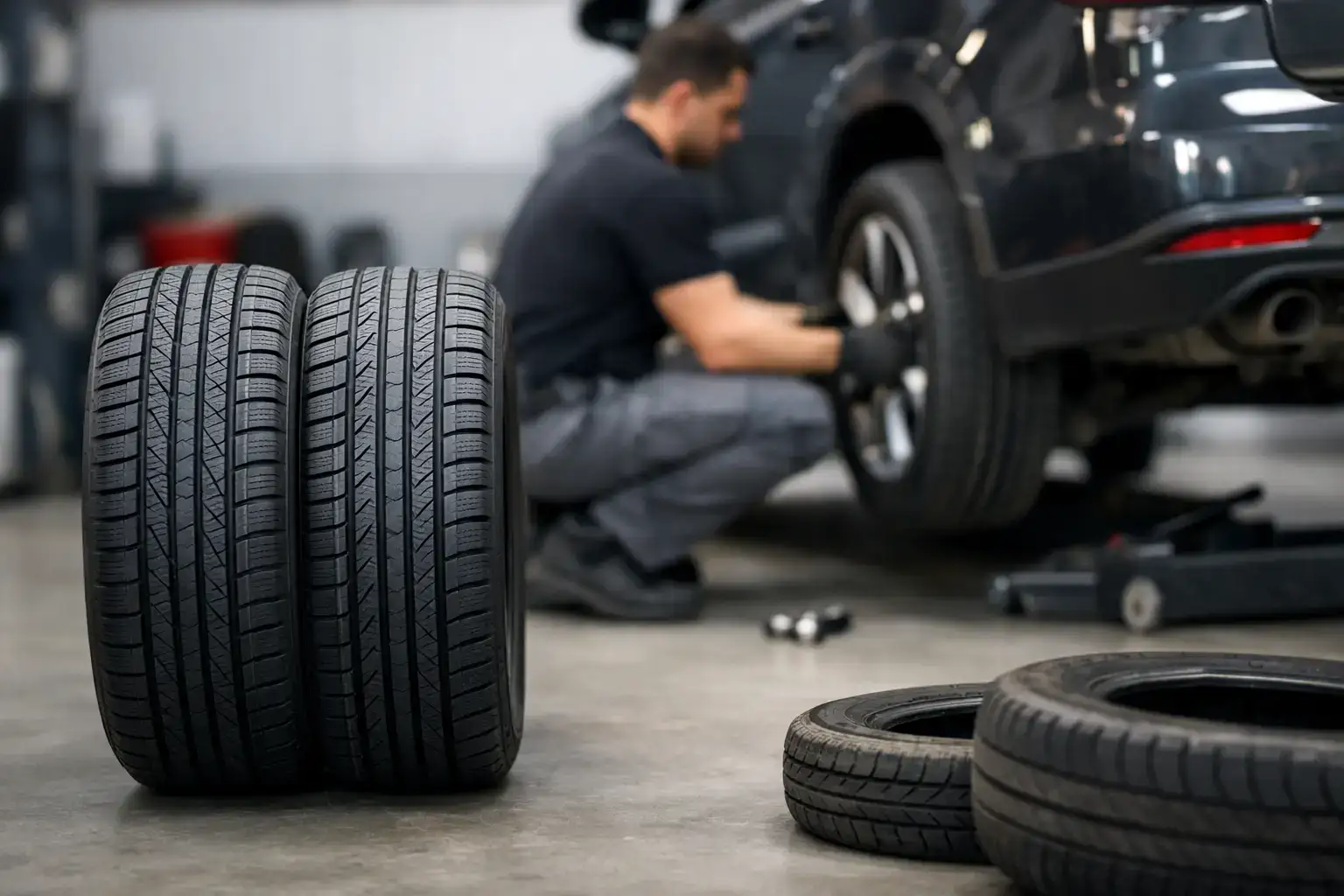
New tires need professional installation and balancing. Proper balancing helps prevent vibration and supports even tread wear. The tire pressure monitoring system may also need attention after service, depending on the vehicle.
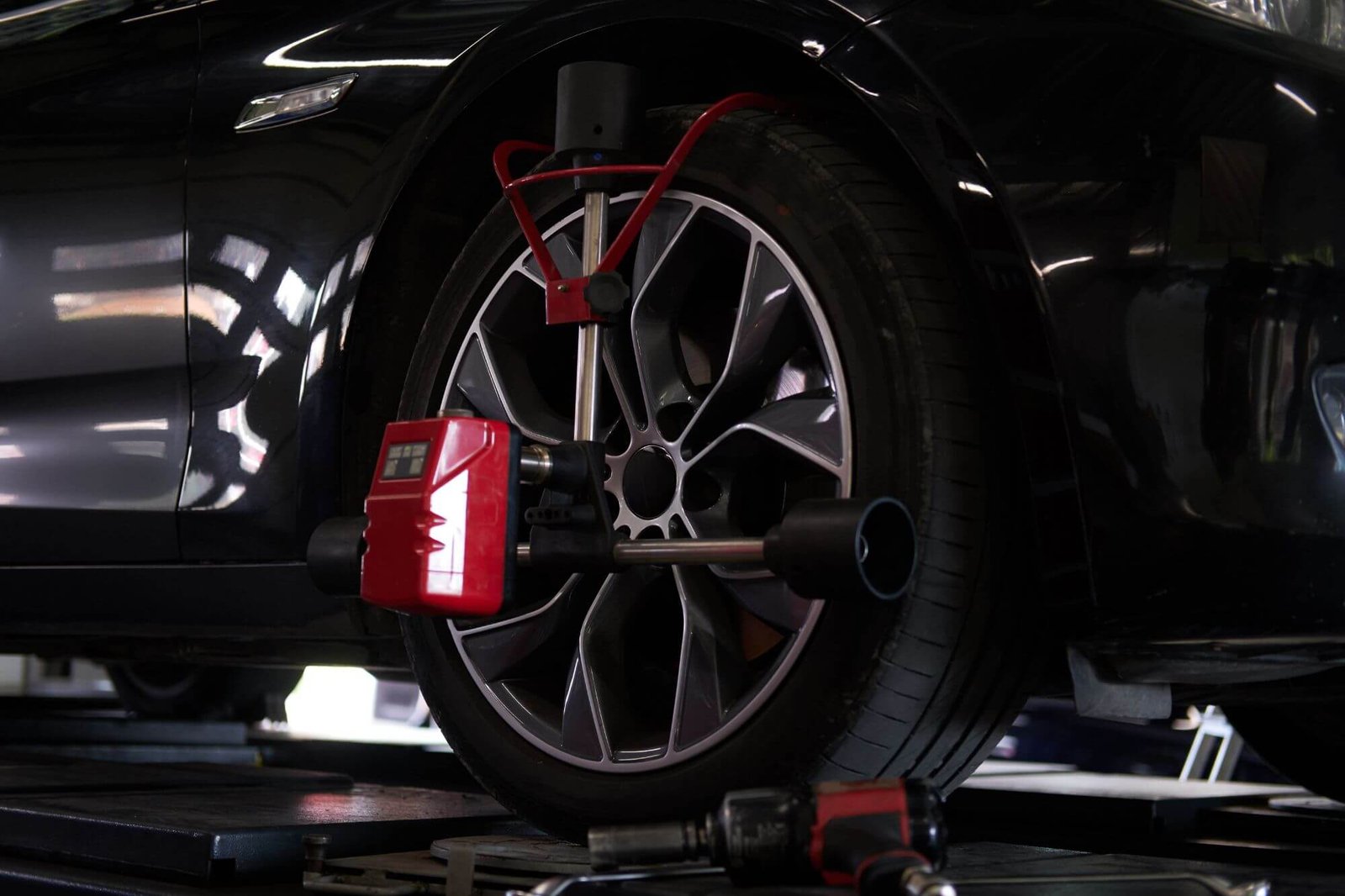
An alignment check is especially worthwhile if the old tires wore more on one shoulder than the other, the vehicle pulls to one side, the steering wheel is off-center, or you recently hit a pothole or curb. Replacing tires without addressing an alignment problem can lead to the same uneven wear on the new pair.
Once the tires are installed, maintain the pressure listed on your vehicle’s door-jamb placard, not the maximum pressure shown on the tire sidewall. Check pressure monthly and before long trips. Regular rotations, performed according to your vehicle’s recommended schedule, can help the new and existing tires wear more evenly.
Make the Choice That Fits Your Vehicle
Two new tires can be a safe, cost-conscious repair when they are matched correctly, the remaining tires are in good condition, and your vehicle does not require four closely matched tires. For AWD vehicles, worn sets, and drivers facing demanding weather, four may be the smarter investment.
At Migo Tire Corp., a tire inspection can help confirm tread depth, tire condition, fitment, and the right replacement path for your vehicle. A few minutes spent checking the details now can help keep your vehicle safe and road-ready through the miles ahead.