
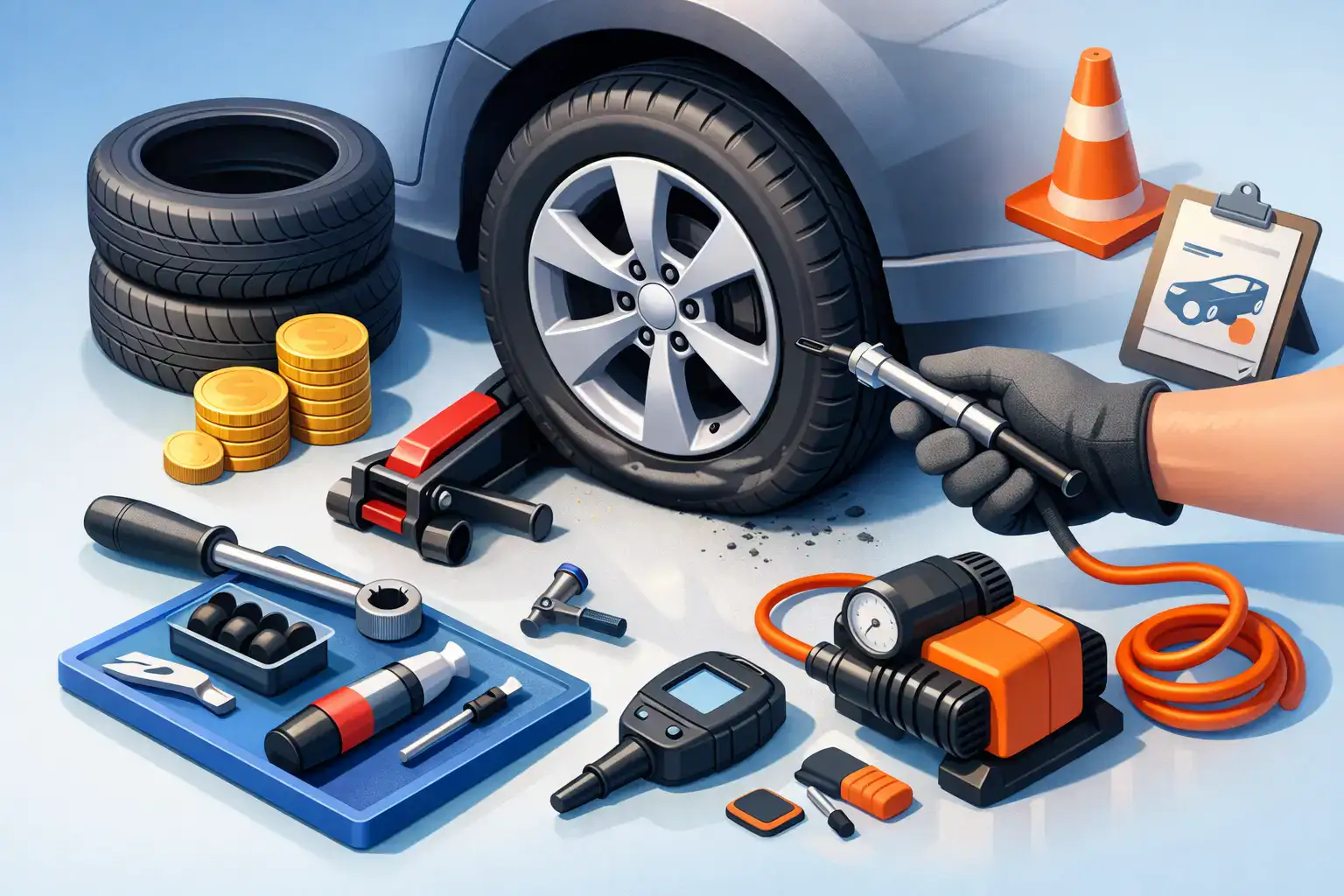
A nail in the tread can turn an ordinary commute into an unexpected expense. The good news is that flat tire repair cost is often modest when the tire is still safe to repair. The key is getting the tire inspected before driving farther than necessary, because a small puncture can become costly damage if the tire is driven while underinflated.
For many passenger vehicles, a professional flat repair commonly costs about $15 to $40 per tire. Some shops may charge more for specialty tires, difficult wheel designs, or extra work such as diagnosing a slow leak. If the tire cannot be repaired safely, replacement costs depend on the tire size, category, brand, and the vehicle’s fitment requirements.
What Does Flat Tire Repair Cost at a Shop?
The price of a tire repair is usually based on the type of leak and the work needed to fix it correctly. A proper repair is more than pushing a plug into the outside of the tire. The tire should be removed from the wheel, inspected inside and out, and repaired with an internal patch-plug combination when the puncture meets repair guidelines.
This process helps a technician check for hidden damage. A tire that looks fine from the outside may have inner-liner wear, broken cords, or heat damage from being driven low on air. That inspection is one reason a professional repair can offer more confidence than a quick temporary fix.
A basic repair may be near the lower end of the price range when a small nail or screw is located in the center tread area. The cost can rise when the wheel needs extra cleaning, the valve stem is leaking, or the tire pressure monitoring system needs attention. If the tire is mounted on a large truck wheel, a low-profile performance tire, or a run-flat tire, labor may also be higher.
When a Flat Tire Can Be Repaired
Not every flat is repairable. Tire technicians follow safety guidelines designed to protect the tire’s structure and keep the vehicle road-ready. In general, a puncture may be repairable when it is in the central tread area, is small enough to be sealed properly, and has not caused internal tire damage.
A puncture from a nail or screw is often the best-case scenario. If it is in the repairable tread zone and the driver stopped promptly, the tire may only need a standard repair. A slow leak caused by a damaged valve stem or a poor bead seal may also be fixable without replacing the tire.
Even in these cases, the final decision should come after an in-person inspection. The visible hole does not always tell the full story. A technician needs to verify that the tire can still hold air and perform safely at highway speeds.
Repairs that are usually not safe
A tire generally should be replaced rather than repaired if the damage is in the sidewall or shoulder area. These parts of the tire flex heavily while driving, and a patch or plug cannot restore their original strength.
Replacement is also usually the safer choice when the puncture is too large, multiple punctures are too close together, or the tire has been driven flat. Driving on a low tire can crush the sidewall between the wheel and road surface. That can damage the internal cords even if the tire reinflates and appears normal afterward.
Cuts, bulges, exposed cords, and damage from a pothole or curb strike are other signs that a repair may not be appropriate. A lower upfront cost is never worth taking a chance with braking, handling, or a sudden failure on the road.
What Can Raise the Cost of a Flat Tire Repair?
The location and severity of the damage matter most, but a few vehicle and tire factors can affect the final bill. Specialty fitments often require more time and care than a standard passenger tire. Run-flat tires, for example, have reinforced sidewalls and can be more difficult to remove and remount. Larger light truck tires may also require different equipment or added labor.
Tire pressure monitoring system sensors can add another consideration. If a sensor is damaged, corroded, or needs a service kit, the repair may include additional parts and programming. A warning light after a flat should not be ignored, even after the tire has been repaired and inflated.
The source of the leak can change the cost as well. A puncture repair is different from fixing a leaking valve stem, resealing a tire bead, or addressing a bent wheel. If the wheel itself is damaged, a tire repair alone may not solve the problem.
Emergency roadside service is another factor. Having a spare installed at the roadside may cost more than bringing the vehicle to a tire service location. If the tire is severely damaged, towing or a replacement tire can add to the total expense.
Repair or Replace: Making the Practical Choice
A safe repair is usually the most affordable option, especially when the tire is relatively new and has strong remaining tread. It helps preserve the value of the tire and gets your vehicle back on the road without the cost of a full replacement.
Replacement makes more sense when the tire has unsafe damage or is already near the end of its usable tread life. Putting repair money into a worn tire may not be the best value if it will need replacement soon. The same is true when the tire has uneven wear caused by alignment issues, suspension wear, or chronic underinflation.
If one tire must be replaced, the right next step depends on your vehicle. Many front-wheel-drive and rear-wheel-drive vehicles can accept a single matching replacement tire when tread-depth differences are reasonable. All-wheel-drive vehicles can be more sensitive to differences in tire circumference. In some cases, replacing more than one tire or matching tread depth more closely may be necessary to help protect the drivetrain.
A tire professional can compare the remaining tread on your current tires, confirm the correct size and load rating, and help you choose a replacement that suits your vehicle and driving needs. That is particularly helpful for drivers using winter tires, all-weather tires, light truck tires, or performance-oriented fitments.
How to Avoid a Bigger Tire Bill
When you notice a tire losing air, check the pressure as soon as it is safe to do so. If it is visibly flat, do not continue driving on it unless your vehicle’s tire instructions specifically allow limited operation on a run-flat tire. Use the spare tire if available, or arrange for service.
Regular pressure checks can catch slow leaks before they become a roadside problem. Check tire pressure at least once a month and before longer trips, using the pressure listed on the vehicle’s door-jamb placard rather than the maximum pressure molded into the tire sidewall. Keeping tires properly inflated also supports even tread wear, fuel efficiency, and responsive handling.
It also helps to inspect your tires after construction-zone driving, rough roads, or a hard pothole impact. Look for nails, screws, cuts, bulges, and unusual tread wear. Catching a small puncture early gives you the best chance of paying for a simple repair instead of a tire replacement.
Get the Tire Checked Before the Leak Gets Worse
A flat tire can feel urgent, but the right response is straightforward: stop safely, avoid driving on a deflated tire, and have the damage evaluated by a qualified technician. Migo Tire Corp. can help inspect the tire, determine whether a safe repair is possible, and recommend the right replacement when it is not. A quick inspection today can help keep a small leak from becoming a larger safety concern tomorrow.


