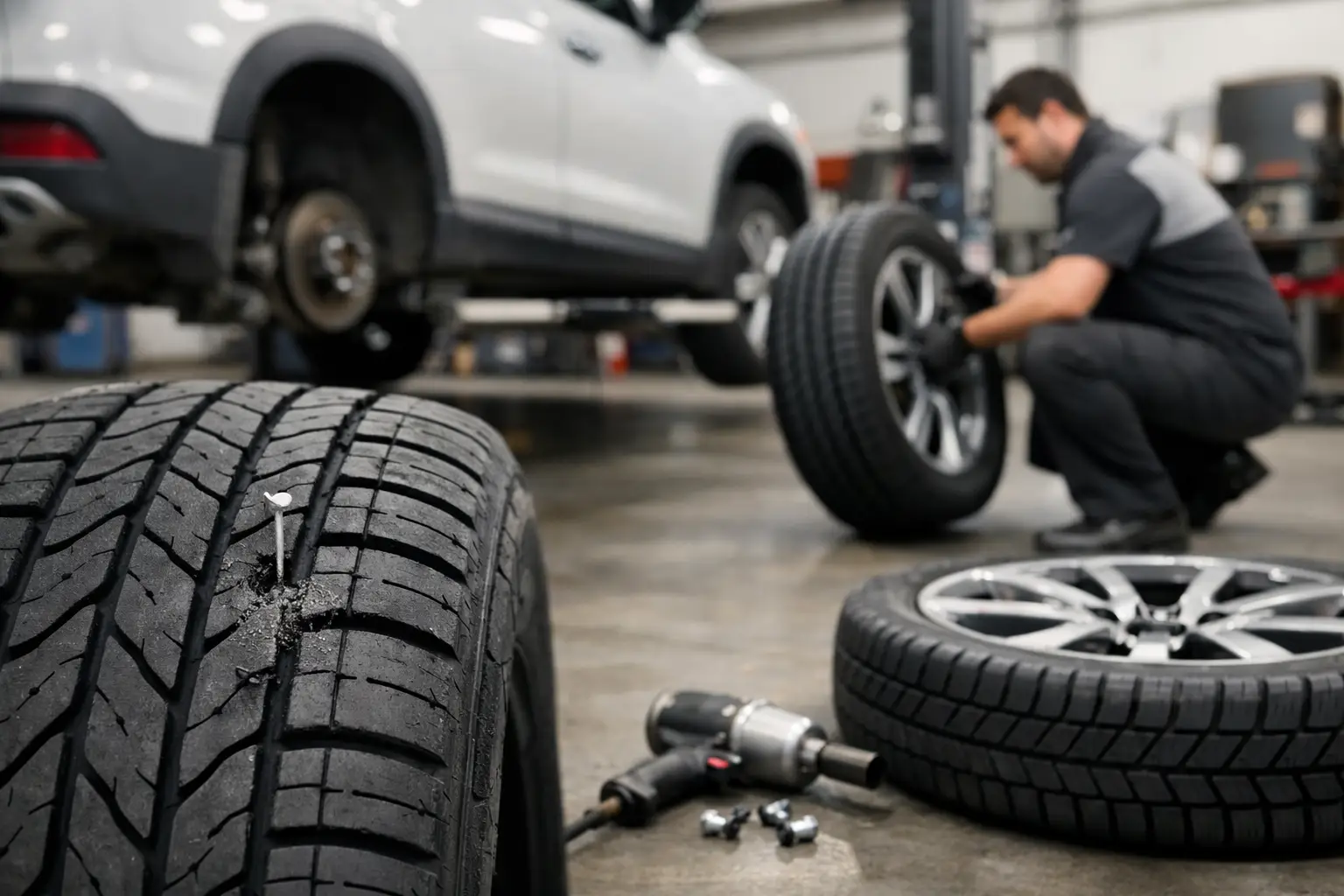
A nail in your tire can turn an ordinary commute into a stressful question: can it be repaired, or is it time for a new tire? Tire replacement after nail puncture is not always necessary, but the location, size, condition, and remaining tread on the tire all matter. The safest choice is based on an in-person inspection, not just whether the tire still holds air.
If you spot a nail, avoid pulling it out before the tire has been checked. The nail may be slowing the air loss, and removing it can leave you with a flat tire where you are parked. Check your tire pressure, drive only as far as necessary, and arrange a professional inspection as soon as you can.
When a Nail Puncture Can Be Repaired
Many punctures can be repaired safely when they are small, located in the main tread area, and caught before the tire is driven while severely underinflated. A repairable puncture is generally caused by a nail or screw that enters straight through the central part of the tread.
The repair needs to address both sides of the damage. A proper internal patch-and-plug repair requires the tire to be removed from the wheel so a technician can inspect the inside. This helps identify hidden damage and seals the path of the puncture rather than simply filling the hole from the outside.
An external plug may seem like a quick answer, especially when you need to get moving, but it is best viewed as a temporary measure unless a qualified tire professional confirms otherwise. It cannot show whether the tire’s inner liner, belts, or sidewall were damaged by low-pressure driving.
A tire with good remaining tread and one clean, small puncture in the repair area is often a good repair candidate. Repairing it can be the practical choice when the tire remains structurally sound and matches the condition of the other tires on your vehicle.
When Tire Replacement After Nail Puncture Is Safer
Some punctures cannot be repaired reliably. If the nail is in the sidewall or shoulder – the outer edge where the tread curves toward the sidewall – replacement is usually the right call. These areas flex heavily while driving, so a repair may not hold safely under normal road loads.
Replacement is also commonly needed when the puncture is too large, the hole is irregular, or there is more than one repairable-area puncture close together. Damage from a screw, a sharp piece of metal, or a road hazard can be wider than it appears from the outside.
The bigger concern is often what happened after the puncture. Driving for any meaningful distance with very low pressure can damage the tire internally. The sidewalls may become overheated or pinched, and the inner structure can weaken even when the tire looks normal after reinflation. A technician may find scuffing, loose rubber debris, or other signs that the tire should not return to service.
Tread depth also changes the decision. If your tires are already worn close to replacement, putting money into a repair may not make sense. A new tire can provide better wet-road grip and help keep your vehicle safe and road-ready through changing weather conditions.
Warning Signs You Should Not Ignore
Do not continue driving on a punctured tire if you notice strong pulling, vibration, a visibly low tire, a bulge, a cut, or a tire-pressure warning light that stays on after you add air. Stop in a safe location and inspect the tire from a distance. If the tire is flat or damaged, use your spare tire if your vehicle has one and you can do so safely, or arrange roadside assistance.
Never rely on a tire sealant as a permanent repair. Sealant can help in limited emergency situations, but it may not work on larger holes or sidewall damage. It can also make a later inspection and repair more difficult. Check your vehicle owner’s manual, especially if you have run-flat tires or a factory tire mobility kit.
Why Puncture Location Matters So Much
Think of the tire tread as the part designed to meet the road and the sidewall as the part that carries flex and supports the tire’s shape. The central tread area is relatively stable, which is why a small puncture there may be repairable. The shoulder and sidewall experience far more movement every time the wheel turns.
A nail near the edge of the tread can be difficult to judge without removing the tire. What looks like a tread puncture from above may extend into the shoulder area. That is one reason a visual check in the driveway cannot replace a full tire inspection.
Puncture angle matters, too. A nail driven in straight may create a simple channel. A nail that enters at an angle can damage more material beneath the surface, even when the visible hole is small.
Replacing One Tire, Two Tires, or a Full Set
When replacement is necessary, the next question is whether you need one tire or more. For many front-wheel-drive and rear-wheel-drive vehicles, one matching new tire may be appropriate if the remaining tires have adequate and even tread depth. The replacement should match the required tire size, load rating, speed rating, and intended use for your vehicle.
All-wheel-drive vehicles require extra care. Differences in tire circumference caused by uneven tread depth can place strain on the drivetrain. Depending on your vehicle and the wear on the other tires, a technician may recommend replacing more than one tire or using a properly matched option. Your owner’s manual and a tire professional can help determine the acceptable tread-depth difference for your specific vehicle.
Replacing tires in pairs can also make sense when the opposite tire on the same axle is significantly worn. Matching traction and handling from side to side is especially valuable in rain, snow, and quick braking situations. If your current tires are close to the end of their usable life, a complete set may offer the most balanced performance.
For drivers who use dedicated winter tires, keep the seasonal setup consistent. Mixing a new winter tire with a heavily worn winter tire on the same axle can affect grip and stability. The same principle applies to all-season, all-weather, summer, light truck, and performance tires: fitment and condition should work together.
What to Expect During a Tire Inspection
A proper inspection starts with finding the puncture and checking air loss. The technician will remove the tire from the wheel when needed, inspect the inside, examine the tread and sidewall, and look for evidence of low-pressure damage. They will also check whether the puncture falls within a repairable area.
If the tire is repaired, it should be resealed to the wheel and balanced as needed before it goes back on the vehicle. If it is replaced, this is a good time to check the condition of the other tires, tire pressure, wheel balance, and alignment. Uneven wear can point to an alignment issue that could shorten the life of your new tire.
For vehicles equipped with a tire pressure monitoring system, the system may need to be reset or serviced after the work is completed. Do not assume the warning light will disappear immediately without confirming that the repair or replacement has been completed correctly.
How to Reduce the Risk of Another Puncture
Road debris is not always avoidable, but regular tire care helps you catch problems early. Check tire pressure at least monthly and before longer trips, using the pressure listed on the vehicle placard rather than the maximum pressure molded on the tire. Look over your tires for embedded objects, cuts, bulges, and uneven wear whenever you wash your vehicle or fill up.
Rotating tires on schedule helps them wear more evenly, which can make a future replacement decision easier. Proper alignment and inflation also reduce the chance that a small problem becomes a costly one. If you regularly drive through construction zones, unpaved lots, or rough roads, a quick visual check is worth the extra minute.
When a nail finds its way into your tire, the goal is not simply to get air back in it. The goal is to make sure the tire can keep doing its job safely. A prompt inspection gives you a clear answer, whether that means a professional repair or the right replacement to keep your next trip predictable.