A flat tire on the 401, a packed school pickup line, or a late-night drive home is never convenient. This run flat tire buying guide explains what these tires can and cannot do, so you can decide whether the added peace of mind suits your vehicle, driving habits, and budget.
What Run-Flat Tires Actually Do
Run-flat tires are designed to support the weight of your vehicle for a limited distance after a loss of air pressure. In most passenger vehicles, they use reinforced sidewalls that can temporarily carry the vehicle even when the tire has little or no air. That gives you time to leave traffic, avoid changing a tire at the roadside, and get to a qualified service location.
They are not tires that can be driven indefinitely while flat. The maximum distance and speed vary by tire and vehicle, but a common guideline is roughly 50 miles at up to 50 mph after a pressure loss. Always follow the tire manufacturer’s instructions and your vehicle owner’s manual. Continuing farther or faster can damage the tire beyond safe use and may affect the wheel as well.
Run-flat tires are often original equipment on certain vehicles because they can reduce the need for a spare tire. Removing the spare can free up cargo space and reduce vehicle weight. For many commuters and families, avoiding a roadside tire change is the main reason to consider them.
Run Flat Tire Buying Guide: Start With Fitment
The first question is not which run-flat tire has the best features. It is whether a run-flat tire is approved for your vehicle and available in the correct size, load rating, and speed rating.
Start with the tire size shown on your current tire sidewall or the placard inside the driver’s door. A size such as 225/45R18 includes the tire width, sidewall profile, construction, and wheel diameter. Match that size unless a qualified tire professional has confirmed an approved alternative fitment.
Load index and speed rating matter just as much. A tire may physically fit the wheel but still be unsuitable if it does not carry the vehicle’s required load or meet its intended operating capability. This is particularly relevant for heavier EVs, SUVs, and vehicles that routinely carry passengers, tools, or cargo.
You should also confirm that your vehicle has a functioning tire pressure monitoring system, commonly called TPMS. Because a run-flat tire may not look visibly flat when it loses pressure, TPMS is essential. The warning light tells you to slow down, inspect the situation safely, and arrange service rather than continuing as usual.
If your vehicle came from the factory with run-flat tires, switching to conventional tires may be possible, but it should be an informed decision. You would need a plan for punctures, such as a compatible spare tire, mobility kit, or roadside assistance. If you are moving from conventional tires to run-flats, confirm that the tire and vehicle combination is appropriate before buying.
Consider the Trade-Offs Before You Choose
The biggest benefit of run-flat tires is control after a puncture. Rather than stopping immediately on a narrow shoulder or in severe weather, you can usually continue cautiously to a safer location. That is a meaningful advantage for drivers who commute frequently, travel with children, or drive in areas where roadside stops are difficult.
The trade-off is ride comfort. Reinforced sidewalls are stiffer than those on many conventional tires, so some vehicles can feel firmer over potholes, rough pavement, and expansion joints. Modern run-flat designs have improved considerably, but the difference may still be noticeable, especially on low-profile tires.
Replacement cost can also be higher, depending on the size and tire model. Availability may be more limited in certain uncommon sizes, so it is wise to plan ahead when your tread is getting low rather than waiting for a puncture or seasonal changeover.
There can also be a weight and efficiency consideration. Tire construction varies by model, and the impact on fuel economy or EV range is not the same across every option. If range is a priority, look for a tire designed for low rolling resistance that still meets your vehicle’s fitment requirements.
Choose for Your Actual Driving Conditions
A run-flat tire is not a separate seasonal category. You still need the right tire type for the conditions you drive in.
For drivers who use their vehicle mainly in mild to moderate conditions, an all-season run-flat tire may be the practical choice. It offers everyday handling and wet-weather capability, but it is not a replacement for a dedicated winter tire when roads are consistently cold, snowy, or icy.
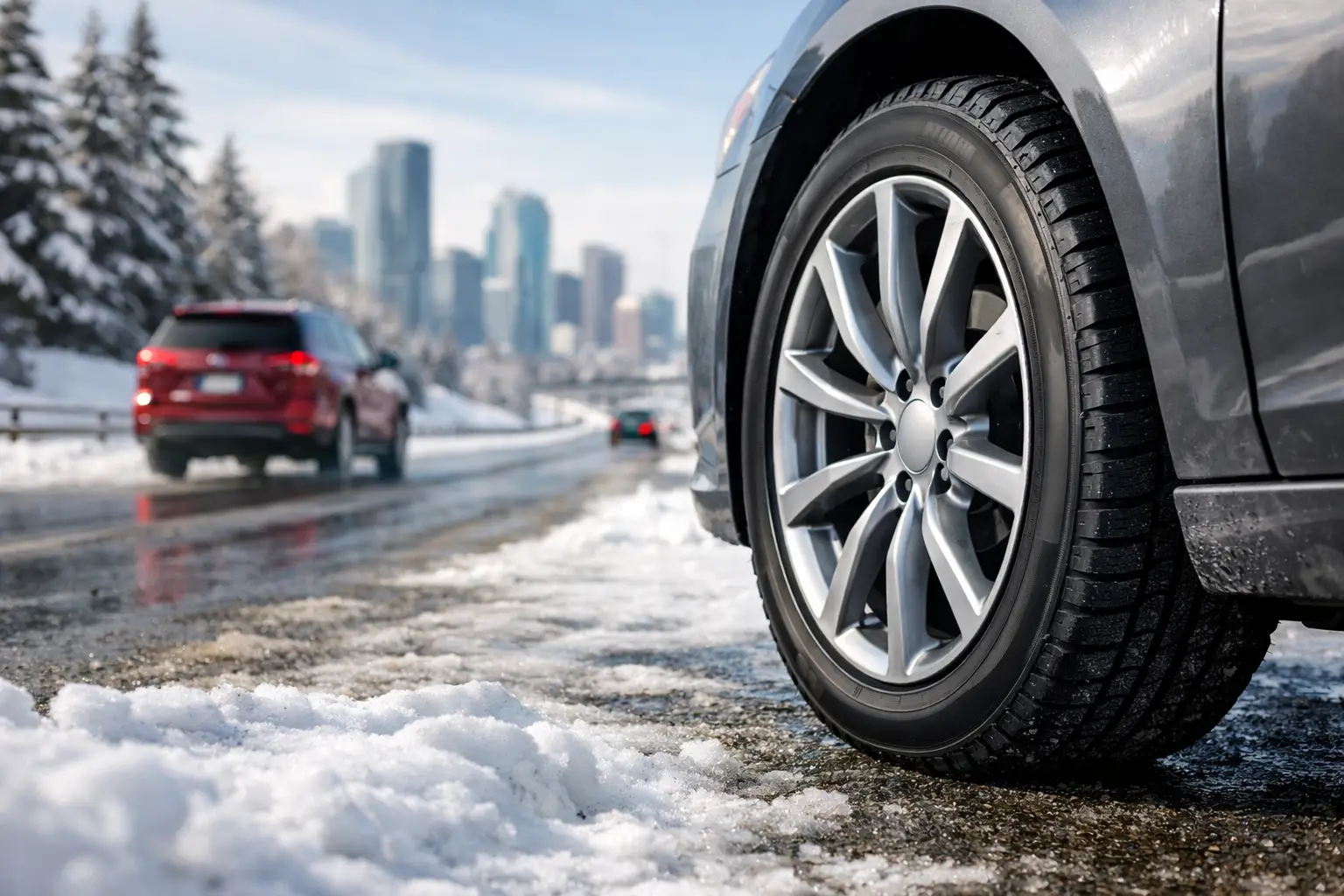
If you drive through a Canadian winter, look for a winter run-flat tire with the Three-Peak Mountain Snowflake symbol. Winter compounds stay more flexible in low temperatures, while winter tread patterns provide better grip in snow and slush. The run-flat feature helps after a puncture, but it does not improve braking or cornering on ice by itself.
Performance-oriented vehicles may use summer run-flat tires. These can provide responsive handling and strong warm-weather grip, but they should not be used in freezing conditions or on snow-covered roads. For many drivers, the best setup is a summer or all-season set for warmer months and a dedicated winter set for the cold season.
Know What Happens After a Puncture
A run-flat tire should be inspected as soon as possible after it has been driven with low or zero pressure. Damage inside the tire is not always visible from the outside. The sidewall may have been stressed, and the tire may no longer be safe even if it can hold air again.
Repair rules vary by tire manufacturer and the extent of the damage. Some run-flat tires may be repairable only when the puncture is in the tread area, the tire was not driven flat beyond its stated limit, and a trained technician finds no internal damage. Others are not intended to be repaired after a loss of pressure. A plug inserted from the outside is not a complete assessment or repair for a tire that may have been driven while deflated.
After any puncture, have the tire removed from the wheel and checked internally. Also inspect the wheel for damage and have the TPMS sensor checked if the tire was dismounted. Proper balancing after installation or repair helps prevent vibration and uneven wear.
Compare Tires Beyond the Run-Flat Label
Two run-flat tires in the same size can feel very different on the road. Once fitment is confirmed, compare the features that affect your everyday experience:
- Tread life expectations and warranty coverage, based on the manufacturer’s terms.
- Wet braking and hydroplaning performance for rain-heavy driving.
- Winter certification if you need dependable cold-weather traction.
- Noise and comfort ratings if your vehicle is used for long commutes.
- EV suitability, load capacity, and low rolling resistance when applicable.
Do not choose based only on the fact that a tire is run-flat. A tire that matches your climate, vehicle weight, and driving style will usually provide better value over its service life than a feature-packed tire that does not suit how you use your vehicle.
Installation and Ongoing Care Matter
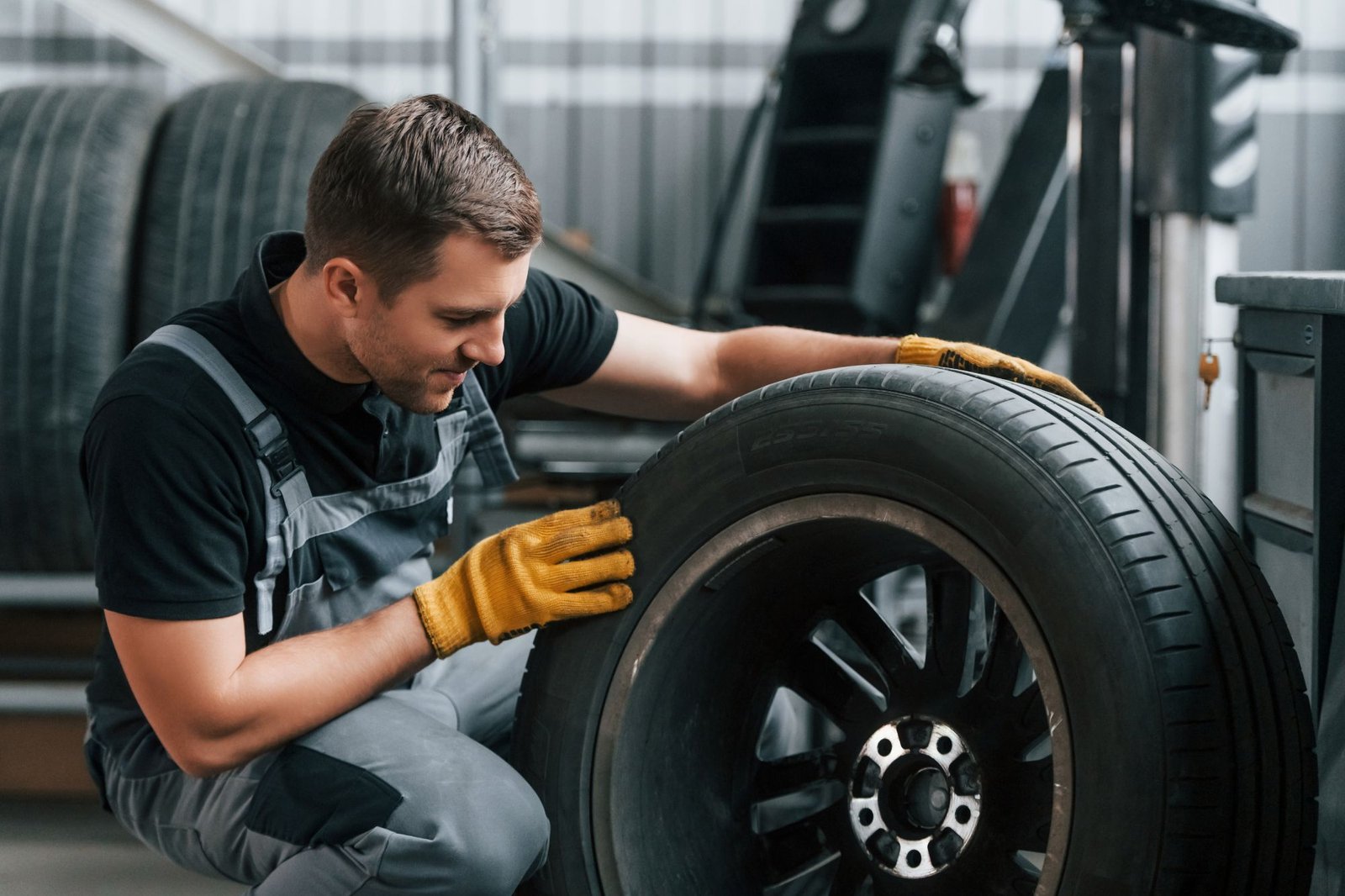
Run-flat tires require careful installation because their stiff sidewalls can be more challenging to mount than conventional tires. Proper equipment and experienced technicians help protect the tire bead, wheel, and TPMS sensor. Installation should include correct inflation, balancing, and a check that the tire’s rotation direction or outside-facing sidewall is positioned correctly.
Check tire pressure at least once a month and before longer trips. TPMS is a warning system, not a replacement for regular pressure checks. Use the pressure listed on your vehicle placard, not the maximum pressure printed on the tire sidewall.
Regular rotations, alignment checks, and prompt attention to vibration can help extend tread life. This matters even more with run-flat tires because uneven wear can affect ride quality and reduce the remaining usable tread sooner than expected.
A run-flat tire makes the stressful moment after a puncture more manageable, but the right choice still comes down to fitment and real driving conditions. Choose the tire that keeps your vehicle safe and road-ready where you actually drive, then have a qualified technician confirm the details before installation.