
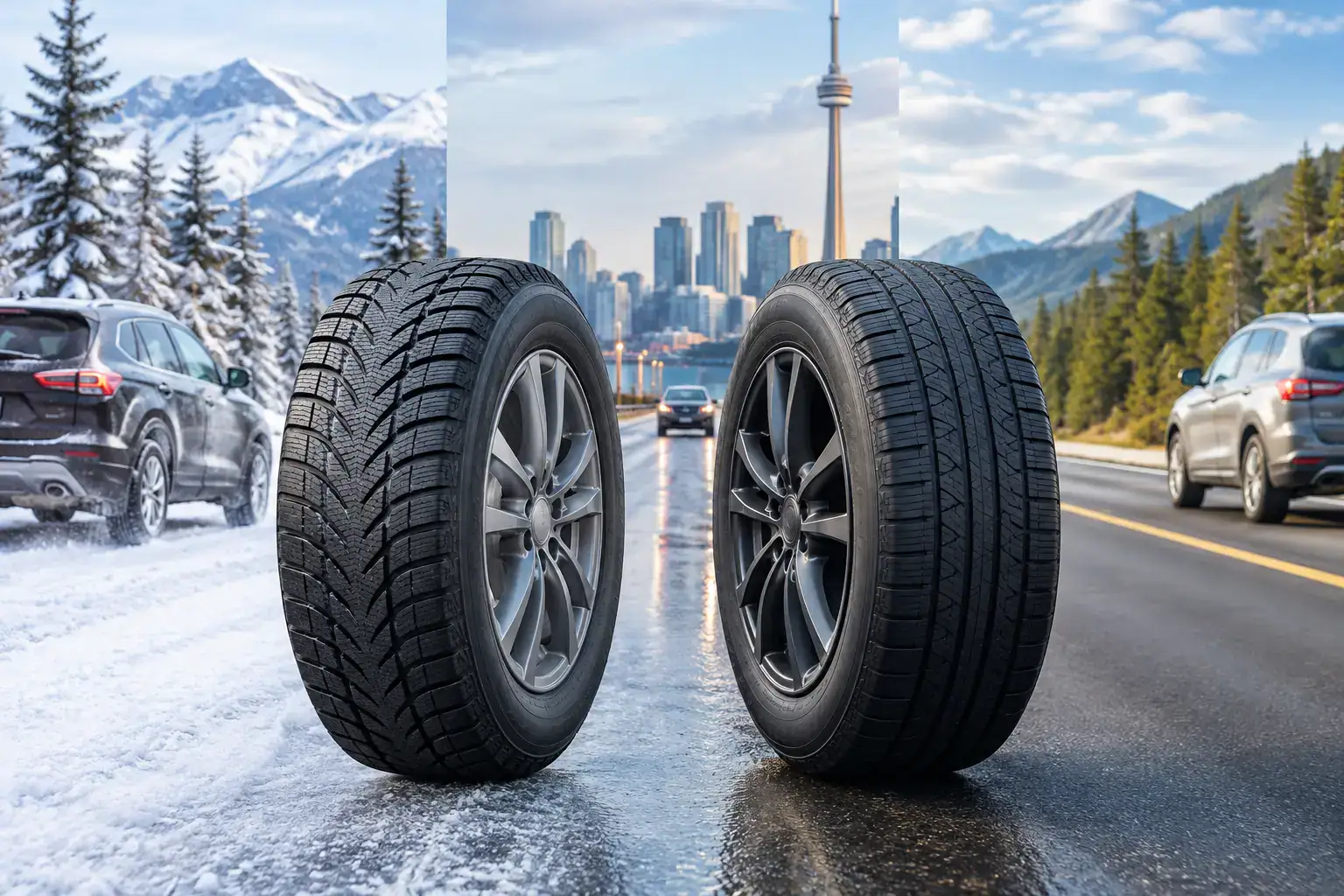
A tire that feels perfectly capable on a dry afternoon can become the weak point of your vehicle when temperatures drop and roads turn wet or snowy. The choice between all-season versus all-weather tires comes down to more than the name on the sidewall. It depends on where you drive, how often you face winter conditions, and whether you want one set of tires to stay on your vehicle year-round.
For many drivers, both categories can be practical. But they are built for different priorities. Understanding those differences can help you choose tires that keep your vehicle safe and road-ready without paying for performance you may not need.
What are all-season tires?
All-season tires are designed for everyday use in moderate conditions. They are the most common original-equipment tire type on passenger cars, crossovers, minivans, and many light trucks. Their tread patterns and rubber compounds aim to provide balanced performance in dry conditions, rain, and light snow while offering a comfortable ride and reasonable tread life.
For a driver who spends most of the year on cleared city streets, highways, and suburban roads, an all-season tire is often a sensible choice. It handles normal commuting, errands, and road trips without requiring seasonal tire changes in areas with mild winters.
The key word is moderate. All-season tires can carry an M+S marking, which stands for mud and snow, but that marking does not mean the tire has met the same winter-traction testing standard as a dedicated winter or all-weather tire. When temperatures stay near or below 45°F (7°C), the rubber in many all-season tires can become firmer. That may reduce grip on cold pavement, slush, packed snow, and ice.
Where all-season tires work best
All-season tires are a strong fit for drivers who mostly encounter rain, dry roads, and occasional light snow. They also suit drivers who value a quieter ride, predictable handling, and efficient everyday performance. Depending on the model, they may provide better warm-weather steering response and longer treadwear than an all-weather tire.
That does not mean every all-season tire performs the same way. Touring, performance, light-truck, and crossover all-season tires are designed with different needs in mind. The right option should match your vehicle, driving habits, and required tire size, load rating, and speed rating.
What are all-weather tires?
All-weather tires are built to cover a wider range of conditions, including more demanding winter weather. They use rubber compounds designed to remain more flexible in cold temperatures, along with tread patterns that typically have more biting edges and channels to help manage slush and snow.
Most all-weather tires carry the Three-Peak Mountain Snowflake symbol. This symbol indicates that the tire has met a recognized standard for traction in severe snow conditions. It gives drivers more cold-weather capability than a typical all-season tire while still allowing the tires to remain on the vehicle through warmer months.
For drivers in regions that see regular snowfalls, rapidly changing temperatures, or frequent wet winter roads, all-weather tires can offer useful extra confidence. They are especially appealing to people who want year-round convenience but need more winter performance than a standard all-season tire can provide.
What all-weather tires do not replace
An all-weather tire is not automatically equal to a dedicated winter tire. Winter tires are engineered specifically for cold weather and generally provide the strongest traction on ice, deep snow, and consistently frozen roads. Their softer compounds and aggressive tread designs are intended for winter use, not year-round heat.
If you regularly drive through severe storms, travel on unplowed roads, head to ski areas, or face long periods of icy weather, a separate set of winter tires remains the better choice. All-weather tires are a practical middle ground, not a one-size-fits-all answer for every winter route.
All-season versus all-weather tires: key differences
The simplest distinction is that all-season tires prioritize balanced everyday use, while all-weather tires place more emphasis on cold-weather traction. That difference affects how each tire behaves in winter, summer, and throughout its expected service life.
In snow and slush, an all-weather tire will usually offer better grip because of its snow-focused tread design and cold-flexible compound. The Three-Peak Mountain Snowflake rating is an easy feature to look for if winter capability is a priority.
In warm, dry conditions, many all-season tires may feel more precise and stable, particularly models designed for touring or performance driving. They can also be quieter on the highway and may wear more slowly when driven through long, hot summers. Actual results vary by tire model, vehicle, alignment, tire pressure, and driving style.
All-weather tires can be a smart convenience choice because they reduce the need for seasonal changeovers. However, leaving one set on all year means accepting a compromise. You may give up some summer refinement compared with a good all-season tire and some extreme-winter grip compared with a dedicated winter tire.
How to choose the right tire for your driving
Start with your real driving conditions, not just the weather forecast in your area. Think about the roads you use most often. A driver whose commute stays on quickly cleared urban roads has different needs than someone who leaves before plows arrive or travels between cities in changing winter conditions.
An all-season tire may be right for you if winter driving is occasional, snowfall is light, and you prioritize ride comfort, tread life, and warm-weather performance. It is also a practical option if you already plan to install dedicated winter tires for the coldest months.
An all-weather tire may be the better fit if you want a single tire set, regularly drive in cold rain or snow, and need more winter traction than a standard all-season tire provides. It can be particularly useful for families, commuters, and drivers who need their vehicle ready for changing conditions without scheduling two seasonal tire swaps each year.
Your vehicle also matters. Check the tire size listed on the driver-side door placard or in the owner’s manual, then match the required load index and speed rating. For SUVs, pickups, and vehicles that carry heavier loads, choose a tire designed for the vehicle’s intended use. A tire professional can help confirm fitment when you are unsure.
Look beyond the tire category
The category name is only the starting point. Two all-season tires can perform very differently in rain, road noise, treadwear, and light snow. The same is true for all-weather tires. Before choosing, review the tire’s winter symbol, treadwear focus, wet-weather design, and intended vehicle type.
It also helps to consider the condition of the roads you drive. Deep tread channels help evacuate water, but no tire can prevent hydroplaning if you are traveling too fast through standing water. Likewise, a snow-rated tire improves traction, but it cannot overcome excessive speed, hard braking, or following too closely on slippery roads.
Proper maintenance makes either choice work better. Check tire pressure at least monthly and before longer trips, since pressure drops in cold weather. Rotate your tires at the interval recommended for your vehicle, and have uneven wear checked early. Alignment and balancing service can help protect handling, ride comfort, and tire life.
When a dedicated winter tire still makes sense
Even with capable all-weather tires, dedicated winter tires are worth considering when winter driving is a regular part of your routine. They are designed for the conditions that demand the most from your vehicle: ice, packed snow, deep snow, steep roads, and repeated freeze-thaw cycles.
This decision is less about the average winter day and more about the days when conditions are at their worst. If you cannot postpone your commute during a storm, transport children or passengers, or drive on rural and secondary roads, the added traction of winter tires can provide meaningful peace of mind.
The best tire choice is the one that fits the roads you actually drive and the conditions you cannot avoid. If you are deciding between all-season and all-weather options, begin with your vehicle information and your winter routine, then choose the level of traction that lets you leave the driveway with confidence.


