
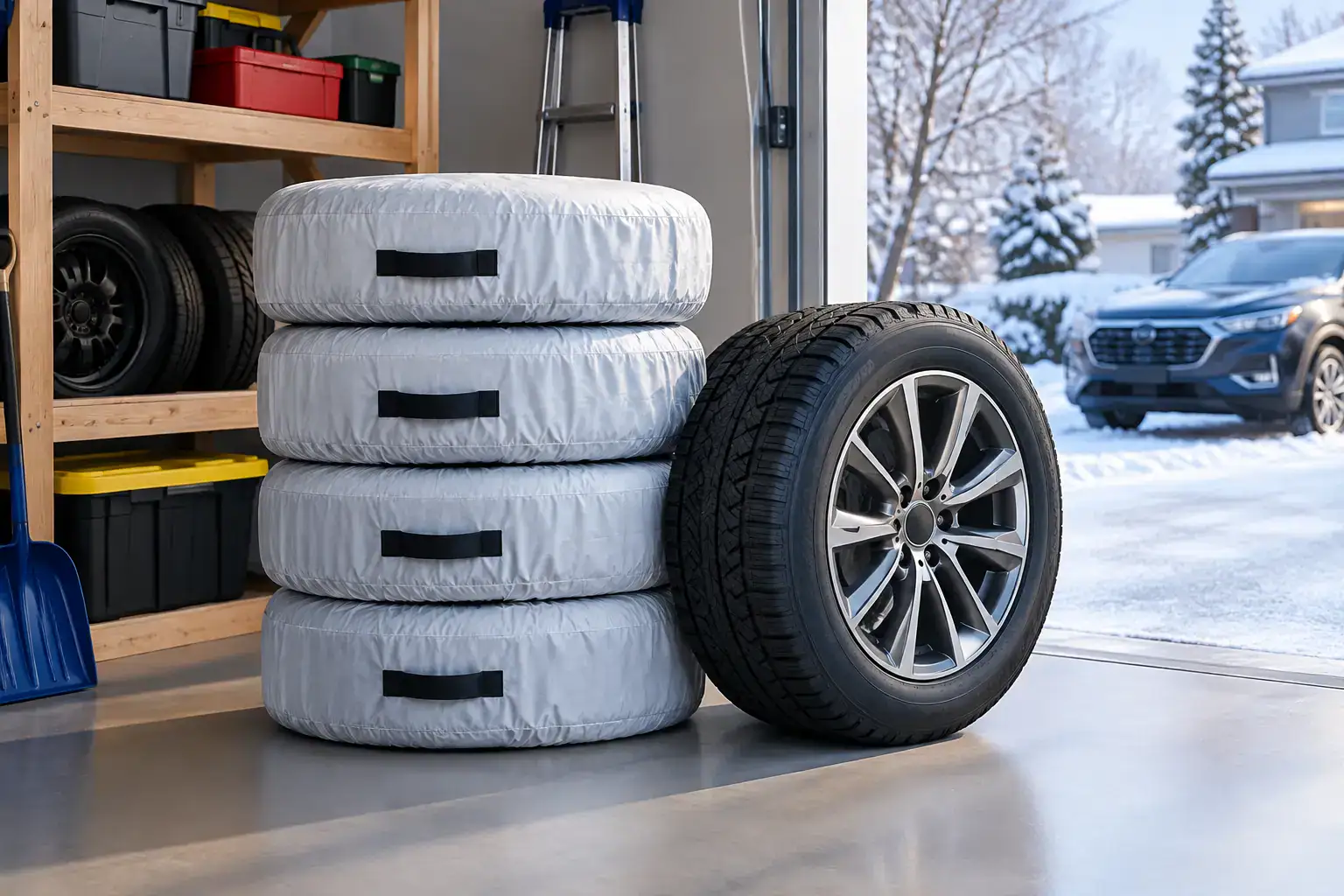
The spring or fall tire changeover is more than a quick swap. The set coming off your vehicle may sit untouched for months, and where you put it can affect how it performs when the next season arrives. Knowing how to store seasonal tires safely helps protect your investment, preserve tire shape, and keep your vehicle safe and road-ready when it is time to reinstall them.
A dry, clean, climate-controlled space is ideal, but a good storage routine matters just as much. Whether your tires are mounted on wheels or stored as tires only, a few careful steps can prevent unnecessary aging, moisture damage, and confusion at your next changeover.
Start With a Clean, Labeled Set
Road salt, brake dust, mud, and small stones can remain on tires after a season of driving. Leaving that buildup in place for months is not a good idea, especially after a Canadian winter. Before storing your tires, rinse them with water and use mild soap if needed. Avoid harsh cleaners, petroleum-based dressings, or products that leave a shiny coating behind. They can contain chemicals that are not suited to long-term rubber care.
Let each tire dry completely before it goes into a bag or storage area. Trapped moisture can encourage corrosion on wheels and create a damp environment around the tire. Check the tread at the same time. Remove stones caught in the grooves, look for cuts or bulges, and note any uneven wear. These details can point to an alignment, balance, inflation, or suspension issue worth addressing before the tires go back on the vehicle.
Label the position of each tire as you remove it: front left, front right, rear left, and rear right. A piece of masking tape on the wheel or a simple tag works well. Keeping track of position makes future tire rotation easier and helps a technician understand an existing wear pattern.
Choose a Storage Space That Protects Rubber
Tires last best in a space that is clean, dry, and reasonably cool. A finished basement, dedicated storage room, or temperature-stable garage is usually a better choice than an uncovered outdoor area. Direct sunlight is one of the biggest concerns because ultraviolet exposure gradually dries and weakens rubber. Heat also speeds up tire aging.
Keep tires away from electric motors, furnaces, water heaters, welding equipment, or other sources of ozone and heat. Ozone is a gas that can contribute to surface cracking over time. It may be present around certain electrical equipment, so giving tires their own clear storage area is a practical precaution.
A garage can work well if it stays dry and does not become extremely hot. An unheated shed may be less suitable when it experiences large temperature swings, standing water, or direct sun. Storage conditions do not need to be perfect, but avoiding the worst conditions makes a meaningful difference over several months.
Bag Tires Before Putting Them Away
Once the tires are clean and dry, place each one in a large opaque plastic bag designed for tire storage or a clean heavy-duty yard bag. Remove as much air as you reasonably can, then seal the bag with tape or a tie. The goal is to limit exposure to air, sunlight, dust, and moisture.
Opaque bags are better than clear bags because they block light. Do not use a bag if the tire is still damp, and do not apply tire shine before sealing it. If your tires are mounted on alloy or steel wheels, bagging is especially helpful because it keeps dust and moisture off the wheel finish.
A tire cover is another option when fully sealed bags are impractical. Covers protect against light and dust, although they do not create the same enclosed environment. For short-term storage in a clean indoor space, either method can be reasonable.
Store Mounted and Unmounted Tires Differently
The best position depends on whether the tires are mounted on wheels.
Tires mounted on wheels
Mounted tires can be stacked horizontally, one on top of another. This is often the easiest arrangement for a full set. Place a piece of clean cardboard, rubber mat, or wood between the floor and the bottom tire to keep the stack off concrete and away from moisture. If space allows, a tire rack that supports the wheels can also work well.
Mounted tires may also be hung from a wall-mounted rack or stored upright. If you stack them, avoid making the stack excessively high or placing heavy items on top. Four passenger vehicle tires are generally manageable as one stack, but wider light truck tires can be heavier and less stable. Use your judgment and prioritize a setup that will not tip or create a lifting hazard.
Tires without wheels
Tires stored without wheels should stand upright, side by side, rather than stacked. Rotate them slightly every few weeks or once a month if they will be stored for an extended period. This helps reduce the chance of a tire developing a flat spot or becoming distorted from sitting in one position.
Do not hang unmounted tires from hooks. Their weight can place stress on the tire and affect its shape over time. Keep them upright on a clean, dry surface and avoid squeezing them tightly between heavy objects.
Keep Tires Off Bare Concrete When Possible
Concrete floors are common in garages and basements, and they are not automatically harmful to tires. The larger concern is moisture, dirt, and chemical residue on the floor. A barrier such as cardboard, plywood, a storage mat, or a low tire rack creates a cleaner buffer between the tires and the ground.
Do not store tires near gasoline, oil, solvents, paint, or cleaning chemicals. Even sealed containers can leak fumes or residue. Tires should also stay away from sharp tools, loose metal, and areas where they could be bumped by bicycles, lawn equipment, or boxes.
If you have children or pets, choose a location where the tire stack cannot roll or fall. Tires are awkward and heavier than they look, particularly when mounted on wheels.
Check Tire Pressure and Age Before Reinstalling
For a set stored on wheels, it is a good idea to check air pressure before putting it away and again before installation. Tires can lose some pressure naturally while sitting. Inflate them according to the vehicle placard or the tire professional’s recommendation when they are ready to return to service, not according to the maximum pressure printed on the tire sidewall.
When the season changes again, inspect every tire before reinstalling it. Look for cracking, cuts, sidewall damage, embedded objects, and unusual tread wear. Measure tread depth if you are unsure whether the tires still have enough life for the season ahead. Winter tires, in particular, need sufficient tread to clear snow and slush effectively.
Also consider tire age. A tire can look acceptable on the outside while the rubber has hardened with time. The date code on the sidewall can help identify when it was manufactured. If you are uncertain about condition, a tire professional can inspect the set and advise whether it remains suitable for service.
When Professional Tire Storage Makes Sense
Home storage is convenient when you have a dry, protected space and can move the tires safely. Professional seasonal storage can be a better fit for apartment residents, drivers with limited garage space, or anyone who would rather not lift and transport a heavy tire set twice a year.
It can also simplify a seasonal appointment. A service team can inspect the tires during the changeover, check tread and wear patterns, balance them if needed, and make sure the correct set is ready for the next season. For drivers in Toronto and the GTA, Migo Tire can help with seasonal tire service alongside selection, installation, and maintenance needs.
Your tires do a demanding job in every season. Giving the off-season set a clean, dry, protected place to rest is one small habit that helps it return ready for the road ahead.


