
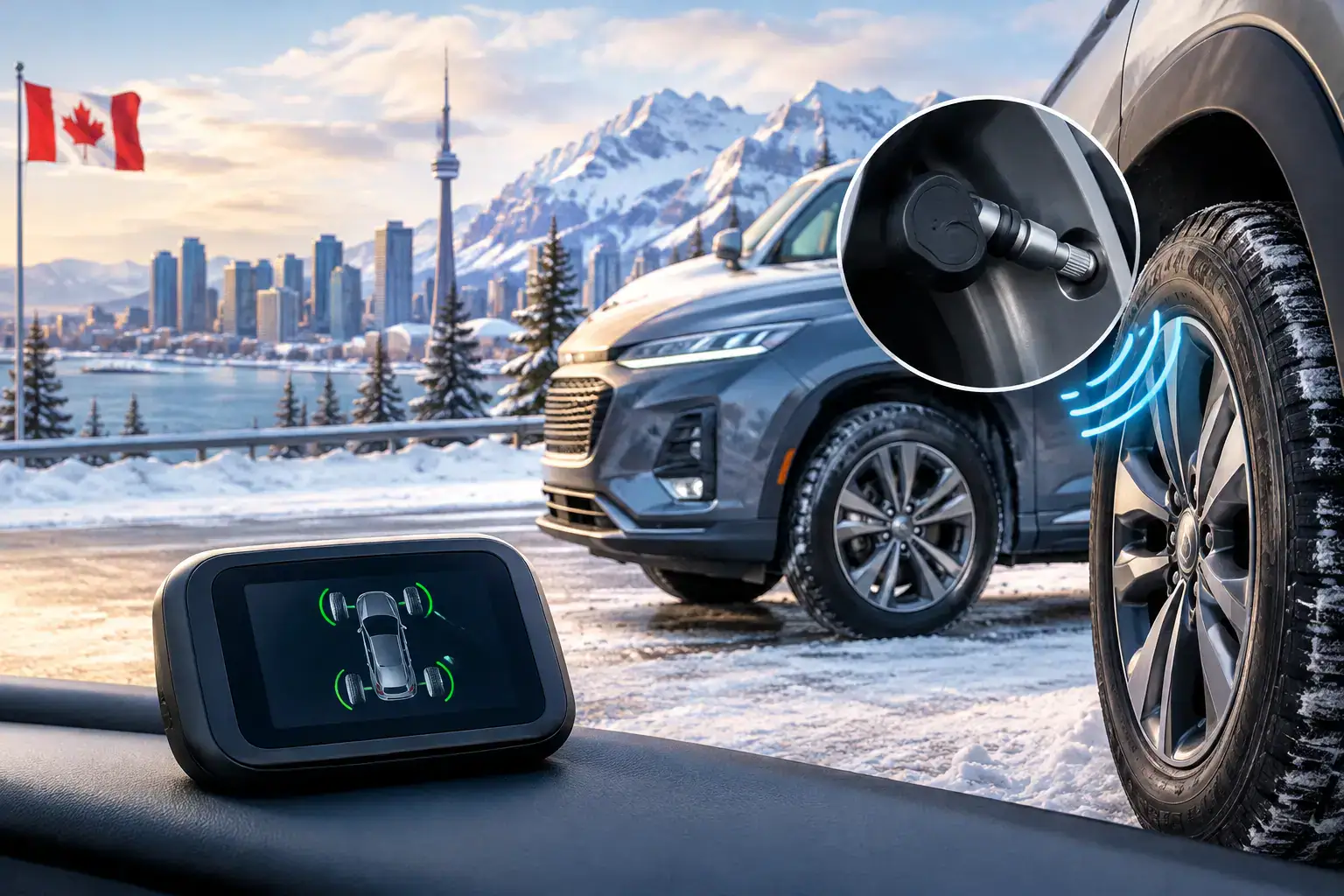
A tire pressure warning light can appear on an ordinary commute, just before a highway trip, or during the first cold snap of the season. That small symbol is easy to ignore when the vehicle still feels normal, but it is often the first sign that one or more tires need attention. This tire pressure monitoring guide explains what your vehicle is telling you, how to check pressure correctly, and when a professional inspection makes sense.
What Your Tire Pressure Monitoring System Does
Your Tire Pressure Monitoring System, often called TPMS, alerts you when tire pressure drops below a level set by the vehicle manufacturer. The system is a safety feature, not a replacement for regular tire checks. It can warn you about a developing problem, but it cannot tell you whether a tire has uneven wear, hidden damage, or a slow leak that has not yet triggered the light.
Most passenger vehicles use one of two TPMS designs. Direct TPMS uses sensors inside each wheel to measure pressure. These sensors send readings to the vehicle, and some dashboards show the pressure for each tire individually. Indirect TPMS does not measure air pressure directly. Instead, it uses wheel-speed data to identify a tire rotating differently from the others, which can happen when it loses air.
Both systems are useful, although they work differently. Direct systems usually provide more specific information. Indirect systems may need to be reset after adjusting pressure, rotating tires, or changing seasonal tire sets. Your owner’s manual will explain which system your vehicle uses and how its reset procedure works.
Understanding TPMS Warning Lights
A steady tire pressure warning light generally means at least one tire is underinflated. Pulling over immediately is not always necessary, but you should check the tires as soon as it is safe to do so. Look for a visibly low tire, obvious damage, or a nail or screw in the tread. If a tire looks flat, do not continue driving on it.
If the light flashes for a short time when you start the vehicle and then stays on, the issue may be with the TPMS itself rather than tire pressure. A weak sensor battery, damaged sensor, lost sensor programming, or a system fault can cause this behavior. Pressure should still be checked manually, because a TPMS fault means the vehicle may not reliably warn you about low tires.
Do not assume that all four tires are fine because none look low. Modern tires can lose a meaningful amount of air and still appear normal, especially when viewed from the side. A quality gauge is the reliable way to confirm actual pressure.
Check Tire Pressure When Tires Are Cold
The correct pressure for your vehicle is found on the tire information label, usually located on the driver’s door jamb. It may also appear inside the fuel door or in the owner’s manual. Use the pressure listed on that label, not the maximum pressure molded into the tire sidewall. The sidewall number is a tire limit, not the recommended operating pressure for your vehicle.
Check pressure when the tires are cold, meaning the vehicle has been parked for at least three hours or driven only a short distance at low speed. Driving warms the tires and raises the pressure, which can give you an inaccurate reading.
Remove the valve cap, press the gauge firmly onto the valve stem, and note the reading. Add or release air as needed, then recheck it. Repeat this for all four tires, and check the spare if your vehicle has a full-size spare that will be used on the road.
For many drivers, a monthly pressure check is a sensible routine. Check again before a long road trip, when carrying unusually heavy cargo, and after a major temperature change. These small checks help protect fuel efficiency, handling, tread life, and ride comfort.
Why Cold Weather Triggers the Light
Air contracts as temperatures fall. A tire that was set correctly during mild weather can become underinflated after a cold night, which is why TPMS alerts are common in fall and winter.
As a general rule, tire pressure changes by about 1 psi for every 10 degrees Fahrenheit of temperature change. The exact result varies, but the pattern is predictable: colder weather lowers pressure, while warmer weather raises it. Do not inflate tires above the door-jamb recommendation simply to prevent a seasonal warning light. Set the pressure to the vehicle’s recommended cold specification, then recheck it as temperatures stabilize.
What Low Tire Pressure Can Do to Your Tires
Underinflated tires flex more as they roll. That extra flex creates heat and can make the vehicle feel less responsive, particularly during turns, braking, and highway driving. It can also accelerate wear along the outer edges of the tread.
Low pressure may reduce fuel economy because the tire rolls with more resistance. More importantly, prolonged underinflation can increase the risk of tire damage, especially when the vehicle is heavily loaded or driven at higher speeds.
Overinflation has trade-offs, too. A tire with too much air can deliver a harsher ride and may wear more quickly through the center of the tread. It can also have less ability to absorb impacts from potholes and rough pavement. The goal is not to use the highest pressure possible. It is to maintain the pressure specified for your vehicle and load conditions.
Tire Pressure Monitoring Guide for Seasonal Tire Changes
Seasonal tire changes are an ideal time to inspect TPMS components. If you switch between winter and all-season or summer tire sets, the sensors in the installed wheels need to communicate properly with your vehicle. Depending on the vehicle, this may happen automatically after driving, or it may require a relearn or reset procedure.
If your winter wheels do not have sensors, the TPMS light may remain on throughout the season. That does not mean pressure no longer matters. It means you should make manual checks part of your regular routine. A basic tire gauge and an air source are especially helpful when temperatures move up and down quickly.
Ask for the valve stems, sensors, and wheel sealing surfaces to be inspected during tire installation. Sensors are exposed to moisture, road salt, and everyday wear. A small valve or seal issue can cause a gradual loss of air that is easy to miss until the warning light comes on.
When a Pressure Warning Needs Service
Adding air may solve an occasional seasonal pressure drop. But if the same tire repeatedly loses pressure, there is likely a reason. It could be a puncture, a leaking valve stem, corrosion around the wheel bead, wheel damage, or a tire that has been compromised by an impact.
Schedule an inspection if the warning light returns within days, if you need to add air repeatedly, or if you notice vibration, pulling, bulges, cuts, or uneven tread wear. Avoid relying on tire sealant as a permanent answer. Some sealants can complicate repairs and may affect TPMS sensors, depending on the product and the vehicle.
A proper tire service should identify the source of the leak, assess whether the tire can be repaired safely, and confirm that the wheel balances and seals correctly. If pressure loss is tied to uneven wear, an alignment or suspension concern may also need attention.
Make Pressure Checks Part of Regular Vehicle Care
TPMS gives drivers an early warning, but the best results come from pairing that warning with a simple maintenance habit. Keep a tire gauge in the glove box or garage, check all four tires once a month, and use the driver-door label as your reference point. This takes only a few minutes and helps you catch small problems before they interrupt a trip.
For drivers managing seasonal tire sets, family vehicles, daily commutes, or light-truck loads, consistent pressure is one of the easiest ways to keep tires safe and road-ready. If a warning light keeps returning or a tire does not hold pressure, a qualified tire technician can help find the cause and get you back to driving with confidence.


