
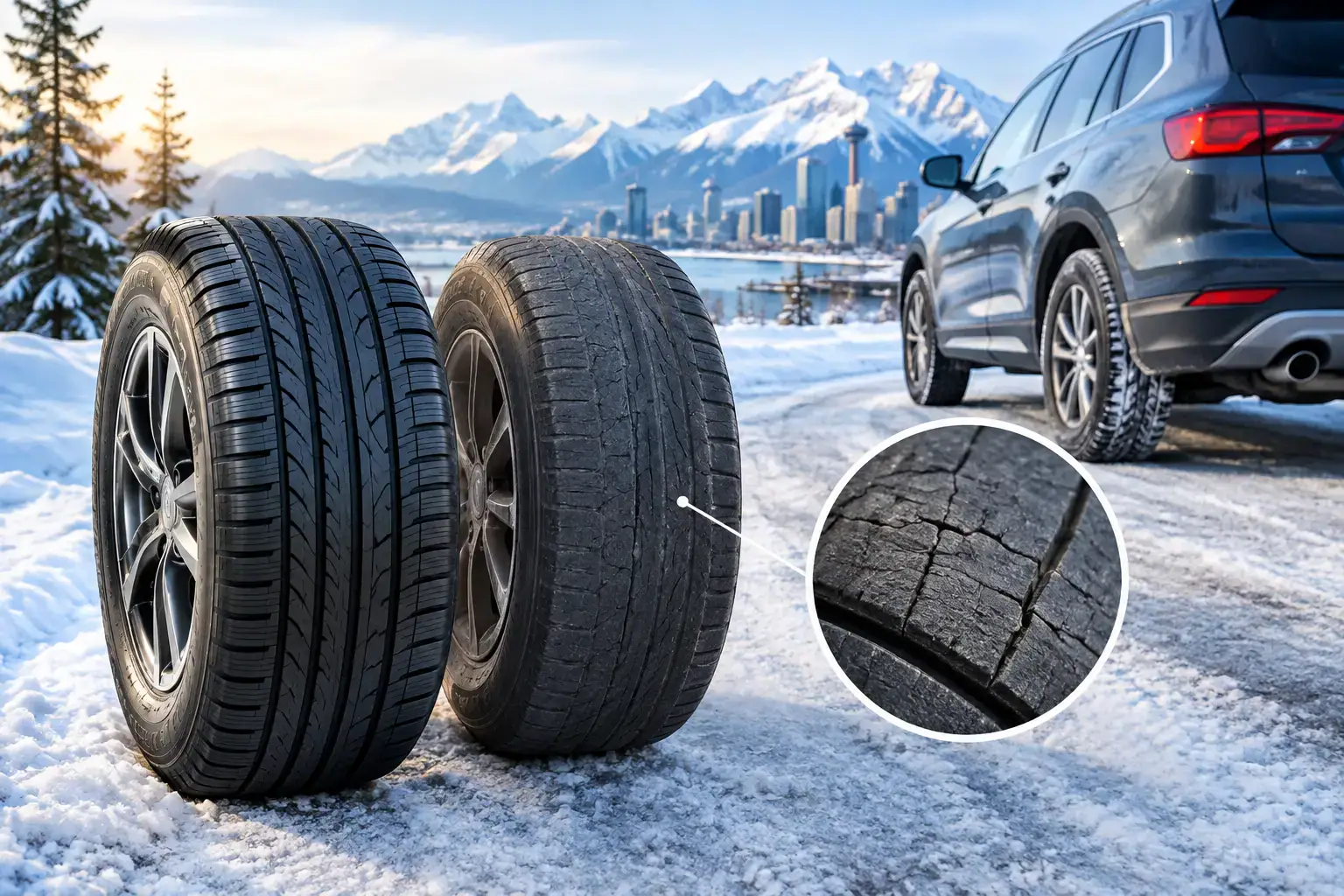
A tire can look perfectly usable at a glance and still be past its best. Tire aging changes the rubber from the inside out, often before the tread has worn down. For drivers who put on fewer miles, keep a second vehicle, or store seasonal tires, age can matter just as much as mileage when deciding whether tires are still safe and road-ready.
What Is Tire Aging?
Tires are made from rubber compounds, steel belts, fabric reinforcements, and bonding materials designed to work together under heat, load, and road stress. Over time, the rubber slowly loses flexibility. Oxygen, sunlight, temperature changes, and heat all contribute to that process.
As rubber hardens, it may not grip the road as effectively, especially in rain, slush, snow, or cold temperatures. The tire can also become more vulnerable to cracks and internal separation. This is why tread depth alone does not tell the full story. A tire with deep grooves may still need replacement if its rubber and internal structure have deteriorated.
For Canadian drivers, this is especially relevant with winter tire sets. A set that is only driven for a few months each year may retain plenty of tread, but several years of summer storage, temperature swings, and normal aging can reduce its performance when winter returns.
What Speeds Up Tire Aging?
Age is unavoidable, but how a tire is used and stored makes a real difference. Tires that spend most of their lives in moderate temperatures and protected from direct sunlight generally age more slowly than tires exposed to heat and weather every day.
Heat is one of the biggest factors. Long highway drives, repeated heavy loads, underinflation, and hot pavement create extra heat within the tire. That heat can accelerate chemical changes in the rubber and put more stress on the tire’s internal components. Underinflation is particularly harmful because it allows the sidewalls to flex more than intended.
Sunlight and ozone also affect rubber. Tires stored outdoors, parked in the same exposed spot for long periods, or kept near equipment that produces ozone can develop surface cracking sooner. Road salt, oils, cleaners, and other contaminants may also affect the appearance and condition of the rubber over time.
Storage conditions matter for seasonal tires. A clean, dry, cool space away from direct sunlight is preferable. Tires should be cleaned before storage to remove road grime and salt, then kept away from heat sources. Proper storage will not stop tire aging, but it can help slow unnecessary deterioration.
How to Check for Signs of Aging
A quick visual inspection is useful, but it should be done carefully. Start with the sidewalls and tread area in good lighting. Look for small cracks in the rubber, particularly around the sidewall lettering, between tread blocks, and in the grooves. Fine surface cracks do not always mean immediate failure, but they deserve professional attention because they can indicate that the rubber is drying out.
Also watch for bulges, cuts, exposed cords, uneven wear, or sections of tread that look raised or distorted. These concerns are more urgent than normal aging and should be inspected promptly. A bulge can point to internal damage, while a separated belt can affect handling and lead to a sudden tire failure.
Do not rely only on appearance. An older tire may have no obvious cracks but still be less flexible than it once was. If the vehicle feels less stable, vibrates at speed, pulls to one side, or loses traction more easily than expected, schedule an inspection. Those symptoms can have several causes, including balance, alignment, suspension issues, or tire damage, so it is best not to guess.
Find the Tire’s Date Code
Every tire has a Department of Transportation, or DOT, code molded into the sidewall. The last four digits show the week and year the tire was manufactured. For example, a code ending in 2423 means the tire was made in the 24th week of 2023.
The full code may appear on only one side of the tire, so you may need to look at the inner-facing sidewall. This date is not an automatic expiration date. How the tire was stored, maintained, and used still matters. However, it gives you essential context when assessing an older set of tires or buying a used vehicle with tires that have plenty of visible tread.
When Should Aging Tires Be Replaced?
There is no single answer that applies to every tire. Replacement depends on the tire’s condition, its manufacturing date, its use, and the vehicle it is installed on. A lightly used tire that was properly stored may remain in good condition longer than a tire of the same age that spent years outdoors or ran underinflated.
That said, older tires should be inspected more frequently, even if their tread depth looks good. Many vehicle and tire manufacturers advise closer evaluation once tires reach several years of service and recommend replacing tires that have reached an advanced age regardless of remaining tread. Your vehicle owner’s manual and the tire manufacturer’s guidance are useful references, but an in-person inspection provides a clearer picture of the tire in front of you.
Be more cautious when tires are used on family vehicles, long-distance commuters, light trucks carrying loads, or vehicles that regularly travel at highway speeds. These uses place greater demands on the tire. The same is true for winter tires, where flexible rubber is essential for cold-weather grip. An aged winter tire can have legal tread depth and still deliver less confidence on icy or snowy roads.
Tread Depth and Tire Age Are Different Safety Checks
Tread depth determines how well a tire can channel water, snow, and slush away from the contact patch. Tire age affects the rubber’s ability to flex and grip. Both are important, and neither replaces the other.
A tire can fail the tread-depth test while still being relatively new if it has been driven hard or poorly aligned. It can also pass the tread-depth test while being too old or too cracked for dependable use. This is why a proper tire inspection includes tread condition, sidewall condition, air pressure, wear pattern, repair history, and age.
If you use separate winter and all-season or summer sets, label each set with the season and year it was first installed. This simple habit makes it easier to track how long the tires have been in service and helps avoid assuming low mileage means low risk.
Simple Habits That Help Tires Last
Regular maintenance cannot make an aging tire new again, but it can prevent avoidable stress. Check inflation pressure at least once a month and before longer trips, using the pressure listed on the vehicle placard rather than the maximum pressure shown on the tire sidewall. Rotate tires at the intervals recommended for your vehicle, and have alignment checked if you notice uneven wear or a change in steering feel.
Avoid overloading the vehicle and address punctures, vibration, or impact damage quickly. Hitting a deep pothole or curb can damage a tire internally even when the outside looks mostly normal. For seasonal storage, keep tires clean, dry, covered from light, and away from high heat.
Get a Professional Opinion When You Are Unsure
Tire aging is easy to overlook because it develops gradually. A professional inspection can help separate harmless surface marks from cracking or structural concerns that call for replacement. It can also identify uneven wear, improper inflation, and alignment issues that may shorten the life of your next set.
If you are unsure whether your current tires are still suitable for another season, bring the vehicle or the tire set in for an assessment. Migo Tire can help you check condition, confirm proper fitment, and choose replacement tires that match your vehicle, driving needs, and the weather you face. A little attention now can make the next rainy commute, highway trip, or winter morning feel far more predictable.


