
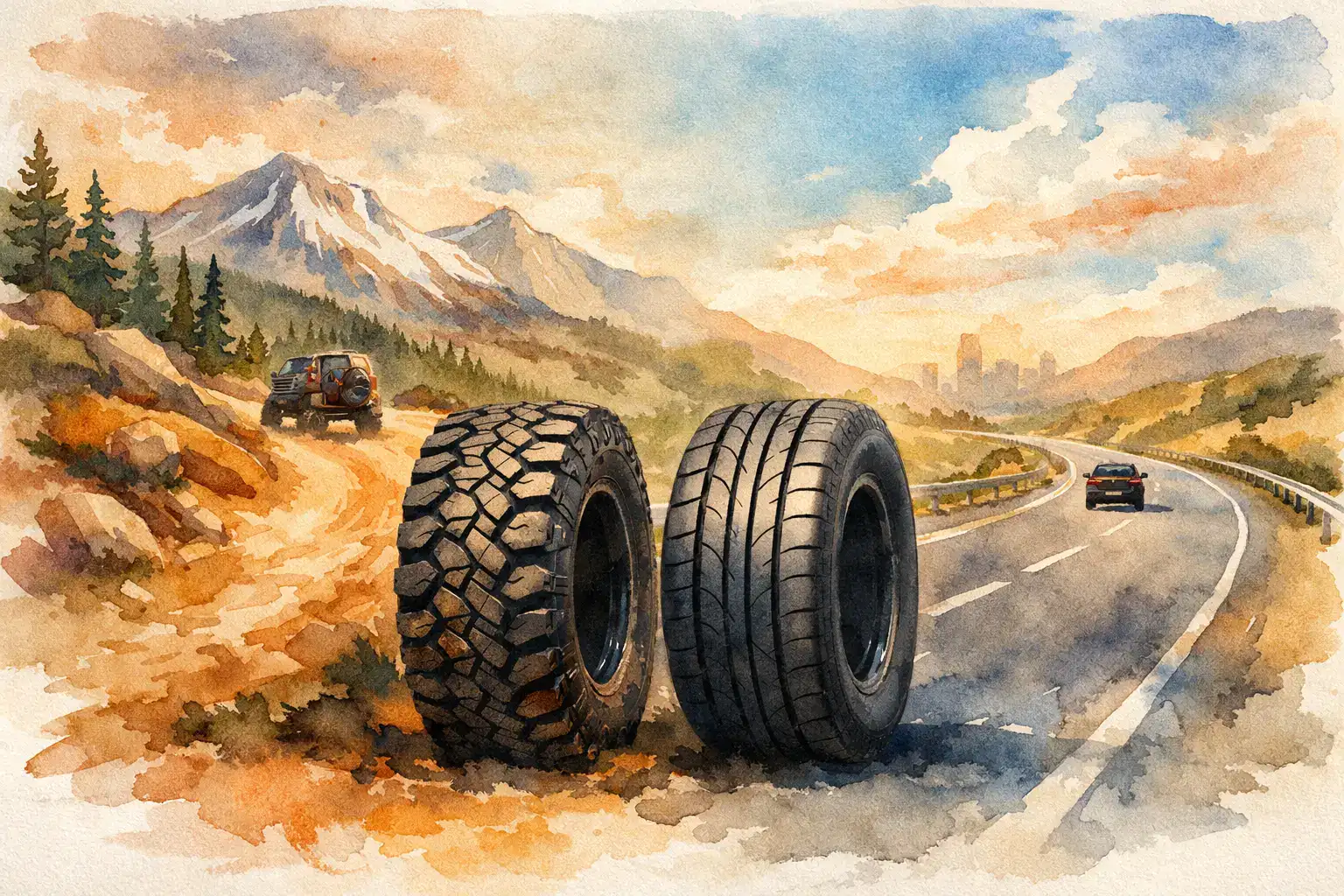
A tire choice can change how your vehicle feels every day. In the all terrain vs highway tires decision, the right answer comes down to where you actually drive, how much comfort you expect, and whether off-pavement traction is a regular need or an occasional one. For many drivers, the best tire is not the most aggressive-looking option. It is the one that keeps the vehicle safe, quiet, and dependable on the roads they use most.
All Terrain vs Highway Tires: The Main Difference
All-terrain tires, often marked A/T, are built to handle a mix of paved roads and unpaved surfaces. Their tread blocks are larger and more open than a typical road tire, helping them find grip on gravel, dirt, mud, and loose terrain. They are a common choice for pickups, SUVs, and drivers who regularly travel to job sites, campsites, trails, or rural properties.
Highway tires, sometimes called H/T tires, are designed primarily for pavement. They usually have a more closely packed tread pattern, which creates a smoother ride, lower road noise, and more consistent handling during daily driving. Many trucks and SUVs leave the factory with highway tires because most owners spend the majority of their miles on streets and highways.
Neither type is automatically better. An all-terrain tire gives up some on-road refinement for added versatility. A highway tire gives up some loose-surface grip in exchange for quieter, more efficient everyday driving.
When All-Terrain Tires Make Sense
All-terrain tires are a practical fit when pavement is only part of your routine. If you drive on maintained gravel roads, travel through construction areas, pull into fields, or take your truck on outdoor trips, the extra traction can make a noticeable difference. The more open tread helps clear loose material instead of packing it between the grooves.
They can also give a truck or SUV a more capable look, but appearance should be secondary to driving needs. A deeper, more aggressive tread can be useful on wet grass, uneven dirt, and rocky access roads. It may also offer better protection from minor cuts and chips than a road-focused tire, depending on the tire’s construction.
That said, an A/T tire is not the same as a dedicated mud-terrain tire. Most all-terrain models are designed to remain comfortable and stable on pavement while providing meaningful off-road capability. They are a strong middle ground for drivers who need one set of tires to cover work, family travel, and weekend use.
Trade-offs of all-terrain tires
The same tread design that helps on loose surfaces can create more sound on the highway. Some all-terrain tires produce a noticeable hum, especially as they wear. Ride quality can feel firmer, and fuel economy may drop slightly compared with a similar-size highway tire because of increased rolling resistance and tire weight.
Tread life varies by model and driving habits. Frequent towing, heavy loads, hard acceleration, and missed rotations can wear an A/T tire unevenly. Regular rotations, proper inflation, balancing, and alignment help protect the investment and keep the vehicle handling predictably.
When Highway Tires Are the Better Choice
Highway tires are usually the sensible option for drivers who stay on paved roads nearly all the time. They are well suited for commuting, family errands, long interstate trips, and light truck work that does not require traveling over loose or rough terrain. Their tread is engineered for stable pavement contact, which often translates to a calm, controlled driving feel.
For a pickup used as a daily driver, a highway tire can provide a more car-like experience. Road noise is generally lower, steering response can feel more direct, and long trips may be more comfortable for everyone in the cabin. Many highway tires are also designed for solid wet-road performance, with channels that move water away from the contact patch to reduce the chance of hydroplaning.
A highway tire can be especially appealing if you use your truck or SUV for towing on pavement. A properly rated H/T tire can provide stable handling and reliable load support, as long as its load range and capacity match your vehicle and trailer requirements. Always check the tire placard, owner’s manual, and the tire’s load rating before making a selection.
Trade-offs of highway tires
Highway tires are not built for serious off-pavement use. A gravel driveway or a packed dirt parking area is usually no problem, but deep mud, loose sand, sharp rocks, and uneven trails can quickly exceed their intended purpose. The tighter tread can fill with mud or debris, reducing traction when conditions get messy.
If your schedule includes frequent driving on unpaved roads, a highway tire may wear faster from stone chips or leave you wishing for more grip. In that case, an all-terrain tire may be the more dependable long-term choice, even if it is slightly louder during the commute.
Compare Traction, Comfort, and Cost
The simplest way to compare these tire types is to think about the miles you drive in a typical month. If roughly 90 percent of those miles are paved, highway tires will often give you the comfort and efficiency you want. If dirt roads, gravel, job sites, or recreational travel are a regular part of that month, all-terrain tires may justify their compromises.
In dry pavement conditions, both can perform well when properly inflated and maintained. Highway tires often have the edge in quietness and crisp on-road feel. On loose gravel and dirt, all-terrain tires typically provide more confidence. Wet-road performance depends heavily on the specific tire model, tread depth, and condition, so category alone should not decide the purchase.
Cost is also more than the price shown on the tire. Consider expected tread life, fuel use, the driving comfort you value, and whether a tire will prevent you from needing a second set for occasional off-pavement use. The cheapest tire is not always the best value if it does not match the work your vehicle needs to do.
Check Fitment Before You Choose
Choosing between A/T and H/T tires starts with the right fitment. Use the size listed on the tire sidewall or on your vehicle’s door-jamb placard, then confirm the proper load index and speed rating. Trucks and SUVs often have multiple acceptable tire options, but changing size or construction without checking clearance, load capacity, and manufacturer guidance can affect handling, braking, and speedometer accuracy.
If you tow, haul equipment, or carry a full passenger load, pay close attention to load requirements. A more aggressive all-terrain tire is not automatically better for heavy-duty work if its load rating does not meet your needs. Likewise, a comfortable highway tire must still have the capacity to safely support your vehicle when it is fully loaded.
It also helps to consider the weather where you drive. Some all-terrain tires carry a Three-Peak Mountain Snowflake rating for severe snow service, while others do not. A highway tire may be excellent in rain and dry conditions but less capable in winter weather. Drivers who regularly face ice and deep snow may need a dedicated winter tire regardless of whether they choose A/T or H/T tires for the rest of the year.
Get More From Either Tire Type
Once you select the right category, maintenance determines much of its performance. Check inflation pressure at least once a month and before long trips, using the vehicle manufacturer’s recommended cold pressure rather than the maximum pressure printed on the tire sidewall. Uneven wear, vibration, pulling to one side, or a sudden change in road noise are signs to schedule an inspection.
Regular tire rotation helps spread wear across all four tires, particularly on trucks and SUVs that carry uneven loads or have four-wheel drive. Balancing supports a smoother ride, while alignment service helps prevent premature edge wear. At Migo Tire Corp., proper selection can be paired with installation and ongoing tire care, making it easier to keep your vehicle road-ready after the purchase.
Your tires should fit the life you lead, not just the look you want. Choose highway tires when pavement comfort, quiet travel, and everyday efficiency matter most. Choose all-terrain tires when your plans regularly take you beyond the pavement and you want more traction when the surface changes.


