
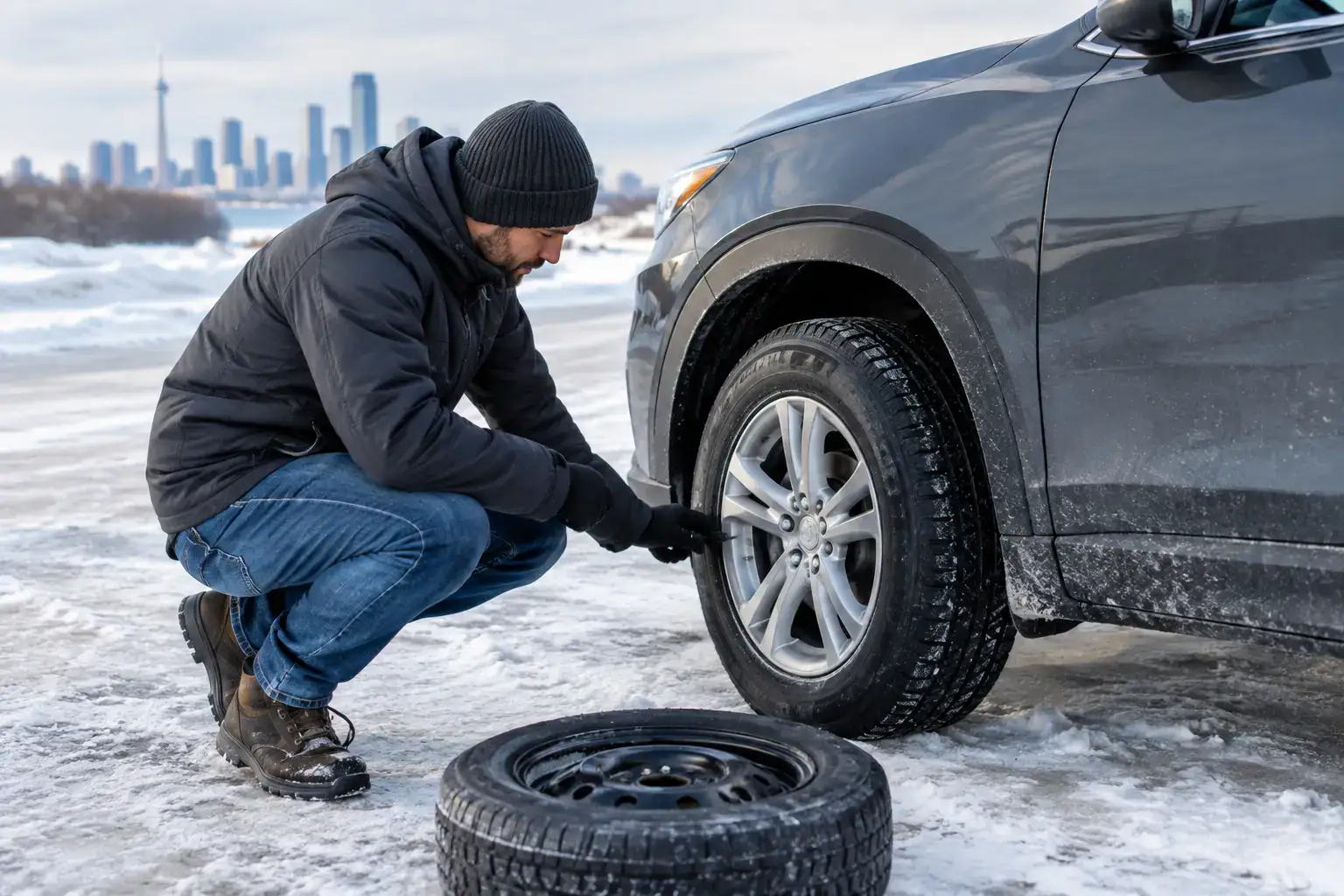
A nail in one tire can turn a normal commute into a frustrating question: can I install one tire and get back on the road safely? Sometimes, yes. But a single replacement is only a good choice when the new tire will work properly with the three tires already on your vehicle.
The right answer depends on your vehicle, drivetrain, the condition of your remaining tires, and the type of tire being replaced. Getting it right protects traction, predictable handling, and the components that transfer power to the road.
Can I Install One Tire Safely?
You may be able to replace just one tire when the other three tires are relatively new, in good condition, and closely matched in tread depth to the replacement. The new tire should also match the existing tires in size, construction, load rating, speed rating, and general category. For example, replacing one all-season tire with the same all-season model is very different from mixing a new all-season tire with three worn winter tires.
The biggest issue is tread depth. A brand-new tire has deeper tread than a tire that has been driven for thousands of miles. That difference can affect how the vehicle grips wet pavement, responds during braking, and handles in an emergency. On some vehicles, especially all-wheel-drive models, an uneven tire circumference can also put extra stress on drivetrain components.
A qualified tire technician can measure the remaining tread and inspect the tire that needs replacing before recommending one tire, a pair, or a full set. That assessment is more useful than deciding based on appearance alone.
Why Matching Tread Depth Matters
Tread depth is what allows a tire to move water, slush, and loose snow away from the contact patch. When one tire has substantially more tread than the others, it can behave differently in rain or winter conditions. Your vehicle may pull, feel less balanced under braking, or lose traction earlier at one end of the vehicle.
On a two-wheel-drive vehicle, the concern is mainly about keeping traction balanced across the same axle. Tires on the same axle should generally be a close match. If one front tire is replaced, it is often wiser to replace the other front tire as well, particularly when the existing tire has noticeable wear.
For many vehicles, new tires are installed on the rear axle, even if the vehicle is front-wheel drive. That is because stronger rear traction can help reduce the risk of a rear skid on wet roads. Still, tire placement should follow the vehicle manufacturer’s guidance and the technician’s recommendation, especially if your vehicle has staggered tire sizes or a directional tread design.
All-Wheel Drive Requires Extra Care
All-wheel-drive and four-wheel-drive systems are less forgiving of tire differences. These systems rely on all four tires rotating at nearly the same speed. A tire with a larger overall diameter from deeper tread can rotate at a slightly different rate than the others.
Over time, that difference may place unnecessary strain on the transfer case, differential, or other drivetrain parts. Some vehicle manufacturers set very specific limits for acceptable tread-depth differences. If your other tires are moderately worn, replacing one tire with a brand-new version may not be suitable.
In certain cases, a matching tire can be professionally shaved to a tread depth that closely matches the remaining tires. This is a specialized solution, not something to assume is available for every tire or vehicle. If it is not practical, replacing two or four tires may be the safer and more cost-effective decision over the long run.
When Replacing One Tire Makes Sense
A single-tire replacement can be reasonable when damage happens early in the life of a tire set. For instance, if one tire is damaged by a road hazard but the other three have very little wear, the tread-depth difference may be small enough to keep the set properly matched.
It also helps when you can get the exact same tire model. Tire size alone is not enough. Two tires with the same size on the sidewall can have different tread patterns, rubber compounds, handling characteristics, and actual tread depth. Matching the same model provides the most consistent performance.
Before approving a one-tire replacement, check these details:
- The replacement has the same size, load rating, speed rating, and tire type as the existing tires.
- The remaining tires have enough usable tread and do not show irregular wear, cracks, bulges, or sidewall damage.
- The tread-depth difference meets your vehicle manufacturer’s recommendation, particularly for AWD or 4WD vehicles.
- The tire is installed in the correct position for its directional or asymmetric tread pattern.
If the existing tires are close to worn out, replacing only one may save money today but create another replacement decision very soon. A pair or complete set can provide better value when it keeps the vehicle balanced and road-ready for the season ahead.
Do Not Mix Tire Types Just to Replace One
A replacement tire should match more than its dimensions. Avoid mixing summer, all-season, all-weather, and winter tires on the same vehicle unless a tire professional confirms a specific setup is appropriate for your needs.
Winter tires are designed to stay flexible in cold temperatures and to grip snow and ice. Summer tires are built for warm, dry, and wet conditions. All-season tires offer practical year-round use in moderate conditions, while all-weather tires carry winter-focused capability for drivers who want one set through changing seasons. Combining these types can make the vehicle react differently from front to rear, which is not what you want when roads are wet, snowy, or unpredictable.
The same caution applies to different tread designs. A directional tire must rotate in the correct direction to clear water effectively. An asymmetric tire has a designated inside and outside sidewall. Installing or positioning either incorrectly can reduce the performance you paid for.
Check Why the Tire Failed First
Before replacing a damaged tire, find out what caused the problem. A puncture in the tread area may be repairable, depending on its size, location, and the tire’s overall condition. A puncture near the sidewall, a deep cut, a bulge, exposed cords, or damage from driving while flat usually means replacement is necessary.
Uneven wear can point to an issue beyond the tire itself. Wear concentrated on one edge may indicate an alignment concern. Cupping or scalloped wear can be related to worn suspension parts, balance issues, or tire pressure problems. Replacing one tire without addressing the cause can lead to the same problem on the new tire.
A proper inspection should include the tire, wheel, valve area, tread depth, and the other tires on the vehicle. It is also a good time to confirm that tire pressures match the vehicle placard and that the spare tire is ready if your vehicle has one.
Installation Is More Than Mounting a Tire
A replacement tire should be mounted on an appropriate wheel, balanced, and inflated correctly. The technician should also inspect the wheel for damage and reset or relearn the tire-pressure monitoring system when needed. If uneven wear is present, an alignment check can help protect the new tire from premature wear.
For drivers replacing seasonal tires, consistency matters even more. Installing one winter tire among three all-season tires does not give your vehicle true winter traction. If the goal is dependable cold-weather control, use a complete, matched set designed for those conditions.
Choose the Replacement That Protects the Whole Vehicle
One tire can be the right replacement, but only when it matches the rest of the set closely enough for your vehicle and driving conditions. If you are unsure, bring in the tire details, vehicle information, and a clear look at the wear on the other three tires. Migo Tire can help assess fitment, tread condition, and the right next step so your vehicle stays safe and road-ready, not just temporarily repaired.


