
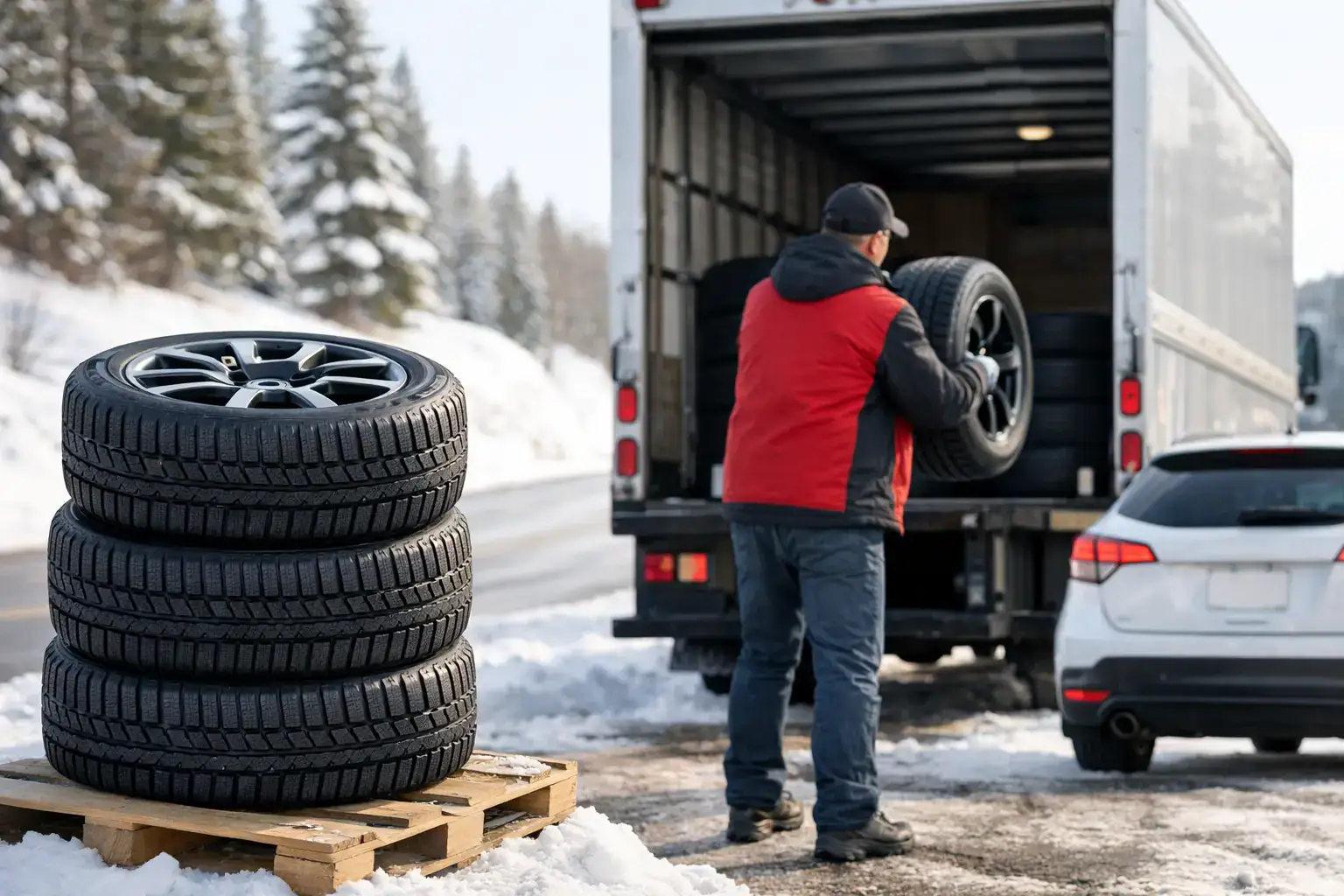
A tire purchase is only convenient when the tires that arrive are the tires your vehicle actually needs. This Canadian tire shipping guide explains what to confirm before placing an online order, how tire delivery typically works across Canada, and how to prepare for installation once your order arrives.
For most drivers, the key is not simply finding a tire that looks right or fits the budget. It is matching the correct size, load capacity, speed rating, and tire type to your vehicle and driving conditions before the shipment is processed. A few minutes spent checking those details can prevent delays, returns, and an inconvenient appointment change.
Start With Fitment Before You Think About Shipping
Shipping cannot fix an incorrect tire order. Before adding tires to your cart, search using your vehicle’s year, make, model, and trim whenever possible. This is often the easiest path for drivers who do not know their tire size.
If you are searching by size, read the information printed on the sidewall of your current tire. A size such as 225/65R17 identifies the tire width, aspect ratio, construction, and wheel diameter. You should also compare the load index and speed rating with the vehicle manufacturer’s requirements. These ratings matter, especially for SUVs, light trucks, EVs, and vehicles that regularly carry passengers or cargo.
Do not assume that two tires with the same wheel diameter are interchangeable. A different width or overall diameter can affect clearance, handling, speedometer accuracy, and wear. If you are moving to a different size, confirm that the change is appropriate for your vehicle before ordering.
Canadian Tire Shipping Guide: What to Confirm at Checkout
Once you have selected the right tires, checkout is where a smooth delivery begins. Enter the delivery address carefully, including apartment, unit, buzzer, or business details when applicable. Tires are substantial items, and incomplete address information can make delivery more difficult than it needs to be.
Review the shipping details shown for your order before payment. Delivery availability and timing can depend on the tire size, quantity, destination, carrier service area, and the location from which the tires are being fulfilled. Remote regions may require more planning than major urban centers, particularly during seasonal rushes.
It also helps to use a contact number and email address you check regularly. Shipping updates, delivery notices, and any questions about an address need a quick response. If you plan to send tires directly to an installer, confirm in advance that the shop accepts customer-shipped tire orders and has room to receive them.
Understand How Tires Usually Arrive
New tires may arrive individually, paired together, or packaged in another practical configuration. The exact presentation can vary by carrier and tire size. A tire may not look like a typical boxed parcel, so make sure someone at the delivery location understands what to expect.
Plan for a safe, accessible delivery spot. Four passenger tires take up more room than many drivers expect, while light truck and larger SUV tires can be especially bulky. Avoid leaving them in a narrow hallway, near a heat source, or where they can block an entrance.
When the order arrives, inspect the shipment promptly. Check the number of tires against your invoice, confirm the sidewall size and specifications, and look for visible shipping damage. Do this before installation. Once tires have been mounted or driven on, resolving an order concern can become more complicated.
Time Your Order Around the Season
Tire shipping is closely tied to Canadian weather. The first sustained cold spell and the first major snowfall often create a rush for winter tire orders and installation appointments. Waiting until the forecast changes can leave you with fewer appointment choices and less flexibility if delivery takes longer than expected.
For winter tires, order before you urgently need them. For summer or all-season replacements, do not wait until tread is severely worn or a tire has become unsafe to use. Ordering early gives you time to verify fitment, arrange installation, and handle any unexpected delivery issue without pressure.
The same approach applies to road trips. If your current tires are near the end of their useful life, replace them before the week of departure. Tires should be installed, balanced, and checked with enough time to address any vehicle concerns that surface during service.
Choose the Right Destination for Your Tires
Home delivery works well when you have space to receive and store the tires until your appointment. It is a practical option for drivers who already have a trusted installer or prefer to compare service schedules on their own.
Shipping directly to a service location can reduce handling, but it requires coordination. Ask the installer whether they accept deliveries in your name, how they identify incoming orders, and how long they can store tires before your scheduled appointment. Confirm that your booking is made for the correct tire size, vehicle type, and service needed.
Toronto and GTA drivers may find it easier to combine purchasing and service through one tire provider. Migo Tire can help customers select appropriate tires and arrange installation-related services, which limits the need to move a full set of tires between locations yourself. For drivers elsewhere in Canada, a little advance planning with a local installer provides the same basic advantage.
Plan for Installation, Balancing, and Seasonal Storage
A delivered tire is not ready for the road until it has been installed correctly. Mounting puts the tire on the wheel, while balancing helps the wheel and tire assembly rotate smoothly. Both are necessary for ride comfort, tire life, and predictable handling.
Ask whether your appointment includes valve service, tire pressure adjustment, and a visual inspection of the wheels. If your vehicle uses a tire pressure monitoring system, make sure the installer knows this when booking. You may also need a wheel alignment check if the old tires showed uneven wear, the vehicle pulls to one side, or you recently hit a pothole or curb.
If you are switching seasonal sets, decide where the removed tires will go. Clean, dry storage away from direct sunlight and extreme heat helps protect tires between seasons. A tire service provider may also offer storage, which can be useful for condo residents, apartment dwellers, and households without garage space.
Know When Shipping May Not Be the Best Next Step
Online ordering is convenient for planned replacement, but it is not always the right response to an urgent tire problem. A sudden flat, sidewall damage, or a tire that cannot hold air may require immediate inspection. Depending on the damage, repair may be possible, but a damaged sidewall generally calls for replacement rather than a patch.
If you are replacing only one tire, confirm whether its size, tread design, and remaining tread depth will work appropriately with the other tires on the vehicle. This is particularly important for all-wheel-drive vehicles, where major tread-depth differences can create drivetrain concerns. In some cases, replacing two or even four tires is the safer and more practical choice.
A Final Check Before You Place the Order
Before submitting payment, take one last look at the tire size, quantity, load and speed ratings, delivery address, and installation plan. Keep your order confirmation until the tires are installed and you have inspected the completed work.
The right tires should arrive with a clear plan behind them: the correct fitment, a safe place to receive them, and a qualified installer ready to put them on the road. That small amount of preparation helps keep your vehicle safe and road-ready when the weather and your schedule change.


