
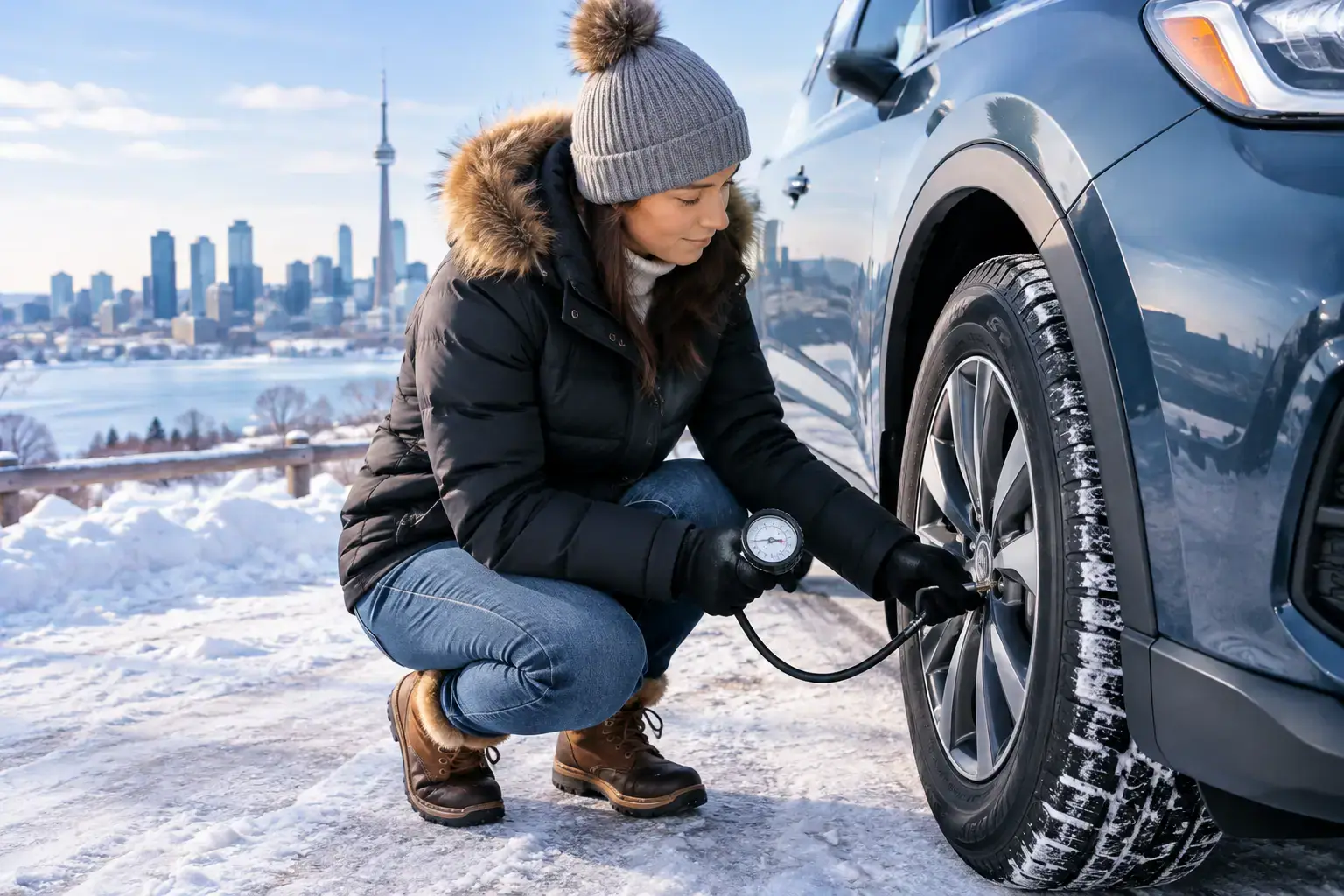
A tire can look perfectly fine and still be underinflated. That is why learning to check tire pressure correctly matters: a few PSI can affect how your vehicle handles, brakes, rides, and uses fuel. It is one of the quickest maintenance checks you can do to help keep your vehicle safe and road-ready.
For most drivers, this takes less than five minutes. The key is using the right pressure number, checking at the right time, and adjusting each tire carefully rather than guessing by appearance.
Find the Correct Tire Pressure for Your Vehicle
Start with your vehicle manufacturer’s recommended cold tire pressure. You will usually find it on a label inside the driver’s door jamb. Depending on the vehicle, it may also appear in the owner’s manual or behind the fuel door. The label typically lists a recommended PSI for the front and rear tires, along with the recommended spare tire pressure if your vehicle has a full-size spare.
PSI means pounds per square inch. Your vehicle may use the same PSI front and rear, but many vehicles call for different pressures because the front axle carries more weight. Follow the numbers shown for your specific vehicle, not a general number you have heard from someone else.
Do not use the maximum PSI molded into the tire sidewall as your everyday target. That number is the tire’s maximum inflation limit, not the pressure your vehicle needs for normal driving. Inflating to the sidewall maximum can create a firmer ride, reduce the tire’s contact patch, and contribute to uneven center tread wear.
The door-jamb label is based on the original tire size and load specification. If you have changed tire sizes, installed light truck tires, or regularly carry heavy loads, the right pressure may require more careful guidance. A tire professional can help confirm a pressure that supports your vehicle, tires, and normal use.
What You Need to Check Tire Pressure Correctly
A simple handheld tire pressure gauge is the most reliable tool for the job. Pencil-style gauges are affordable and easy to store in the glove box, while dial and digital gauges can be easier to read. A portable air compressor or access to an air pump is useful when a tire needs air.
Many newer vehicles also have a Tire Pressure Monitoring System, often called TPMS. This system is helpful, but it should not replace regular manual checks. In many vehicles, the warning light comes on only after a tire has lost a meaningful amount of air. By that point, pressure may already be low enough to affect tire wear, fuel economy, and handling.
Check Tire Pressure When Tires Are Cold
For the most accurate reading, check your tires before driving or after the vehicle has been parked for at least three hours. This is called checking cold tire pressure. Driving creates heat inside the tires, and warm air expands, so a pressure reading taken after a trip can be higher than the true cold pressure.
If you must check after driving, do not release air just because the reading is above the number on the door label. A warm tire may read several PSI higher than its cold pressure. Instead, check again when the tires are cold and make your final adjustment then.
Cold weather makes this especially relevant. Tire pressure commonly drops as temperatures fall, often by about 1 PSI for every 10-degree Fahrenheit decrease in outside temperature. During seasonal temperature swings, a tire that was properly inflated a few weeks ago may no longer be at its recommended pressure.
How to Check Tire Pressure Correctly Step by Step
Park on a level surface, set the parking brake, and have your pressure gauge ready. Check all four tires, even if only one looks low or your TPMS warning identifies one location. Tires can lose air at different rates, and a complete check gives you a clearer picture of your vehicle’s condition.
- Remove the valve cap from the tire valve stem and keep it somewhere clean.
- Press the gauge firmly and straight onto the valve stem until the hissing stops. A brief hiss while positioning the gauge is normal.
- Read the PSI and compare it with the recommended cold pressure on your vehicle placard.
- Add air in short bursts if the tire is low, then recheck with the gauge. If it is overinflated, release a small amount of air and measure again.
- Replace the valve cap securely and repeat the process for every tire, including the spare when applicable.
Take your time with the gauge placement. If you hear a steady leak of air while checking, the gauge is not seated properly, and the reading may be inaccurate. Remove it and try again with a firm, direct press.
How Often Should You Check Tire Pressure?
Check tire pressure at least once a month and before longer road trips. It is also wise to check it when temperatures change sharply, before carrying extra passengers or cargo, and after striking a pothole or curb.
Do not wait for a warning light. A tire can be several PSI low without looking visibly flat, particularly on modern radial tires with stiff sidewalls. Checking monthly gives you the opportunity to catch slow air loss before it turns into uneven wear or a roadside problem.
For drivers who switch between winter and all-season or summer tires, check the pressure shortly after installation and again after the first major temperature change. A proper seasonal tire change is also a good time to inspect tread, sidewalls, valve stems, and wheel condition.
What Low and High Tire Pressure Can Do
Underinflation is the more common issue. A low tire flexes more as it rolls, creating excess heat and causing the outer edges of the tread to wear faster. It can make steering feel less precise, increase fuel use, and reduce the tire’s ability to carry its intended load.
Overinflation has trade-offs too. An overinflated tire can feel harsher over bumps and may wear more quickly through the center of the tread. It may also have less effective contact with the road over uneven surfaces. The goal is not simply to add more air. It is to match the pressure specified for your vehicle.
If one tire repeatedly loses pressure, do not keep topping it up without investigating. A puncture, leaking valve stem, damaged wheel, or tire bead issue may be the cause. A professional inspection can identify the source and determine whether a repair is appropriate.
Common Tire Pressure Mistakes to Avoid
The most common mistake is relying on a visual inspection. Tires can be significantly low before they appear noticeably soft. Another is checking only the tires that are easy to see while overlooking the spare.
Drivers also sometimes use the air pump gauge as their only measurement. These gauges can be convenient, but a separate personal gauge gives you a better way to confirm the reading. Finally, avoid setting the same pressure in every tire unless the vehicle placard specifically calls for it.
If your TPMS light stays on after setting the correct cold pressures, your vehicle may need a short drive to update the system. If the light flashes or remains on, the system itself may need service. The owner’s manual can explain the warning pattern for your specific vehicle.
Keep a Simple Monthly Routine
A quick pressure check works best when it becomes routine. Keep a gauge in your vehicle, check the door-jamb label before you start, and record any tire that needs frequent air. That small habit helps you spot a developing issue early and helps your tires deliver the comfort, traction, and service life they were designed to provide.
When you are unsure about tire condition, a pressure concern, or the right setup after changing tire sizes, a qualified tire service team can inspect the vehicle and help you drive away with more confidence.


