A tire that needs air every few days can turn a normal commute into an avoidable safety problem. Knowing how to fix slow leak issues starts with finding the true source of the pressure loss. A nail in the tread is one possibility, but a leaking valve stem, a damaged wheel, or a poor seal between the tire and rim can cause the same symptom.
Do not ignore a slow leak because the tire still looks usable. Low pressure changes how the tire carries your vehicle’s weight, increases heat buildup, reduces fuel efficiency, and can affect handling and braking. It also causes uneven wear that may shorten the life of an otherwise good tire.
Confirm That You Have a Slow Leak
Tire pressure naturally changes with outdoor temperature. A drop in temperature can lower pressure without any damage to the tire, which is why checking pressure regularly is especially useful when seasons change. Before assuming there is a leak, use a quality gauge to check all four tires when they are cold.
Use the pressure listed on the vehicle’s driver-side door-jamb label, not the maximum pressure molded into the tire sidewall. Record the reading, inflate the tire to the recommended level, and check it again after a day or two. If that same tire keeps losing pressure while the others remain stable, it needs closer attention.
Common signs of a slow leak include a tire pressure warning light that returns after inflation, one tire that looks slightly lower than the others, or a vehicle that pulls or feels less settled in turns. Even if the warning light disappears after adding air, the underlying issue has not necessarily gone away.
Find the Source Before You Try to Fix It
Park on level ground, apply the parking brake, and inspect the tire carefully. Look over the tread for nails, screws, glass, or other objects. Do not pull out an object that is still embedded in the tire. It may be slowing the air loss, and removing it can turn a manageable leak into a rapid flat.
Next, inspect the sidewall for cuts, cracks, bulges, or deep scrapes. Damage in this area is more serious because the sidewall flexes constantly while driving. A sidewall puncture or bulge is not a safe repair situation and usually means the tire must be replaced.
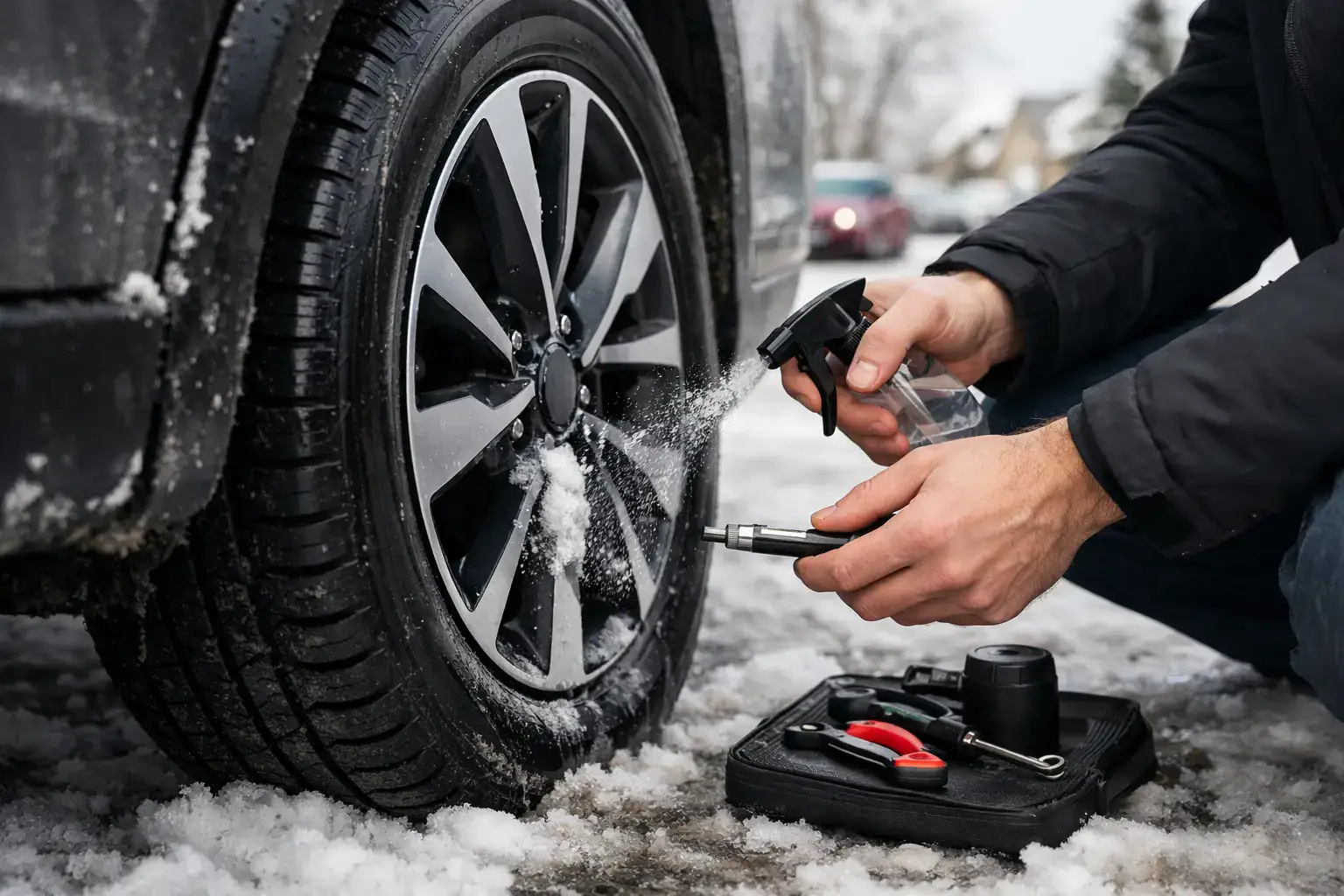
If you cannot see an obvious puncture, mix water with a small amount of dish soap and apply it to the tread, valve stem, and area where the tire meets the wheel. Steady bubbles can reveal escaping air. Check the valve cap as well. The cap does not seal the tire by itself, but a missing cap allows dirt and moisture to reach the valve core, which can contribute to leaks over time.
A leak around the edge of the wheel may point to a bead leak. This is common when corrosion, dirt, or damage prevents the tire from sealing evenly against the rim. Pothole impacts can also bend a wheel enough to create a slow leak, even if the tire appears undamaged.
How to Fix Slow Leak Problems Safely
The right repair depends on the location and cause of the leak. A small puncture in the center portion of the tread is often repairable if the tire has enough remaining tread and has not been driven while severely underinflated. A tire professional should remove the tire from the wheel and inspect the inside before deciding. Internal damage is not always visible from the outside.
For a repairable tread puncture, the dependable approach is an internal repair that seals both the injury path and the inner liner. This is more thorough than inserting a plug from the outside alone. A temporary roadside plug may help in an emergency, but it should not be treated as a permanent solution for daily driving, highway trips, or heavy loads.
If the leak comes from the valve stem or valve core, a technician can replace the faulty part and confirm the seal. This is generally a straightforward service, but vehicles with tire pressure monitoring sensors need extra care. The sensor may be attached to the valve stem, and improper handling can damage it or create another leak.
For a bead leak, the tire usually needs to come off the wheel so the rim and bead area can be cleaned and inspected. If corrosion is minor, proper cleaning and resealing may solve the problem. If the wheel is cracked, heavily corroded, or bent, replacing or repairing the wheel may be necessary before the tire can hold air reliably.
When a Tire Should Not Be Repaired
A repair is not always the best value or the safest choice. A tire should generally be replaced when it has sidewall damage, a puncture near the shoulder, a large or irregular hole, exposed cords, or signs that it was driven flat or nearly flat. Heat and flexing from underinflation can damage the internal structure even when the tire reinflates and looks normal.
Also consider the tire’s overall condition. If the tread is near the end of its useful life, replacing the tire may make more sense than paying for a repair that only delays the next service visit. For all-wheel-drive vehicles, tread-depth differences between tires can matter. If one tire needs replacement, ask a tire professional whether the remaining tires are close enough in wear to remain a suitable match.
Run-flat tires require particular attention. They are designed to support the vehicle for a limited distance after losing pressure, but that does not mean every run-flat tire can be repaired after a puncture. The tire must be inspected according to the manufacturer’s repair guidance and its actual condition.
What to Do Until You Can Get Service
If the tire is losing air slowly and there is no visible sidewall damage, inflate it to the vehicle manufacturer’s recommended cold pressure and arrange an inspection as soon as practical. Recheck the pressure before driving. If it has dropped significantly overnight, avoid a long drive or high-speed travel.
Do not continue adding air week after week without finding the cause. Each low-pressure drive can create more wear and raise the risk of a sudden failure. Avoid aerosol tire sealants unless your vehicle manufacturer specifically allows them and there is no safer option. Sealant can complicate a proper repair, make tire service messier, and may interfere with tire pressure monitoring components.
If the tire is visibly flat, has a bulge, has a sidewall cut, or loses air rapidly after inflation, use your spare tire if it is safe and available, or arrange roadside assistance. Driving on a flat tire can damage both the tire and wheel in a very short distance.
Prevent the Next Slow Leak
A quick monthly pressure check is the simplest habit for catching a slow leak early. Check pressure before long drives and after major temperature changes, and include the spare tire if your vehicle has one. Inspect tires after hitting a pothole or curb, particularly if you notice a new vibration, pulling, or pressure warning.
Keeping valve caps installed, having tires properly mounted and balanced, and booking regular tire inspections can also help prevent small issues from becoming costly ones. During seasonal tire changes, ask for a close look at the wheels, valve stems, tread condition, and any signs of uneven wear.
A slow leak is often fixable, but the safe answer depends on where the air is escaping and how the tire has been used since the problem began. If you are unsure, a qualified tire service team can inspect the tire from the inside, explain your options clearly, and help keep your vehicle safe and road-ready.