
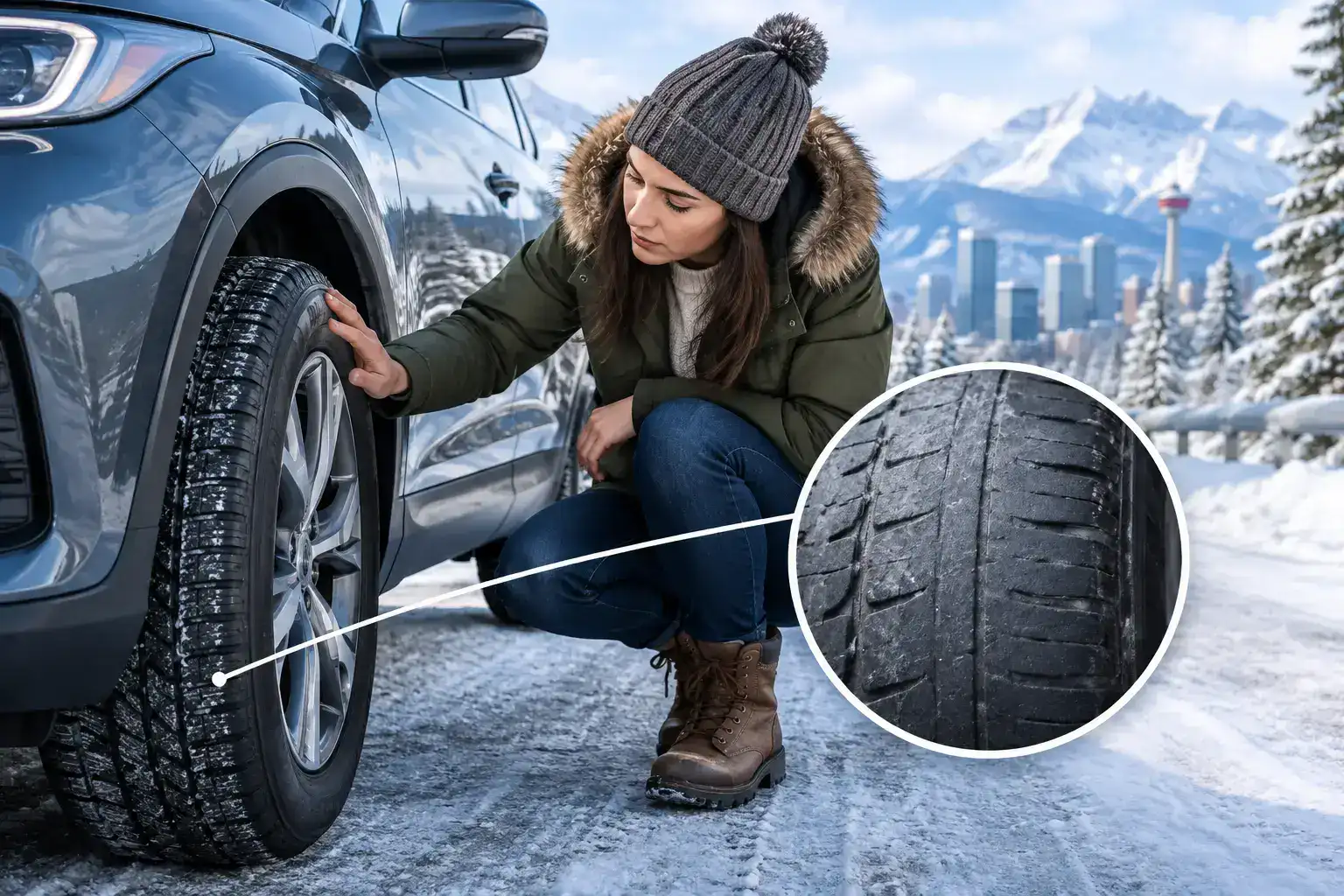
The warning often starts quietly: your car needs more distance to stop in the rain, the steering feels less certain, or a tire that looked fine last month now seems low. Knowing how to identify worn tires gives you time to act before a routine commute, highway trip, or sudden weather change turns a small maintenance issue into a safety concern.
Tires are the only part of your vehicle designed to stay in contact with the road. As their tread wears down or their structure ages, they lose the ability to grip wet pavement, move water away from the contact patch, and respond predictably to steering and braking. A quick visual check helps, but the best assessment combines tread depth, wear pattern, tire age, and how the vehicle feels on the road.
How to Identify Worn Tires at Home
Start with the tread. The grooves in your tire are designed to channel water, slush, and debris away from the rubber. When those grooves become shallow, wet-weather traction can drop quickly, even if the tire still feels acceptable on dry roads.
Most tires have built-in tread wear indicators. These are small raised bars located at the bottom of the main tread grooves. Look along the tire for the small triangle, the letters TWI, or another marking on the sidewall that points to their location. When the surrounding tread is level with these bars, the tire has reached the point where replacement is needed.
A tread-depth gauge is a more reliable way to check. Measure several points across the width of each tire, not just one spot. A tire can have enough tread in the center while being worn down near one shoulder. If you do not have a gauge, the wear bars still provide a clear visual signal that the tire is at the end of its useful tread life.
Do not wait for the wear bars if you regularly drive through heavy rain, slush, or snow. More remaining tread generally provides better grip in poor conditions. This matters especially for winter tires, which need adequate tread depth to maintain their snow traction and water evacuation.
Check every tire, including the spare
Front and rear tires often wear at different rates. On many vehicles, the front tires handle more steering and braking force, so they may wear faster. A vehicle that is front-wheel drive can also use its front tires more aggressively during acceleration.
Check the inside and outside edges as well as the center. You may need to turn the steering wheel fully to one side or crouch down to see the inner shoulder clearly. The spare should also be inspected periodically, particularly before a long trip. A spare with visible cracking, very old rubber, or low air pressure may not be dependable when you need it.
Read the Wear Pattern
The pattern of tread wear can point to a vehicle issue, not just a worn-out tire. Replacing tires without addressing the cause can mean the next set wears out sooner than it should.
If both outer shoulders are worn more than the middle, the tires may have been driven underinflated. Low pressure allows the tire to flex more and puts extra load on the edges. If the center of the tread is more worn than both shoulders, overinflation may be a factor. Check the vehicle’s recommended tire pressure on the driver-side door placard, not the maximum pressure printed on the tire sidewall.
Wear concentrated on one edge often suggests an alignment issue. Potholes, curb contact, worn suspension components, and everyday road impacts can affect wheel angles over time. An alignment inspection can help protect both your new tires and your vehicle’s handling.
Cupping is another pattern to watch for. It looks like a series of dips or scallops around the tread, and you may notice a humming or thumping noise while driving. Cupping can be connected to wheel balance, suspension wear, or alignment concerns. A tire service professional should inspect the vehicle rather than simply rotating the tires and hoping the problem disappears.
Look Beyond Tread Depth
Tread is essential, but it is not the only sign of tire condition. Examine the sidewalls and tread surface in good light. Small surface marks can be harmless, while other damage calls for prompt attention.
Bulges or bubbles in the sidewall are serious. They can develop after striking a pothole or curb and may mean the tire’s internal structure has been damaged. Do not continue driving on a tire with a bulge. Have it inspected and replaced as soon as possible.
Also look for cuts, deep punctures, exposed cords, separated tread, or cracks in the rubber. Cracking becomes more likely as tires age and are exposed to sunlight, temperature changes, and long periods of sitting. Fine surface cracking does not always mean immediate failure, but it is a reason to arrange a professional assessment, especially if cracks are deep, widespread, or visible between tread blocks.
Tire age matters even when the tread looks good. You can find the manufacturing date in the DOT code on the sidewall. The final four digits show the week and year the tire was made. For example, 1824 means the tire was manufactured in the 18th week of 2024. A service professional can help you assess older tires based on their condition, storage history, and the vehicle’s use.
Notice Changes While Driving
Your vehicle may tell you about worn tires before you see the issue. A steering wheel that shakes at certain speeds can be caused by wheel balance or a damaged tire. Pulling to one side may point to alignment, uneven tire pressure, or tire wear. Increased road noise, vibration, or a rough ride can also be worth checking.
Pay attention to how the vehicle behaves on wet roads. If it feels like it slips more easily during turns, takes longer to stop, or loses traction sooner than usual, inspect the tires promptly. Avoid testing traction intentionally. The goal is to notice changes during normal driving and address them before conditions become more demanding.
A tire pressure monitoring system is helpful, but it does not replace regular inspections. It can alert you to a significant pressure loss, yet it cannot measure tread depth, detect every type of damage, or diagnose uneven wear. Check tire pressure when the tires are cold at least once a month and before longer drives.
When to Repair, Rotate, or Replace
A repair may be possible for certain punctures in the repairable area of the tread, provided the tire has not been driven while severely underinflated and has no structural damage. Sidewall punctures, bulges, and exposed cords generally require replacement rather than repair.
Rotation helps tires wear more evenly, but only when it is done before uneven wear becomes severe. Follow your vehicle manufacturer’s maintenance schedule or ask a tire professional for an interval that suits your vehicle and tire type. Directional and staggered tire setups may have specific rotation limits, so the pattern is not always the same for every vehicle.
Replacement decisions depend on tread depth, damage, age, and the season you drive in. It can also depend on whether your vehicle is all-wheel drive, since a major difference in tire circumference can affect some AWD systems. If only one tire is damaged, a tire professional can advise whether replacing one, two, or all four is the appropriate choice for your vehicle.
Make Tire Checks Part of Regular Vehicle Care
A quick monthly inspection takes only a few minutes. Check pressure, scan the tread and sidewalls, and look for objects embedded in the rubber. Add a closer inspection before seasonal tire changes, road trips, or periods of heavy rain or winter weather.
If you are unsure what you see, it is better to have the tires inspected than to guess. Migo Tire can help drivers assess tire wear, alignment concerns, balancing needs, and replacement options that fit their vehicle and driving conditions. A timely check can keep your vehicle safe and road-ready when the road asks more of your tires.


