
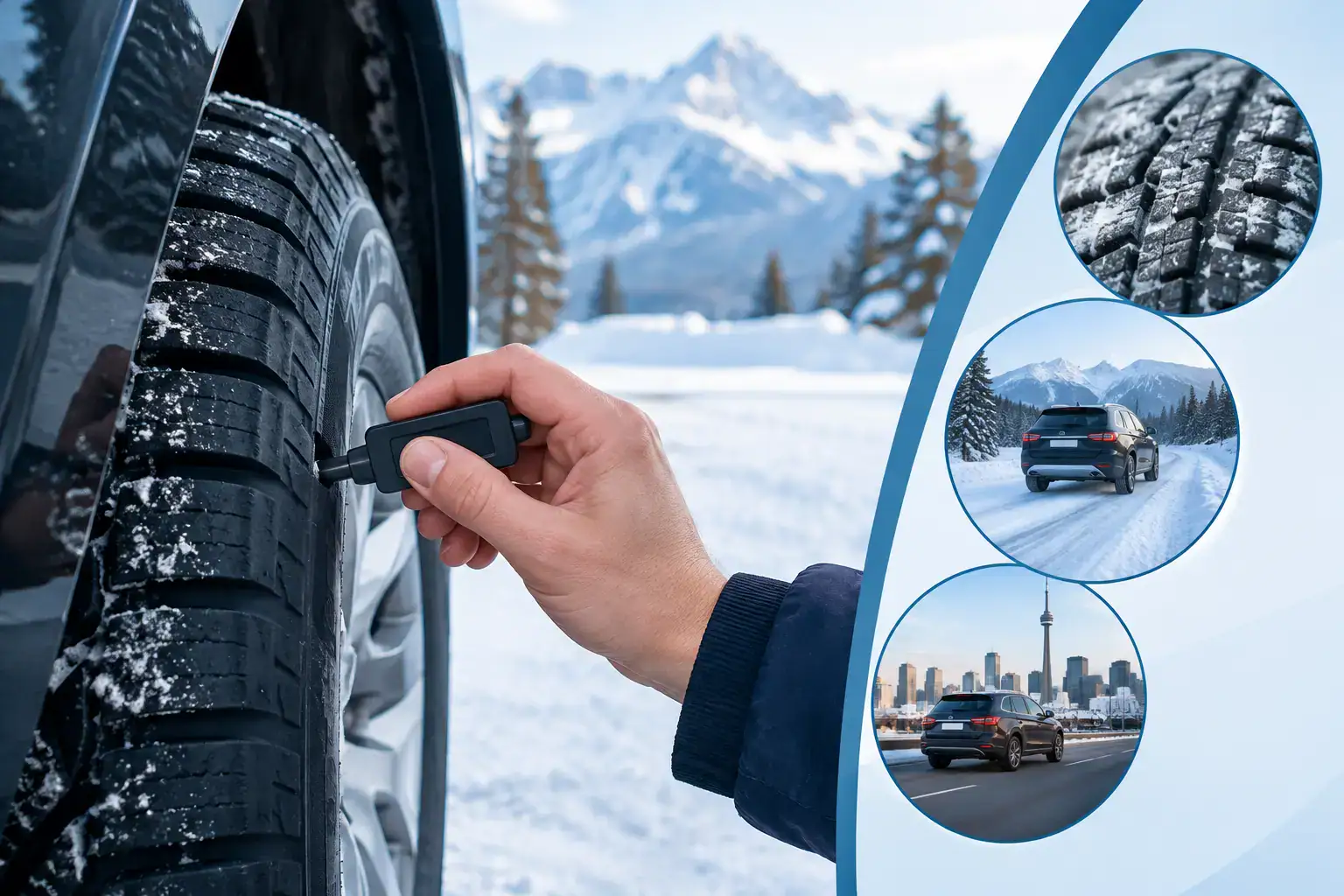
A tire can look fine from the driveway and still have too little grip for a wet highway, an unexpected stop, or the next snowfall. Learning how to measure tire tread depth takes only a few minutes, but it gives you a clearer picture of whether your tires are ready for the road or due for attention.
Tread is the patterned rubber that contacts the pavement. Its grooves move water, slush, and snow away from the contact patch so your vehicle can brake, corner, and accelerate with more control. As those grooves become shallow, performance declines gradually – which is why a quick visual check is not always enough.
What Tire Tread Depth Tells You
New passenger tires commonly begin with roughly 10/32 to 12/32 inch of tread, although the exact starting depth varies by tire type and model. That depth is not just about how long a tire may last. It directly affects traction in changing conditions.
As tread wears down, a tire has less space to channel water away. This increases the chance of hydroplaning on wet roads and can lengthen stopping distances. Winter conditions raise the stakes further. Winter tires depend on deep grooves and small biting edges to hold snow and help maintain control on cold, slippery surfaces.
Tread depth is also a useful clue about the vehicle itself. If one part of a tire is wearing much faster than another, the issue may involve alignment, inflation pressure, suspension components, or an overdue tire rotation. Measuring regularly helps you catch those patterns before they shorten the life of a full set of tires.
How to Measure Tire Tread Depth With a Gauge
A dedicated tread-depth gauge is the most accurate and repeatable option. These small tools are easy to use, read in 32nds of an inch or millimeters, and make it simple to compare all four tires over time.
Park on a level surface, turn the steering wheel if needed for better access to the front tires, and inspect the grooves. Place the gauge probe into a main circumferential groove – one that runs around the tire – then press the gauge base flat against the tread blocks. Read the measurement where the indicator meets the scale.
Take readings in at least three places across each tire: the inner edge, the center, and the outer edge. Do this at several points around the tire if possible. A single measurement can miss localized wear caused by a mechanical issue or a past puncture repair.
Write down the lowest reading you find for each tire. The lowest number, rather than the best-looking area, is what should guide your next step.
Reading the results
Tires at 6/32 inch or more generally have useful remaining tread for many driving conditions, assuming the wear is even and there is no damage. At around 4/32 inch, wet-weather performance deserves closer attention. Drivers who regularly face heavy rain, long highway commutes, or seasonal snow should plan ahead rather than waiting until the tire is worn to its minimum.
At 2/32 inch, tires are at the commonly accepted replacement point. Their ability to clear water is greatly reduced, and the built-in wear bars will usually be visible. For winter tires, replacement may be appropriate earlier because snow traction can fall off well before the tread reaches that minimum.
The right replacement timing depends on the tire category, your driving conditions, and how much margin you want for bad weather. A commuter who drives mostly dry city streets may make a different decision than a family that travels on highways year-round or a driver who depends on winter tires through frequent snow.
The Penny Test: A Useful Quick Check
If you do not have a gauge, a penny can provide a fast basic check. Insert the penny into a main tread groove with Lincoln’s head facing downward. If the top of Lincoln’s head remains covered, the tread is above 2/32 inch. If the top is visible, it is time to arrange a tire inspection and replacement.
The penny test is convenient, but it cannot tell you whether you have 7/32 or 4/32 inch remaining. It also will not reveal a small but meaningful difference between the inside and outside shoulder of a tire. Use it as a quick warning tool, not as a substitute for a gauge when you are deciding whether to keep a tire through another season.
You can also look for tread wear indicator bars. These are narrow raised bars molded across the grooves of the tire. When the surrounding tread is flush with those bars, the tire has reached approximately 2/32 inch of remaining depth.
Check for Uneven Tread Wear While You Measure
Depth matters, but even wear matters too. A tire with plenty of tread in the center and a nearly smooth inner edge does not have the grip or service life its average measurement suggests.
Wear concentrated in the center of the tread can point to overinflation. Excess wear on both outer shoulders may suggest underinflation. One-sided wear often indicates an alignment concern, while scalloped or cupped patches can be associated with balance or suspension issues.
These patterns are not a diagnosis on their own. Tire construction, driving habits, road surfaces, and vehicle setup can all play a role. Still, uneven wear is a good reason to have a qualified technician inspect the vehicle. Replacing tires without correcting the cause can lead to the same problem on the next set.
Also inspect the sidewalls and tread surface for cuts, bulges, exposed cords, embedded objects, and cracks. Tread depth cannot make up for structural damage. If you find a bulge, exposed cord, or a significant sidewall injury, avoid driving on the tire and seek professional advice promptly.
When to Check Your Tires
Checking tread about once a month is a practical habit, especially for vehicles that cover a lot of highway miles. It is also smart to inspect tires before a road trip, after striking a pothole, and before seasonal weather changes.
For drivers using separate winter and all-season or summer tire sets, measure tread when tires come off the vehicle and again before they go back on. This makes it easier to decide whether a set is worth reinstalling for another season. It also gives you time to choose replacements without making a rushed decision after the first major storm.
Do not forget the spare tire if your vehicle has one. A spare can lose air over time, and an older tire may have age-related damage even if its tread appears deep.
Tread Depth Is Only Part of Tire Safety
A tire with healthy tread still needs correct air pressure, proper balancing, and alignment to perform as intended. Check pressure when tires are cold and use the pressure listed on the vehicle’s tire information label, not the maximum pressure printed on the tire sidewall.
Rotation can help tires wear more evenly, but the correct interval and pattern depend on the vehicle, tire setup, and whether the tires are directional or staggered. If you are unsure, a tire service professional can confirm the right approach and identify problems that are easy to miss at home.
At Migo Tire, the goal is to help drivers stay safe and road-ready, whether they need a quick tread inspection, maintenance service, or help finding tires that fit their vehicle and driving conditions.
A tread gauge in the glove box and a few minutes of attention each month can prevent an unpleasant surprise. Measure the lowest point on every tire, watch for uneven wear, and act before shallow tread turns a routine drive into a traction problem.


