
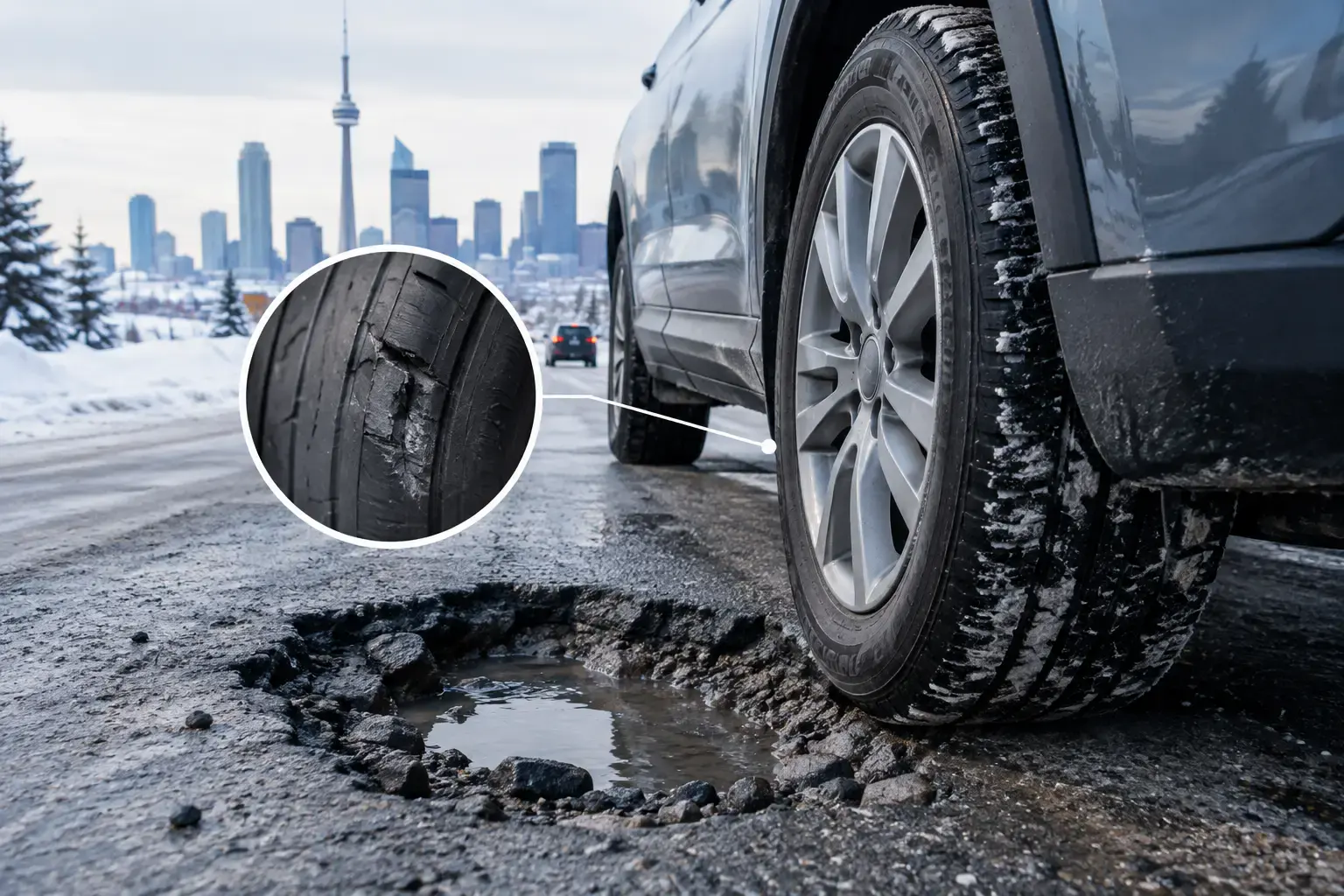
A hard pothole hit can feel minor in the moment, especially when you are focused on traffic. But pothole tire damage is not always visible from the driver’s seat. A tire can lose air slowly, a wheel can bend at the inner edge, or the suspension alignment can shift just enough to cause uneven wear later.
For everyday drivers, the right response is simple: slow down, pay attention to changes in how the vehicle feels, and inspect the tire and wheel as soon as it is safe. Catching damage early can help prevent a roadside flat, protect your other tires from irregular wear, and keep your vehicle safe and road-ready.
What Happens When You Hit a Pothole?
A pothole creates a sharp impact as the tire drops into the hole and strikes its far edge. The tire’s sidewall, wheel, and suspension absorb most of that force. The risk depends on the pothole’s depth, the speed of the vehicle, tire pressure, tire profile, and the weight being carried.
Low-profile tires can be more vulnerable because there is less sidewall cushioning between the road and the wheel. That does not mean taller-profile tires are immune. A deep pothole can damage nearly any tire, particularly when it is hit at speed or with a heavily loaded vehicle.
The most common problems include a sidewall bulge, a puncture or cut, internal tire damage, a bent or cracked wheel, and an alignment issue. Sometimes the damage is immediate. Other times, it shows up days or weeks later as vibration, air loss, or unusual tread wear.
Signs of Pothole Tire Damage to Look For
After a significant impact, start by checking whether the tire is holding air. If the tire looks low, do not assume it is safe to drive until it has been inspected. A low tire can overheat and suffer further internal damage even during a short trip.
Walk around the vehicle and look at the tire sidewalls, tread, and wheel rims. Watch for a visible bulge, bubble, cut, deep scrape, crack, or an area where the tire looks distorted. A bulge is especially serious because it can indicate broken internal cords. That tire should be replaced, not repaired.
Also pay attention to how the vehicle behaves on the road. Warning signs may include a new vibration in the steering wheel or seat, pulling to one side, a steering wheel that is no longer centered, a thumping sound, or a tire pressure warning light. These symptoms can point to tire damage, wheel damage, or a suspension and alignment concern.
Not every pothole impact causes an obvious issue. If the hit was hard enough to make you wince, it is worth having the tire and wheel checked, even if the vehicle seems normal at first.
A sidewall bulge is not a cosmetic problem
Drivers sometimes see a small bump on the sidewall and assume it can wait. It should not. A sidewall bulge means the tire’s internal structure may have been weakened by the impact. Since the sidewall flexes constantly while driving, that weak area can fail without much warning.
Do not try to patch, plug, or continue using a tire with a sidewall bubble. Install the spare tire if it is safe and properly inflated, or arrange for service. This is one situation where replacement is the responsible choice.
Can a Pothole Bend a Wheel?
Yes. A pothole can bend a steel or alloy wheel, and damage is often hidden on the inner rim where it is difficult to see without removing the wheel. A bent rim may cause a slow air leak if the tire can no longer seal correctly against the wheel. It can also cause vibration that becomes more noticeable at highway speeds.
A wheel that is only slightly bent may sometimes be repairable, depending on the material, the location of the damage, and whether there is any cracking. A cracked wheel requires more caution. The wheel needs professional assessment, and replacement may be the safer option.
If a wheel is damaged, the tire should be inspected at the same time. The tire absorbed the same impact, and a wheel repair alone does not rule out hidden tire damage.
What to Do Immediately After Hitting a Pothole
Keep a firm grip on the steering wheel and avoid sudden braking or swerving. If the vehicle feels stable and the tire pressure warning light stays off, reduce speed and drive carefully to a safe place to inspect the vehicle.
If you hear loud flapping, scraping, or repeated thumping, or if the vehicle pulls sharply, stop as soon as it is safe. Continuing to drive on a flat or severely damaged tire can ruin the tire and may damage the wheel as well.
Once parked safely, check for visible damage and compare the affected tire to the others. If you have a tire pressure gauge, use it rather than relying only on appearance. Modern tires can be significantly underinflated without looking completely flat.
Avoid the temptation to simply add air and forget about the incident. If air pressure drops again, or if you notice a bulge, vibration, or uneven handling, have the vehicle inspected promptly.
Tire Damage, Wheel Damage, or Alignment: How to Tell
These issues can overlap, but the symptoms are often different. Tire damage commonly causes air loss, a bulge, a cut, or a thumping sensation. Wheel damage is more likely to cause vibration, an air leak around the rim, or visible rim deformation. Alignment problems often show up as drifting, a crooked steering wheel, or uneven tread wear over time.
A pothole can also affect suspension components such as tie rods, control arms, or struts. That is less common after a small impact, but it becomes more likely after a severe hit. If the vehicle feels unstable, makes new noises over bumps, or pulls noticeably, a full inspection is the practical next step.
An alignment check is especially worthwhile if you recently installed new tires or your existing tires are wearing unevenly. Correct alignment helps protect your investment by allowing the tread to wear more evenly across all four tires.
When Can a Tire Be Repaired?
A repair may be possible when the damage is a small puncture in the repairable area of the tread and the tire has not been driven while flat. The repairable area is generally the central tread section, away from the shoulder and sidewall.
A puncture caused by a pothole impact is not always straightforward. The tire may have internal damage that is not visible from the outside. For that reason, a proper inspection involves removing the tire from the wheel and checking the inside, not just inserting a plug from the exterior.
Sidewall cuts, sidewall bulges, severe impact breaks, and damage from driving on a deflated tire usually mean replacement is needed. It can feel frustrating to replace a tire that still has usable tread, but structural damage is not a safe trade-off.
How to Reduce the Risk of Future Pothole Damage
You cannot avoid every pothole, particularly after winter weather and freeze-thaw cycles. You can reduce the risk by keeping your tires inflated to the vehicle manufacturer’s recommended pressure. Proper inflation helps the tire support the vehicle and absorb normal road impacts as intended.
Leave enough following distance to see road hazards ahead. Potholes are harder to spot when you are closely following another vehicle, driving through standing water, or traveling on poorly lit roads. If you cannot avoid a pothole, slow down before reaching it when safe to do so. Braking hard while the tire is inside the pothole can increase the impact load.
It also helps to choose tires that suit your vehicle and driving conditions. Drivers who regularly travel on rough city roads, construction zones, or rural routes may prioritize a tire with a more protective sidewall or a slightly taller profile when fitment allows. The right choice depends on the vehicle, wheel size, handling preferences, and seasonal needs.
Get a Professional Inspection When Something Feels Off
A pothole impact does not always require a new tire, wheel, or alignment service. It depends on the severity of the hit and what an inspection finds. Still, waiting for a small vibration or slow leak to become a larger problem rarely saves time or money.
A tire professional can inspect the tread and sidewall, check the wheel for bends or cracks, test for leaks, and assess whether balancing or alignment is needed. For drivers in Toronto and the GTA, Migo Tire can help evaluate the condition of your tires and recommend the appropriate next step.
Your vehicle does not need to be visibly damaged to deserve attention. If a pothole hit felt severe or the drive home felt different afterward, trust that signal and have it checked before your next long trip.


