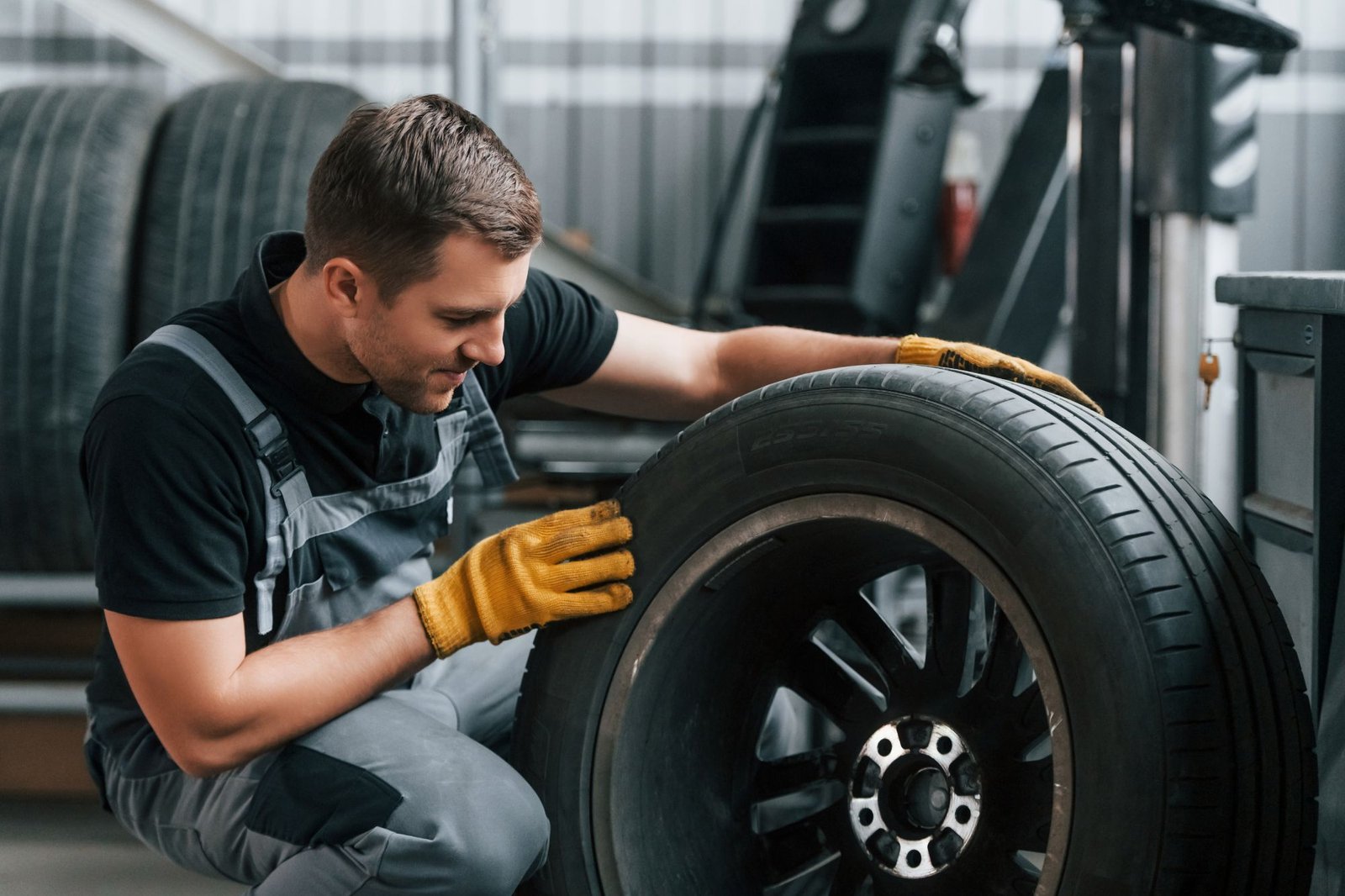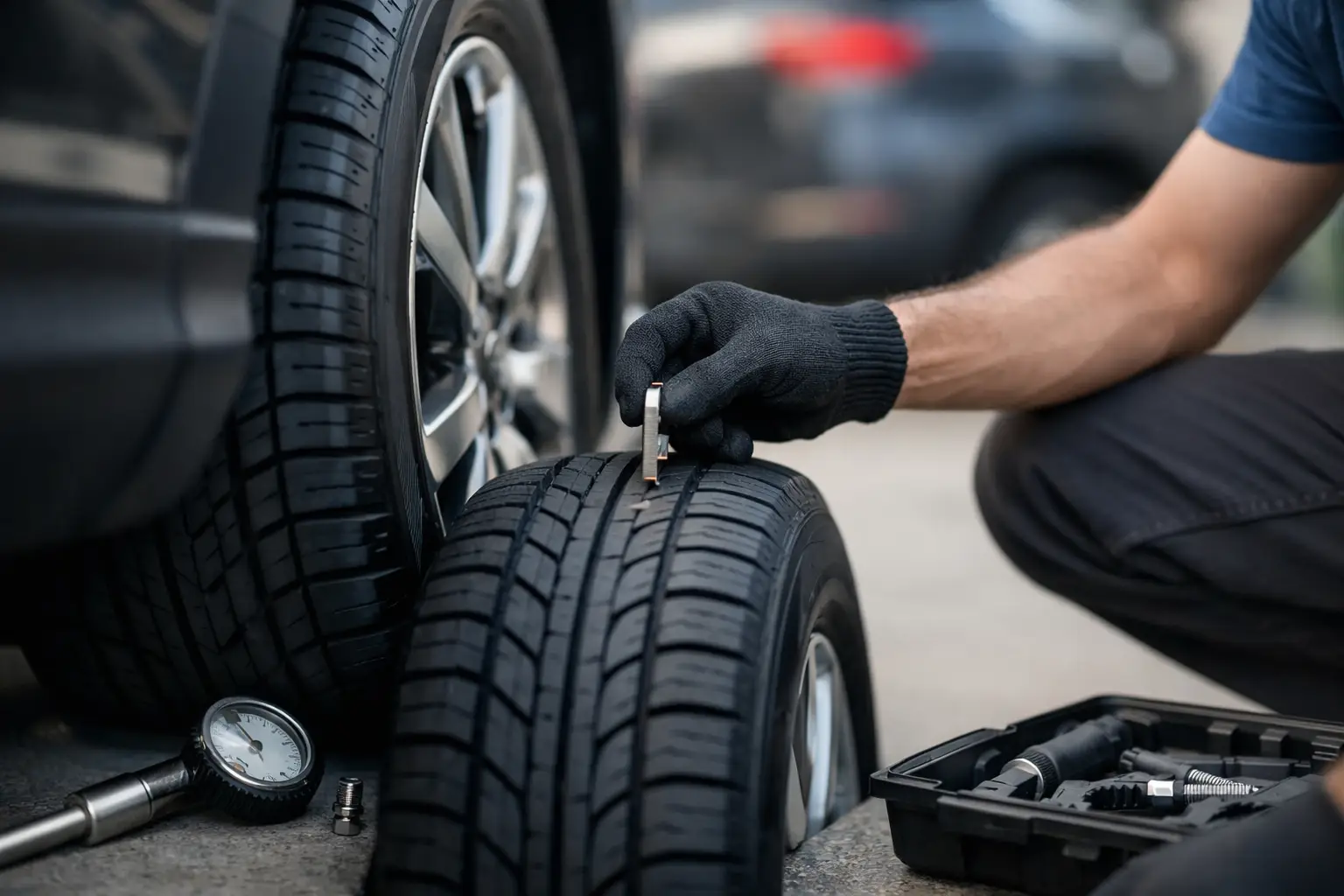
A tire maintenance guide matters most when your vehicle starts telling you something is off – a steering wheel that pulls, a rougher ride on the highway, or tread that looks worn sooner than expected. Tires affect braking, fuel efficiency, handling, and day-to-day safety, so small maintenance habits can prevent larger problems and help you get more value from every set.
Why a tire maintenance guide matters
Tires are the only part of your vehicle that touches the road. That sounds simple, but it has real consequences. If air pressure is too low, the tire flexes more, builds extra heat, and wears faster on the shoulders. If pressure is too high, the center of the tread can wear down early and the ride may feel harsher.
Maintenance also affects how evenly your tires age as a set. A good tire can still deliver disappointing results if the alignment is off, the balance is uneven, or rotation is delayed too long. On the other hand, routine checks help keep your vehicle stable, comfortable, and easier to control in wet weather, on long commutes, and through seasonal temperature swings.
Start with tire pressure
If there is one habit to keep, make it checking tire pressure regularly. Air pressure changes with temperature, so a tire that looked fine a month ago may now be underinflated after a cold snap. That is one reason drivers often see warning lights at the start of winter or during major weather changes.
Check pressure when the tires are cold, preferably before driving or after the vehicle has been parked for several hours. Use the recommended PSI listed on the driver-side door placard, not the maximum pressure molded onto the tire sidewall. Those numbers are not the same. The vehicle recommendation is based on proper load support, ride quality, and handling for your specific car, SUV, truck, or EV.
Some drivers top off tires only when one looks visibly low. That approach usually comes too late. By the time a tire looks underinflated, it may already be affecting wear and performance. A quick monthly check with a reliable gauge is a better habit.
Watch tread depth and wear patterns
Tread depth is what helps your tires maintain grip, especially in rain and light snow. As tread gets low, the tire has less ability to channel water away from the contact patch. That increases the risk of hydroplaning and reduces braking confidence in poor weather.
You can inspect tread by looking across the full width of each tire. What you are looking for is not just how much tread remains, but how evenly it is wearing. Even wear is usually a good sign. Uneven wear often points to a maintenance issue.
Wear on both outer edges can suggest underinflation. Wear in the center can indicate overinflation. One-sided wear may point to alignment problems. Cupping or scalloping can be linked to suspension issues or improper balance. These patterns matter because replacing tires without fixing the root cause often leads to the same problem again.
If you drive a light truck, carry tools or cargo, or tow occasionally, tread checks become even more important. Extra load changes how the tire works and can speed up wear if inflation and rotation are not kept on schedule.
Rotation keeps tire wear more even
Rotation is one of the most practical steps in any tire maintenance guide because front and rear tires do different jobs. On many vehicles, the front tires handle steering, a larger share of braking force, and often more of the vehicle’s weight. That means they may wear faster than the rear tires.
Rotating the tires helps spread that wear more evenly across the set. In many cases, rotating every 5,000 to 7,500 miles is a reasonable schedule, though the right interval depends on your vehicle, tire type, and driving conditions. If you already follow oil change intervals, that can be a convenient time to ask for a rotation check, although some newer vehicles have different service timing.
There are a few cases where rotation needs more attention. Directional tires, staggered fitments, performance vehicles, and some EV setups may have specific rotation limits or patterns. That is one reason it helps to have service done by a tire professional who can confirm the correct approach instead of assuming every vehicle follows the same pattern.
Alignment and balance are not the same thing
Drivers often group alignment and balancing together, but they solve different problems. Alignment refers to the angles of the wheels in relation to the vehicle and the road. If those angles are off, you may notice pulling, an off-center steering wheel, or uneven tread wear.
Balancing deals with weight distribution in the tire and wheel assembly. If a tire is out of balance, vibration is the more common symptom, especially at certain speeds. You may feel it in the steering wheel, seat, or floor.
It depends on the issue, but if your vehicle starts pulling after hitting a pothole or curb, alignment is worth checking. If the vehicle drives straight but shakes more at highway speed, balance may be the better place to start. Both matter because both affect comfort, tire life, and control.
Seasonal changes affect tire care
Temperature shifts change more than just pressure. They also change how your tire compound performs. All-season tires are designed for broad everyday use, but they still have limits in severe winter conditions. Winter tires are built for cold-weather grip, while summer tires are made for warm-weather handling and will not perform the same way in freezing temperatures.
That means maintenance is partly about using the right tire for the season. If you switch between summer and winter sets, inspect each set before installation. Look for cracking, irregular wear, punctures, and remaining tread depth. If you run all-weather or all-season tires year-round, regular pressure checks are especially important as temperatures rise and fall.
Storage matters too. Tires stored improperly can age faster. If a seasonal set is off the vehicle, keep it in a cool, dry place away from direct sunlight and strong heat sources.
Do not ignore small damage
A nail in the tread, a slow leak, or a sidewall bulge should never be treated the same way. Some punctures in the tread area may be repairable if they meet industry safety standards. Sidewall damage generally is not. A bulge can indicate internal structural damage, and that is not something to watch and wait on.
This is where drivers can lose time and money by guessing. A tire that seems fine after adding air may still have a puncture, wheel issue, or valve problem. Prompt inspection helps you avoid driving on a compromised tire, and it can prevent a simple repair from turning into a full replacement.
Match maintenance to how you drive
Not every vehicle uses tires the same way. A commuter sedan that sees steady highway miles has different tire demands than a family SUV doing school runs, weekend errands, and road trips. A pickup used for light truck work may need closer attention to load, inflation, and shoulder wear. EV drivers may notice faster tire wear due to added vehicle weight and instant torque.
That is why a one-size-fits-all schedule only goes so far. If you drive long distances, face frequent stop-and-go traffic, park outdoors year-round, or deal with rough pavement, your tires may need more frequent inspections. The right maintenance plan should reflect real driving conditions, not just a generic mileage number.
When to replace instead of maintain
Maintenance helps tires last longer, but it does not make them last forever. If tread is worn down near replacement level, if damage is not repairable, or if repeated uneven wear keeps returning, replacement is usually the safer and more cost-effective choice.
Age can matter too, even when tread looks acceptable. Tires can degrade over time due to heat, UV exposure, and general use. A professional inspection is the best way to judge whether a tire still has safe service life left.
When replacement time comes, fitment matters as much as brand. The right tire should match your vehicle, driving needs, and local weather. For many drivers, the easiest path is working with a provider that can help with selection, installation, balancing, alignment, and follow-up service in one place.
A practical tire maintenance guide to follow year-round
The most reliable tire care routine is not complicated. Check pressure monthly, inspect tread and sidewalls regularly, rotate on schedule, and pay attention when the vehicle starts feeling different. Small changes in ride quality, noise, or steering response are often the first sign that your tires need attention.
At Migo Tire Corp., the goal is simple – help drivers stay safe and road-ready with the right tires and the right support after installation. If your tires are due for inspection, service, or replacement, taking care of it early is usually the easiest way to protect your vehicle and your time on the road.
The best tire maintenance plan is the one you will actually keep, and a few consistent checks each month can do more for safety and tire life than most drivers expect.