
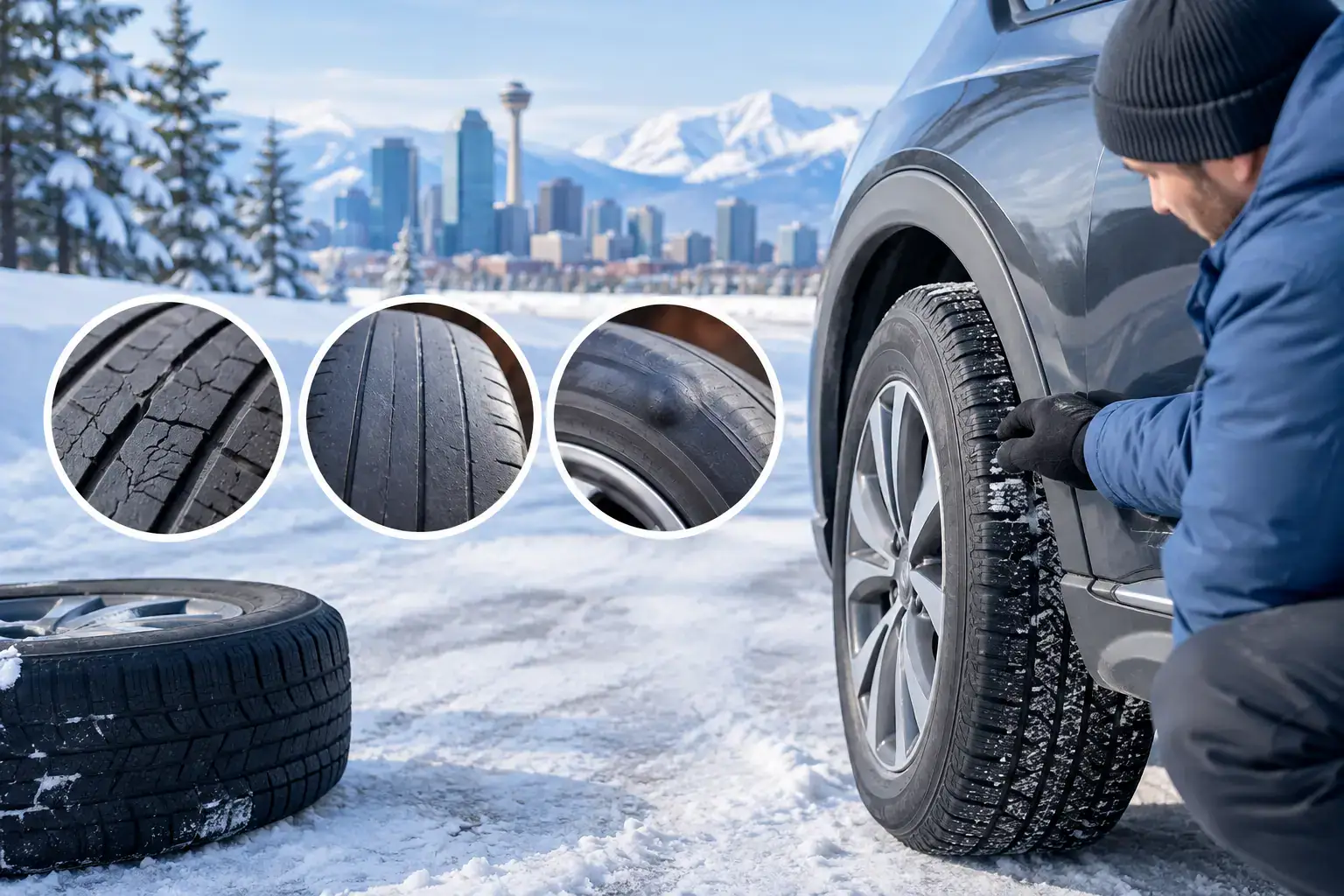
A tire can look acceptable while parked in the driveway and still lose much of its ability to grip wet pavement, clear slush, or brake confidently. Knowing the top signs tires need replacement helps you act before a routine commute, school run, or highway trip becomes more stressful than it needs to be. The right time to replace tires depends on tread depth, condition, age, driving habits, and the season ahead – not just whether a tire has gone flat.
Top Signs Tires Need Replacement
Tread is worn close to the wear bars
Tread is what channels water away from the tire and creates traction on snow, gravel, and uneven roads. As it wears down, stopping distances can increase and the vehicle may feel less settled in rain. Most tires have small raised tread-wear indicators built into the main grooves. When the surrounding tread is level with these bars, the tire is worn out and should be replaced.
Do not wait for the wear bars if you regularly drive in heavy rain, on rural roads, or through winter conditions. A tire may still be technically usable but no longer offer the wet or snow traction your daily driving requires. For winter tires, deeper tread matters especially because the grooves and biting edges need room to move snow and slush.
A quick check at home can be useful, but a professional tread measurement gives a clearer answer. Measure more than one spot across each tire. Wear on only the inner or outer edge can point to an alignment or suspension issue, while the center may wear first if the tire has been consistently overinflated.
Cracks, cuts, bulges, or exposed cords are visible
Not every tire problem starts with a nail. Inspect the sidewalls and tread for cracking, deep cuts, missing chunks of rubber, or a bubble-like bulge. Small surface cracks can develop as tires age and are exposed to sunlight, temperature swings, and road conditions. Deeper cracking is more concerning because it can affect the tire’s structure.
A sidewall bulge is a clear reason to stop driving on that tire and have it inspected right away. It can mean the internal cords have been damaged, often after a hard pothole strike or curb impact. Likewise, if you can see fabric, steel belts, or cords through the rubber, replacement is necessary. These are not problems that a simple patch or added air can solve.
You are getting more vibration than usual
Some vibration can come from rough pavement, but a steering wheel shake, seat vibration, or repeated thumping that continues on smooth roads deserves attention. A tire may be out of balance, damaged internally, unevenly worn, or no longer round. Wheel damage, loose components, and alignment concerns can cause similar symptoms, so a proper inspection matters.
Pay attention to when it happens. Vibration that begins or gets worse at highway speeds may point to balance or tire-related issues. A pull to one side, especially when braking, may involve tire wear, alignment, or brake components. The cause is not always tire replacement, but delaying the diagnosis can turn a smaller service need into uneven wear that shortens the life of a good tire.
The tires are wearing unevenly
Even wear across the tread is a good sign that inflation, rotation, alignment, and suspension are working together. Uneven patterns tell a different story. Inner-edge wear often suggests alignment trouble, while feathered tread can make the surface feel sharp in one direction and smooth in the other. Cupping or scalloped dips around the tread may indicate worn suspension parts, imbalance, or another mechanical concern.
Replacing tires without correcting the cause can lead to the same premature wear on the new set. This is why tire service often includes a conversation about wheel alignment, balancing, rotation history, and pressure checks. A replacement tire should be part of the fix, not the only step.
Age Matters, Even When Tread Looks Fine
Low-mileage tires can still age out. Rubber gradually loses flexibility over time, especially when a vehicle sits for long periods, is stored outdoors, or experiences large temperature changes. The tire’s manufacturing date is stamped into the sidewall as part of the DOT code. The final four digits identify the week and year it was made.
There is no single replacement date that applies to every tire and every driver. Storage conditions, climate, use, maintenance, and the tire manufacturer’s guidance all matter. Still, older tires deserve closer inspection, even if they appear to have plenty of tread left. If you are unsure about the age or condition of a tire, having it assessed is the sensible next move.
Changes in Wet, Snowy, or Everyday Handling
Drivers often notice declining tire performance before they see obvious damage. Maybe the car activates traction control more often on wet roads. Perhaps it takes more care to pull away from a stop in light snow, or the vehicle feels less secure during turns. These changes can be gradual, which makes them easy to explain away until the weather gets worse.
Consider the tire type as well as its condition. An all-season tire with decent tread may suit mild conditions and everyday commuting, while a dedicated winter tire is designed for sustained cold, snow, and ice. All-weather tires can be a practical year-round option for some drivers, but they are not identical to a winter tire in severe conditions. The best choice depends on where and when you drive, your vehicle, and how much winter performance you need.
If your vehicle is electric, pay attention to tire wear and load ratings. EVs can be heavier and deliver immediate torque, which may affect wear patterns. Light trucks and SUVs also need tires matched to their load, towing, and road-use needs. Choosing the right replacement is about more than finding the same size printed on the sidewall.
Tire Pressure Problems That Keep Returning
Pressure naturally changes with temperature, so a seasonal adjustment is normal. Repeated pressure loss is not. If one tire consistently needs air, it could have a puncture, a leaking valve, wheel corrosion, or damage that is not obvious from the outside. A tire repair may be possible when damage is limited to a repairable area of the tread, but sidewall punctures and certain larger injuries generally call for replacement.
Driving while underinflated can create excess heat, reduce handling precision, and wear the outer edges of the tire. Overinflation can reduce the contact patch and wear the center more quickly. Check pressure when tires are cold, and use the vehicle placard pressure rather than relying only on the maximum pressure molded into the tire sidewall.
When Should You Replace One Tire, Two Tires, or All Four?
The answer depends on the vehicle, tread difference, tire type, and drivetrain. On a two-wheel-drive vehicle, replacing two tires may be appropriate when the matching tires on the same axle are also worn. The new pair is commonly installed on the rear axle to support stability in wet conditions, though vehicle-specific guidance should always come first.
All-wheel-drive vehicles require more caution. Significant differences in tire circumference can place strain on the drivetrain, so tread depth matching matters. In some cases, replacing all four tires is the right answer; in others, a compatible tire can be professionally shaved to match the remaining tread. This is one situation where checking the owner’s manual and speaking with a tire professional can prevent an expensive mismatch.
Whenever possible, keep the same tire model, size, speed rating, and load rating across an axle. Mixing tires without understanding their intended use can change how the vehicle handles, brakes, and responds in poor weather.
A Simple Inspection Routine That Pays Off
Check your tires once a month and before long trips. Look for visible damage, inspect tread across the full width, and verify cold tire pressure. Notice how the vehicle feels on familiar roads. A small change in steering response, ride quality, or road noise is worth investigating before it grows into a roadside problem.
Rotation, balancing, and alignment checks can help a replacement set last longer, but they cannot restore worn rubber or repair structural damage. When it is time for new tires, use your vehicle information and your normal driving conditions to narrow the choices. A Toronto driver planning frequent winter travel may need something different from a driver who mostly makes short urban trips, and both deserve a tire that fits the job.
Migo Tire can help drivers compare suitable options and arrange the service needed to keep their vehicles safe and road-ready. The best time to address questionable tires is while you still have the choice to plan the replacement on your terms, rather than after the next pothole, storm, or unexpected loss of traction.


