
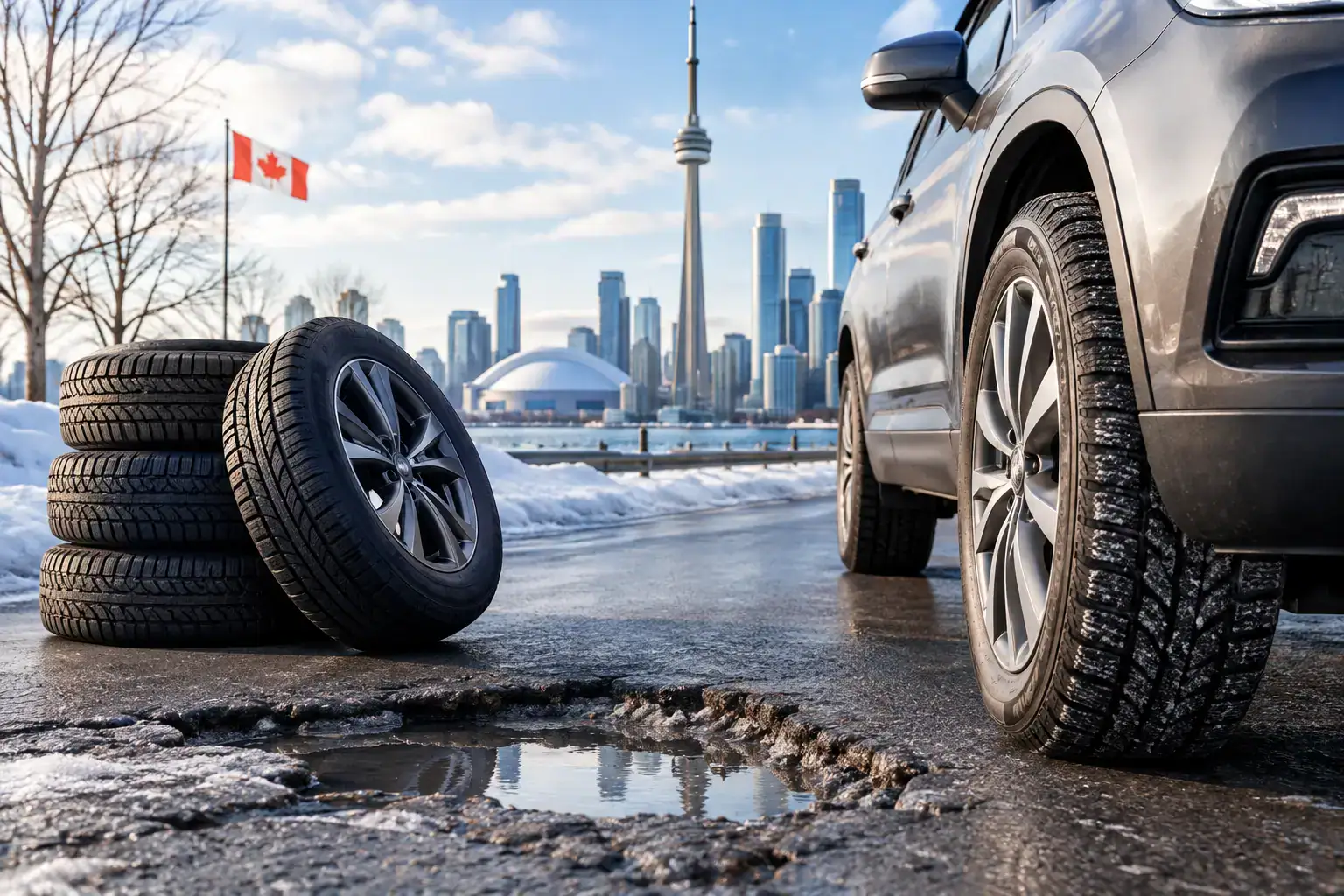
A sharp pothole hit can turn a normal commute into a tire and wheel problem in seconds. For drivers comparing Toronto pothole tire options, the best choice is rarely just the tire with the deepest tread or the lowest price. Sidewall strength, tire size, air pressure, wheel condition, and the roads you drive each week all affect how well your vehicle handles a hard impact.
Potholes are especially hard on tires in late winter and spring, when freeze-thaw cycles break up pavement and water can hide the true depth of a hole. You may not avoid every impact, but choosing the right tire setup and keeping it properly maintained can reduce the chance of damage and help your vehicle stay predictable on the road.
Why potholes damage tires so quickly
When a tire drops into a pothole, the sidewall can be pinched between the road edge and the wheel. This is different from normal tread wear. A tire can have plenty of tread remaining yet still suffer internal damage after one severe hit.
Low-profile tires are often more vulnerable because there is less rubber sidewall between the wheel and the road. Larger wheels can look great and provide responsive handling, but they can also leave less cushion for rough pavement. That does not mean every driver needs to switch to a smaller wheel. It means the tire and wheel package should match the roads and driving conditions you face.
A pothole impact can cause a sidewall bubble, a cut, a slow leak, a bent wheel, or damage to the tire’s internal belts. Some issues appear right away. Others show up later as vibration, pulling, or repeated pressure loss.
Toronto pothole tire options to consider
The right category depends on your vehicle, approved fitment, driving habits, and season. Start with the tire size listed on your vehicle’s door placard or owner manual, then consider whether your current setup is practical for rough city streets.
All-season tires for everyday commuting
For many sedans, crossovers, and minivans, a quality all-season tire is the sensible starting point. Look for a model designed for everyday comfort and durability, with a construction suited to regular city driving. These tires can provide a balanced ride, good wet-road performance, and dependable tread life when used in appropriate temperatures.
Not all all-season tires have the same level of impact resistance. A lower-cost tire may be a reasonable fit for light driving, while a driver who covers rough roads daily may benefit from a more durable construction from a trusted brand. Product specifications and professional fitment advice can help narrow the choices.
Tires with a taller sidewall
If your vehicle allows an approved alternate size, moving to a tire with a slightly taller sidewall can provide more protection from pothole impacts. The added sidewall gives the tire more room to absorb a bump before the wheel reaches the pavement edge.
This change must be done carefully. The overall tire diameter, load capacity, speed rating, wheel width, brake clearance, and vehicle systems all need to remain compatible. An incorrect size can affect handling, speedometer accuracy, and clearance. Always confirm fitment before making a change.
All-weather and winter tires for changing conditions
All-weather tires can be useful for drivers who want one set of tires with stronger cold-weather performance than a typical all-season tire. They are not automatically more pothole-resistant, but choosing a well-built tire in the correct size can make sense for year-round driving in variable weather.
Dedicated winter tires remain the better option for drivers who regularly face snow, ice, and sustained cold conditions. Winter rubber stays more flexible in low temperatures, which supports traction. However, winter tires can still be damaged by potholes, so pressure checks and visual inspections remain essential.
Run-flat tires: useful, with a trade-off
Run-flat tires are designed to support the vehicle for a limited distance after a loss of pressure, under specific conditions. They can be helpful when a puncture occurs in an inconvenient location. For some drivers, that added mobility is valuable.
The trade-off is that run-flat tires often have stiffer sidewalls and may feel firmer on broken pavement. They are not pothole-proof, and a hard impact can still damage a tire or wheel. They also require a vehicle equipped with a tire-pressure monitoring system and should only be used where approved for the vehicle.
Light truck and SUV tires
Pickup and SUV owners may need a tire with higher load capacity, especially when carrying tools, equipment, passengers, or cargo. Light truck tires and certain SUV-focused tires can offer stronger construction for demanding use, but they may ride more firmly and can add weight.
For mostly city use, the most aggressive tire is not always the best pothole tire. An all-terrain pattern may be appropriate for frequent gravel roads or job sites, while a highway-oriented tire may provide a quieter, more comfortable daily drive. Choose based on how the vehicle is actually used.
Sidewall strength matters, but so does tire pressure
A reinforced sidewall can help a tire tolerate demanding conditions, but tire pressure is just as important. An underinflated tire has less ability to support the vehicle through an impact. It flexes more, raising the risk of sidewall damage and wheel contact.
Check tire pressure at least once a month and before a long highway trip. Use the pressure listed on the vehicle placard, not the maximum pressure printed on the tire sidewall. Pressure should be checked when tires are cold, meaning the vehicle has been parked for several hours or driven only a short distance.
Overinflation is not the answer. Too much air can make the ride harsher and reduce the tire’s contact patch. The goal is the manufacturer-recommended pressure for your vehicle’s load and tire size.
Signs a pothole hit needs attention
After a major impact, pull over safely when practical and inspect the tire. A quick look can prevent a damaged tire from becoming a more serious issue. Watch for these signs:
- A bubble, bulge, split, or deep cut in the sidewall
- Sudden pressure loss or a tire-pressure warning
- Steering wheel vibration that was not there before
- A vehicle that pulls to one side or feels unsettled
- A visible bend, crack, or scrape on the wheel
A sidewall bubble is particularly serious because it can indicate broken internal cords. Do not treat it as a cosmetic issue. Have the tire inspected promptly, and avoid driving on it except as needed to reach a safe service location.
Even if the tire looks normal, a new vibration after a pothole hit can point to a bent wheel, tire damage, or a balance issue. An alignment check may also be worthwhile if the vehicle pulls, the steering wheel is off-center, or tread wear becomes uneven.
Installation and service are part of the decision
Buying the right tire is only one part of staying road-ready. Proper installation, balancing, and torque help the tire perform as intended. A tire that is not balanced correctly may vibrate at speed, while an alignment issue can shorten tread life and affect handling.
When replacing one damaged tire, ask whether it is suitable to replace a single tire or whether a pair is the better choice. The answer depends on the vehicle, drivetrain, tread depth of the remaining tires, and tire manufacturer guidance. On all-wheel-drive vehicles especially, significant differences in tire circumference can create mechanical concerns.
Migo Tire can help drivers compare tire categories, confirm fitment, and arrange the tire services that support a safe installation. If a pothole has damaged both the tire and wheel, addressing the full issue is usually more practical than replacing the tire alone and hoping the vibration disappears.
Drive with a plan when road conditions are rough
No tire can make a deep pothole harmless. Leave extra space behind the vehicle ahead so you have more time to spot road damage, slow down when it is safe, and avoid sudden swerves that could put you into another lane. If you cannot avoid an impact, reduce speed smoothly rather than braking hard at the last moment.
The most practical choice is a properly fitted tire with adequate sidewall, the right load rating, and pressure checked regularly. Pair that with prompt inspections after hard hits, and your tires will be better prepared for the roads you drive every day.


