
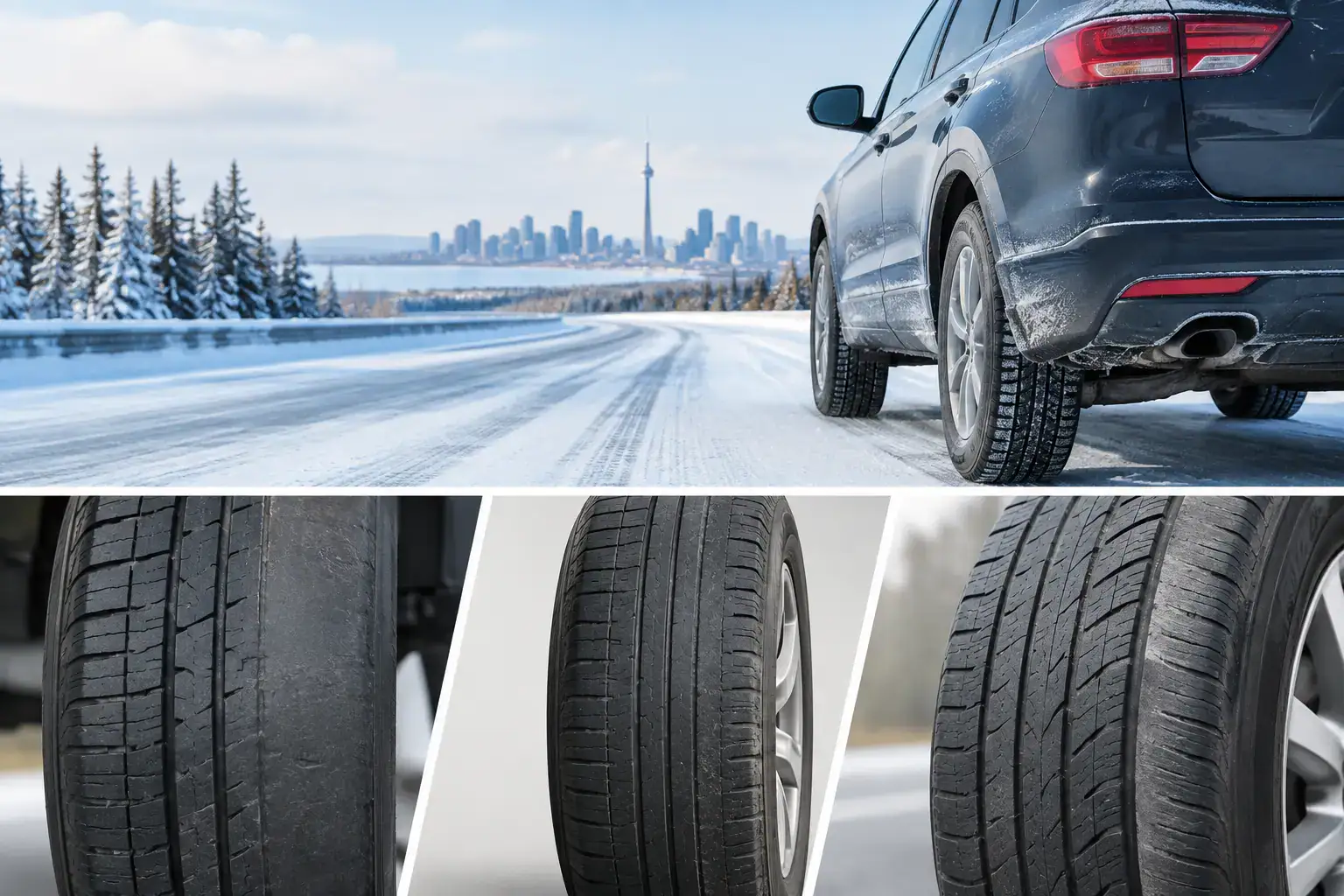
A tire can look fine from the side and still be wearing out in a way that affects traction, braking, fuel use, and ride comfort. Knowing a few uneven tire wear examples gives you a useful early warning before a small vehicle issue turns into a tire replacement you did not expect.
Tread does not wear evenly by accident. The pattern often points to a problem with alignment, air pressure, suspension components, wheel balance, or driving conditions. A quick visual check every month, especially before a seasonal tire change, can help you catch the issue while there is still usable tread left.
Common Uneven Tire Wear Examples
The easiest way to inspect a tire is to turn the steering wheel fully to one side when parked, then look across the full width of the tread. Check both front tires, and do not forget the inside edges, which are easy to miss. If you notice one of the patterns below, it is worth having the vehicle inspected rather than simply replacing the worn tire.
Wear on both outer edges
When both shoulders of the tire are worn more than the center, underinflation is often the cause. A tire with too little air flexes more as it rolls, placing extra load on the outer tread blocks. This can make the vehicle feel less responsive and may reduce fuel efficiency.
Cold weather can lower tire pressure, which makes this especially relevant for Canadian drivers heading into winter. Check pressure when the tires are cold, using the pressure listed on the vehicle’s door placard. That number is more important than the maximum pressure printed on the tire sidewall.
A tire that repeatedly loses pressure may have a puncture, a leaking valve, or a wheel sealing issue. Adding air may solve the immediate problem, but a repair inspection can identify why the pressure keeps dropping.
Excess wear down the center
A tire worn mostly through the middle is commonly overinflated. With too much air inside, the center of the tread carries more of the vehicle’s weight than the shoulders do. The result is faster center wear and a smaller contact patch with the road.
Overinflation is sometimes the result of guessing at pressure or using the sidewall maximum as a target. It can also happen after a tire shop visit if pressures are not rechecked once the tires are cold. Correcting the pressure can slow additional wear, but it cannot restore tread that has already worn away.
One shoulder worn smooth
Wear concentrated on either the inner or outer shoulder often suggests an alignment issue. Wheel alignment is not just about keeping the steering wheel centered. It involves setting the tire angles so the tires meet the road properly as the vehicle travels straight and turns.
If the inner shoulder is wearing first, the issue may not be obvious during a casual walk-around. You may need to crouch down or use a flashlight to see it. Outer-edge wear can be easier to spot and may also happen after repeated curb contact, though alignment should still be checked.
Potholes, rough roads, curb strikes, and worn steering or suspension parts can all change alignment angles. If your vehicle pulls to one side, the steering wheel sits off-center, or one tire shows shoulder wear, schedule an alignment inspection soon. Replacing tires without addressing the cause can lead to the same pattern on the new set.
Feathered tread edges
Feathering occurs when one side of each tread block feels sharp and the other feels rounded. Run your hand gently across the tread in both directions. If it feels smooth one way but noticeably rough the other, you may be feeling feathered wear.
This pattern is often related to toe alignment, which describes whether tires point slightly inward or outward compared with the vehicle’s centerline. Incorrect toe can scrub the tread against the road as the tire rolls. It may also produce a humming sound at highway speeds.
Feathering can develop gradually, so it is easy to ignore until the noise becomes noticeable. An alignment check is the practical next step, along with an inspection of steering and suspension parts that may be preventing the alignment from holding correctly.
Cupping or scalloped dips
Cupping, also called scalloping, looks like a series of uneven dips around the tire tread. Instead of a smooth, even surface, the tire develops low and high spots. You may feel vibration through the steering wheel or seat, especially as speed increases.
This wear can be associated with worn shocks or struts, an out-of-balance wheel, loose suspension parts, or a combination of these issues. The tire is not staying planted evenly on the road, so certain sections take more impact than others.
Wheel balancing may help when imbalance is the cause, but it is not always the full answer. If a suspension component is worn, balancing alone will not prevent the pattern from returning. A proper inspection helps identify which service is actually needed.
Patchy wear in isolated spots
Flat patches or small areas of severe wear can happen after hard braking, a skid, or a wheel that repeatedly locks up. On vehicles with anti-lock braking systems, this is less common than it once was, but it can still occur in slippery conditions or during an emergency stop.
A tire with a flat spot may create a rhythmic thump or vibration as it rolls. In some cases, the issue is mild enough that continued driving wears the area more smoothly over time. If the vibration is strong, the tire has visible damage, or the tread depth is low in the affected area, have it assessed before relying on it for highway or winter driving.
Why the Wear Pattern Matters
Uneven tread is more than a cosmetic concern. Tires are designed to spread water, slush, and snow through channels across the tread. When one area wears down much faster than another, the tire may lose wet-weather and winter performance before the rest of the tread appears worn out.
This is why checking only the most visible part of the tire can be misleading. A tire may have acceptable tread in the center but be nearly worn out on the inside shoulder. For all-wheel-drive vehicles, uneven wear can also create differences in tire circumference that may place added stress on drivetrain components, depending on the vehicle manufacturer’s requirements.
Tire rotation helps spread normal wear across the set, but rotation cannot fix a mechanical problem. Think of it as maintenance, not a cure. If an alignment or suspension issue is present, rotating the tires may simply move the wear pattern to a different corner of the vehicle.
What to Do When You Find Uneven Wear
First, check tire pressure against the vehicle placard and inspect each tire for nails, cuts, bulges, or exposed cords. Do not ignore visible damage or a tire that is losing air. If the wear is clearly limited to the center or both shoulders, correct pressure may prevent further damage, but the remaining tread should still be evaluated.
For one-sided wear, feathering, cupping, vibration, pulling, or unusual road noise, book a tire and vehicle inspection. The service may involve tire balancing, alignment, repair, rotation, or a closer look at suspension and steering components. The right solution depends on the pattern and the condition of the tire, not just what the vehicle feels like from the driver’s seat.
When replacement is necessary, matching the tire type, size, load rating, and speed rating recommended for your vehicle helps preserve predictable handling. Drivers who switch between winter and all-season tires should inspect both sets before installation, since stored tires can carry wear patterns from the previous season.
A few minutes spent checking your tread can protect the tires you already own and give you more confidence on the road. If something does not look or feel right, have it checked early so you can keep your vehicle safe and road-ready.


