A low tire price can feel like an easy win, especially when a replacement was not part of the plan. But used tires vs new is not only a question of what you pay at the counter. It is a decision about remaining tread, tire age, repair history, wet-weather traction, and how long you need the tires to serve your vehicle.
For some drivers, a carefully inspected used tire is a practical short-term solution. For others, new tires deliver better value because they provide full tread depth, current technology, warranty coverage, and a predictable service life. The right choice depends on your vehicle, driving conditions, and how much confidence you need from every mile.
Used Tires vs New: The Main Difference
A new tire starts with its full usable tread and no prior road history. You know it has not been driven underinflated, struck a pothole, repaired improperly, or exposed to damage that is difficult to see. It also comes with the manufacturer’s workmanship and materials warranty, although treadwear coverage varies by tire model.
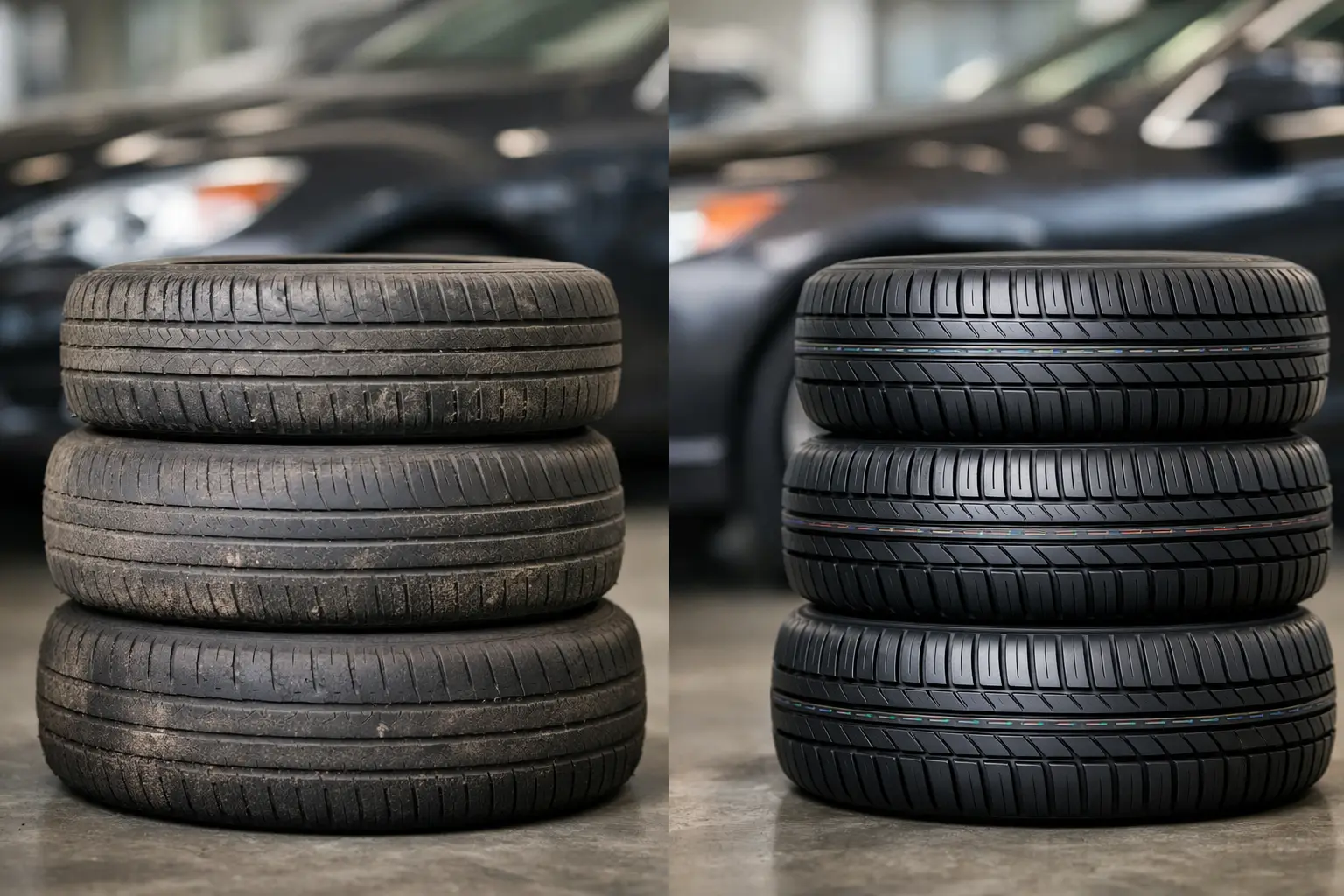
A used tire has already spent part of its life on another vehicle. Its price is lower because some tread has been used, but its true value depends on what remains. Two tires marked with the same tread depth may not offer the same performance if one is older, has uneven wear, or has been repaired.
That is why the lowest upfront price is not always the lowest cost per mile. A used tire with limited remaining life may need replacement much sooner than a new value-oriented tire. On the other hand, a quality used tire with substantial, even tread can make sense when you need a safe temporary replacement or a matching tire for a specific situation.
When Used Tires Can Make Sense
Used tires are not automatically a poor choice. They can be reasonable when the tire has been professionally inspected and the expectations are clear. A driver who needs to replace one damaged tire on an older vehicle, for example, may prefer a compatible used tire rather than investing in a complete new set.
They can also help when a vehicle will be sold soon, driven very little, or needs a short-term solution while the owner plans for a full tire purchase. In these cases, the goal is still safety and proper fitment, not simply finding the cheapest tire available.
A used tire should have even tread wear across its surface, no visible sidewall damage, no exposed cords, and no cracking from age or sun exposure. The seller should also verify the correct size, load index, and speed rating for your vehicle. A tire that fits the wheel is not necessarily a tire that meets the vehicle manufacturer’s requirements.
Used tires are generally less appealing for vehicles that regularly carry family passengers, commute long distances, travel at highway speeds, or face heavy rain, snow, or extreme heat. These conditions demand more traction reserve and more predictable performance.
Why New Tires Often Deliver Better Long-Term Value
New tires give you the full performance the tire was designed to provide. That matters most in rain, where deeper tread channels move water away from the contact patch and help reduce hydroplaning risk. It matters in winter as well, because a tire loses snow traction as its tread gets shallower.
New tires also allow you to choose a model based on how you actually drive. An all-season tire may be the right fit for everyday commuting. A dedicated winter tire can provide stronger cold-weather grip. Light truck, all-terrain, mud-terrain, EV, run-flat, summer, and all-weather tires each serve different needs. Starting new lets you select the category, brand, and performance level that fit your vehicle rather than settling for what happens to be available used.
You also receive a more predictable replacement timeline. Most passenger tires begin with roughly 10/32 of an inch of tread, though starting depth varies by model. A used tire with 5/32 remaining may look acceptable, but it has already used about half its tread depth. It may reach replacement territory quickly, particularly if your vehicle needs an alignment or sees frequent highway driving.
New tires are especially worth considering when replacing two or four tires. Installing a matched set improves consistency in handling, braking, and traction. It also makes regular rotation easier and helps you get the most life from your purchase.
Tread Depth Is Only Part of the Inspection
The legal minimum tread depth in most states is 2/32 of an inch, but waiting that long is not a good safety plan. Wet-weather braking and hydroplaning resistance decline before a tire becomes legally worn out. Many drivers should begin planning replacement around 4/32, and winter tires often need replacement closer to 6/32 to maintain useful snow traction.
When evaluating a used tire, look beyond the center tread. Wear should be consistent across the inner, center, and outer sections. Excess wear on one edge can point to alignment trouble. Wear in the center may indicate repeated overinflation, while wear on both shoulders can result from underinflation. Those patterns can shorten the remaining life of the tire and may signal a vehicle issue that needs service.
Tire age matters, too. Every tire has a Department of Transportation date code on its sidewall. The final four digits show the week and year it was manufactured. For example, 1824 means the tire was made in the 18th week of 2024. Age alone does not determine whether a tire is usable, but older tires deserve closer attention because rubber can harden and deteriorate over time, even when tread remains.
Repairs, Damage, and What Not to Accept
A properly repaired puncture in the center tread area may be serviceable when it has been inspected and repaired from the inside using the correct method. A simple external plug is not the same as a complete professional repair.
Do not accept a used tire with a repair in the shoulder or sidewall, bulges, deep cuts, separated tread, visible cords, or significant dry rot. These conditions can compromise the tire’s structure. Also avoid tires with unknown repair history or tires removed from a wrecked vehicle without a thorough inspection.
A tire can appear fine when it is off the vehicle and still have internal damage from being driven while flat or severely underinflated. Professional inspection is the practical safeguard. This is one area where buying from a qualified tire retailer is very different from buying an individual tire with no documentation or service support.
Fitment and Matching Matter More Than Many Drivers Expect
Before choosing used or new, confirm the tire size listed on your vehicle’s placard, usually located on the driver’s door jamb. Match the recommended size unless a tire professional confirms an approved alternative. Load index and speed rating should meet or exceed the vehicle requirement.
If you are replacing one tire, matching the remaining tires as closely as possible is important. Differences in tread depth, tire design, and overall diameter can affect handling. On many all-wheel-drive vehicles, significant differences in tire circumference can place extra stress on the drivetrain. Your vehicle manufacturer may specify a maximum allowable tread-depth difference, so it is wise to check before buying a single replacement.
When replacing two tires, the new or newer pair is commonly installed on the rear axle. This helps preserve rear traction in wet conditions and can reduce the risk of a rear-axle skid. A tire professional can recommend the right setup for your vehicle and tire condition.
Factor Installation Into the Real Price
Compare complete installed cost, not just the tire price. Mounting, balancing, valve service, disposal fees, and alignment checks can all affect the final number. A used tire that is inexpensive but requires early replacement, repeated balancing, or a second service visit may not be the better deal.
New tires also benefit from routine care. Maintain the recommended inflation pressure, rotate tires at appropriate intervals, and address pulls, vibration, or uneven wear promptly. These steps protect any tire purchase, but they are particularly valuable when you invest in a new set designed to last.
At Migo Tire Corp., the goal is to help drivers find tires that fit their vehicle, driving needs, and budget, then support that purchase with installation, balancing, alignment, and ongoing tire care.
The best choice is the one that keeps your vehicle safe and road-ready without creating a bigger expense a few months from now. If a used tire is properly inspected, correctly matched, and has meaningful life left, it may solve the right short-term problem. If you need dependable traction, longer service life, and confidence through changing conditions, a new tire is usually the stronger investment.