A tire can look perfectly fine in the driveway and still be nearing the end of its useful life. So, how long do tires last? For many drivers, a set of passenger tires lasts roughly 40,000 to 60,000 miles, but mileage is only part of the answer. Tire type, road conditions, driving habits, maintenance, and age all affect when it is time to replace them.
The safest approach is to check your tires regularly instead of waiting for a flat or a failed inspection to force the decision. Good tires help your vehicle brake, corner, and handle wet or winter roads as intended. They are one of the few parts of your vehicle that touch the road, so their condition matters every time you drive.
How Long Do Tires Last on Average?
Most all-season tires on a properly maintained passenger vehicle can deliver about 40,000 to 60,000 miles of service. Some touring tires may last longer under favorable conditions, while high-performance summer tires often wear faster because their softer rubber compounds prioritize grip and handling.
Winter tires may also wear more quickly if they are driven through warm weather. Their flexible tread compound is designed for cold temperatures, snow, and slush, not hot pavement. Removing them after winter helps preserve their tread and keeps your warm-weather tires working during the rest of the year.
Light truck, all-terrain, mud-terrain, EV, and run-flat tires can have very different life spans. A heavier vehicle, frequent hauling, uneven roads, or quick acceleration can reduce tread life. There is no single mileage number that applies to every tire, which is why regular inspections are more useful than relying on the odometer alone.
Tire Age Matters Even When Tread Looks Good
Tread depth gets most of the attention, but rubber also changes over time. Tires can dry out, harden, and develop cracking as they age, especially when a vehicle is parked outdoors for long periods or driven infrequently. A low-mileage tire is not automatically a safe tire.
As a general rule, have tires inspected more closely once they reach about five years old. Many manufacturers recommend replacing tires that are around 10 years old, even if they still appear to have usable tread. The tire’s date code, molded into the sidewall, identifies when it was made. The final four digits show the week and year of manufacture. For example, a code ending in 2424 means the tire was produced in the 24th week of 2024.
If you see cracks in the sidewall, between tread blocks, or around the bead area, arrange an inspection. Cracking does not always mean immediate failure, but it should never be ignored.
What Makes Tires Wear Out Faster?
Tire wear is rarely caused by one thing alone. Often, a vehicle that needs an alignment or has inconsistent tire pressure will wear through a good set of tires much sooner than expected.
Inflation pressure and regular checks
Underinflated tires flex more as they roll, creating heat and wearing the outer edges of the tread. They can also reduce fuel efficiency and make the vehicle feel less responsive. Overinflation can wear the center of the tread more quickly and may make the ride feel harsher.
Check pressure at least once a month and before longer trips, using the pressure listed on the vehicle’s door-jamb label. That label is the right reference point, not the maximum pressure printed on the tire sidewall. Check when the tires are cold for the most accurate reading.
Alignment and suspension condition
A vehicle that pulls to one side, has an off-center steering wheel, or shows uneven tread wear may need an alignment. A pothole, curb strike, or rough road can affect alignment, sometimes without an obvious change in how the vehicle feels.
Worn suspension components can also prevent the tire from meeting the road evenly. Cupping, feathering, or patches of unusually fast wear are signs worth having checked. Replacing tires without addressing the cause can lead to the same problem with the new set.
Rotation habits and vehicle setup
Front and rear tires often wear at different rates. On many front-wheel-drive vehicles, the front tires handle steering, much of the braking, and the driving force, so they commonly wear faster. Rotating tires at the intervals recommended by the vehicle manufacturer helps distribute wear more evenly.
Some vehicles use different tire sizes front and rear, or directional tires that require a particular rotation pattern. In those cases, proper service matters. A tire professional can confirm the correct rotation approach for your vehicle and tire setup.
Driving conditions and driving style
Frequent stop-and-go commuting, sharp turns, hard braking, rapid acceleration, and high-speed driving all use up tread faster. So do rough roads, potholes, gravel, and carrying loads beyond what the vehicle regularly handles.
That does not mean every trip has to be driven cautiously. It simply means tire life reflects how and where the vehicle is used. A set of tires on a highway commuter may last far longer than the same model on a delivery vehicle or a heavily loaded pickup.
Signs It Is Time to Replace Your Tires
Do not wait until the tread is completely gone. Tires gradually lose their ability to channel water away from the contact patch, which can reduce traction in rain and slush well before they look bald.
Start with the built-in treadwear indicators. These small raised bars sit inside the main tread grooves. When the surrounding tread wears down to the same level as the bars, the tire has reached its legal minimum tread depth and should be replaced. For everyday safety, especially in rainy or winter conditions, it is wise to plan replacement earlier rather than waiting for that point.
You should also schedule an inspection if you notice vibration that was not there before, repeated air loss, bulges in the sidewall, exposed cords, deep cuts, or an impact after hitting a pothole. A sidewall bulge can indicate internal damage and requires prompt attention. It is not a problem to postpone until the next oil change.
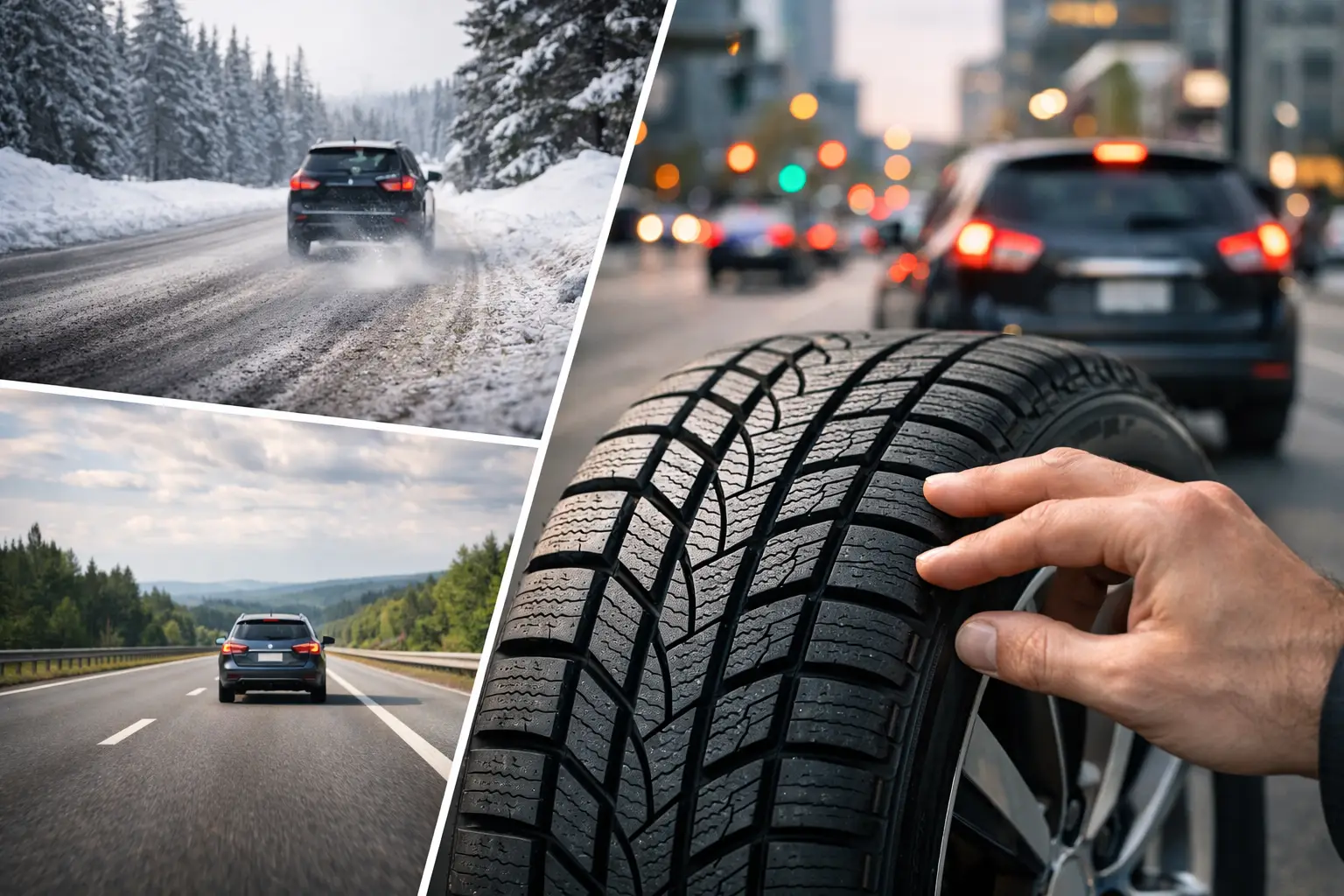
For winter driving, tread depth is particularly important. As tread gets shallow, the tire has less space to bite into snow and clear slush. If you depend on winter tires for seasonal travel, inspect them before the first cold stretch rather than after the first snowfall.
Simple Ways to Help Tires Last Longer
A few routine habits can add meaningful life to your tires while helping keep your vehicle safe and road-ready. Check tire pressure monthly, inspect tread and sidewalls when washing your vehicle, and rotate tires on schedule. Have alignment checked when the vehicle pulls, the steering wheel sits crooked, or uneven wear appears.
It also helps to avoid driving on visibly underinflated tires, even for a short errand. If a tire repeatedly loses pressure, the cause could be a puncture, valve issue, wheel damage, or bead leak. A proper inspection can determine whether it can be safely repaired or needs replacement.
When switching between winter and all-season or summer tires, ask for a condition check on both sets. Seasonal changeovers are a practical time to measure tread, look for cracking, and spot uneven wear before it becomes more expensive.
Choosing the Right Replacement Tires
When replacement time arrives, the longest-lasting tire is not always the best choice for every driver. A family vehicle used for daily commuting may benefit from a dependable all-season tire with balanced tread life, comfort, and wet-weather performance. A vehicle that faces harsh winter roads needs a tire designed for cold-weather traction. A light truck used for hauling or unpaved roads may need a tougher construction and a tread pattern that matches the work it does.
The right fit also includes the correct size, load rating, and speed rating for your vehicle. Choosing based on the vehicle information or the tire size shown on your current tire helps narrow the options, but professional fitment guidance can provide extra confidence when comparing categories and brands.
Tires do not have a fixed expiration date based on mileage alone. A quick monthly check and timely service can help you catch wear early, get more from your investment, and keep every drive feeling secure.