
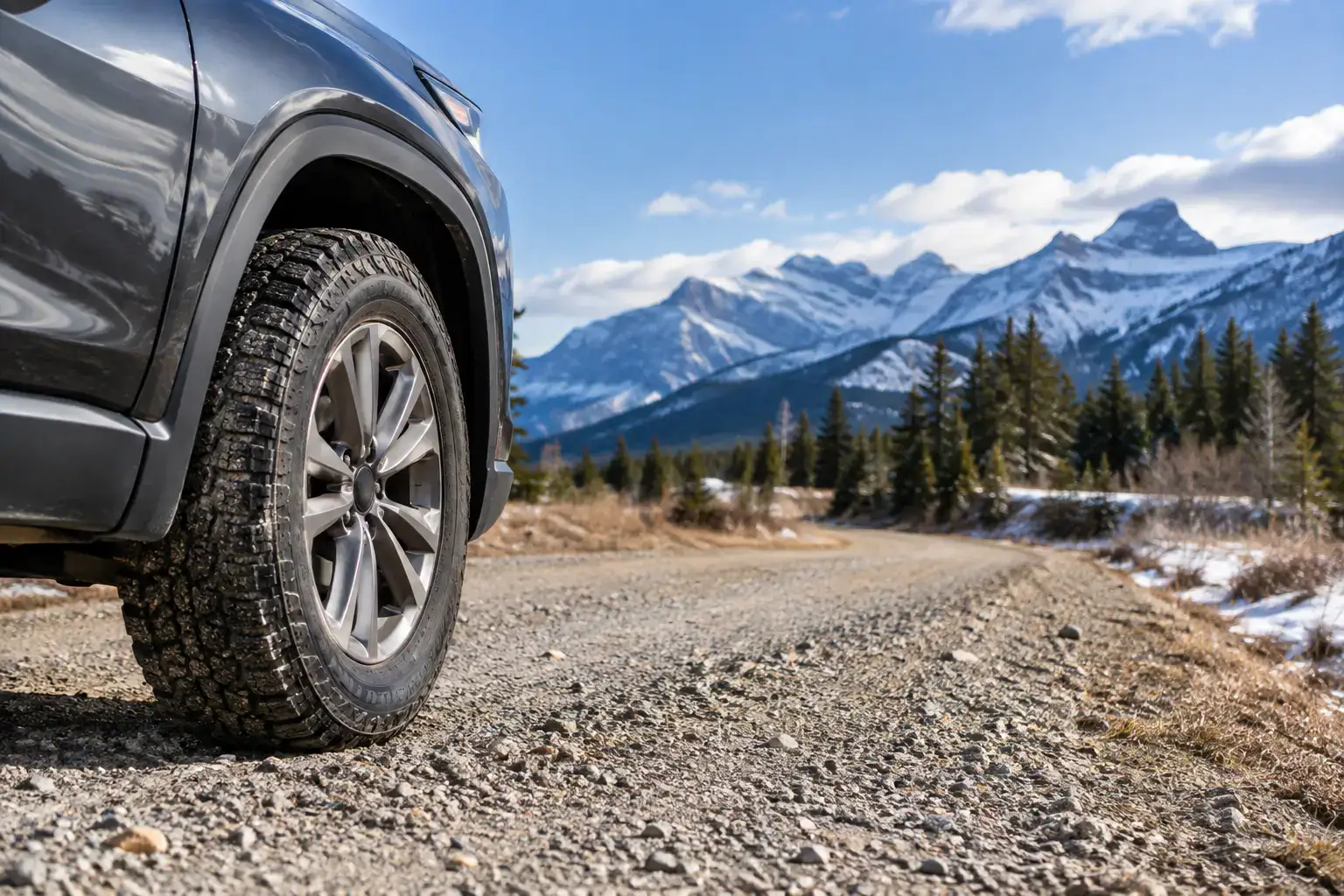
A gravel road can feel perfectly manageable one day and surprisingly rough the next. Loose stone, washboard sections, dust, rain-softened shoulders, and sharp rocks all ask more of your vehicle than smooth pavement does. The right tires for gravel road driving help you maintain control, reduce damage risk, and make everyday trips feel less stressful.
For most drivers, the answer is not automatically an aggressive off-road tire. The best choice depends on how often you drive gravel, what vehicle you own, the weather you face, and how much highway driving you do between unpaved roads. A tire that performs well on loose surfaces still needs to be comfortable, quiet, and safe on pavement.
What Gravel Roads Demand From a Tire
Gravel creates a different kind of traction challenge than mud or snow. Instead of needing deep tread to dig through a soft surface, your tires need to stay stable over loose material while clearing small stones and resisting cuts. Braking distance can increase quickly on gravel, especially when the surface is dry and dusty or freshly graded.
Sidewall protection matters, too. Sharp stones and rough road edges can cause cuts, chips, or punctures, particularly on tires with a low-profile sidewall. Drivers who regularly travel cottage roads, rural routes, job sites, or access roads should look beyond appearance and focus on durability.
Your tire also needs to handle the transition back to pavement. Many gravel-road drivers spend most of their time on highways or city streets, which means wet braking, ride comfort, noise, fuel use, and tread life remain part of the decision.
Best Tires for Gravel Road Driving by Vehicle Use
Mostly pavement with occasional gravel
If gravel makes up a small part of your weekly driving, a quality all-season tire is often the practical choice. Look for a tread pattern with wide grooves, a durable compound, and solid wet-weather performance. These tires are designed for daily commuting and can handle maintained gravel roads without the extra noise or reduced efficiency often associated with more aggressive tread designs.
This approach works well for sedans, minivans, crossovers, and SUVs that travel down gravel roads occasionally. It is also a sensible option if the road is generally packed and you avoid deep ruts, large loose stone, and frequent construction-style terrain.
Regular gravel travel in a crossover, SUV, or pickup
All-terrain tires are often a better match when gravel is a regular part of the routine. Their tread blocks and shoulder design are generally more open than a highway tire, helping them stay composed on loose surfaces. Many also offer stronger construction and better resistance to chipping from rocks.
The trade-off is worth considering. All-terrain tires can be louder on the highway, may feel less responsive during pavement cornering, and can affect fuel economy. Modern all-terrain options vary widely, so it is worth comparing road manners and wet performance rather than choosing based on an aggressive look alone.
For a light truck that carries tools, trailers, or heavy loads on unpaved roads, select a tire with the proper load rating for the vehicle and its normal use. A tire that is too lightly rated can run hotter and wear faster under repeated loads.
Rough access roads and frequent loose stone
Drivers who regularly encounter deep gravel, sharp rock, uneven trail-like roads, or remote work access routes may need a more durable all-terrain tire or a light-truck tire with reinforced construction. The goal is not simply maximum tread depth. Look for a design built to resist stone drilling, chipping, and sidewall damage.
Mud-terrain tires can be useful in very loose, muddy, or off-road conditions, but they are usually excessive for ordinary gravel-road driving. They can be noisy, wear differently on pavement, and may not deliver the balanced wet-road behavior most daily drivers need. If your route is primarily gravel rather than mud, a well-chosen all-terrain tire is usually the more practical middle ground.
Tread Design Matters More Than Aggressive Looks
A tire’s tread should provide traction without making paved driving unnecessarily harsh. For gravel, look for channels that help move water and fine debris away from the contact patch, plus tread blocks that are stable rather than overly soft or widely spaced.
A more open tread can improve traction on loose surfaces, but it can also create more road noise and reduce the smooth, planted feel you expect on pavement. Conversely, a touring tire with a tightly packed tread may ride quietly but may be more vulnerable to stone retention and less confident on frequently loose roads.
Small details can make a difference. Stone ejectors, reinforced shoulders, and cut-resistant compounds are useful features for drivers who see a lot of sharp aggregate. They are not essential for every commuter who occasionally turns onto a gravel lane.
Do Not Overlook Sidewalls and Tire Size
Low-profile tires may look sharp, but they leave less cushioning between the wheel and road hazards. On a rough gravel road, that can raise the chance of wheel damage and sidewall impacts. If your vehicle has multiple approved tire sizes, a slightly taller sidewall may offer a more forgiving ride and better protection.
Stay within the tire sizes approved for your vehicle. Changing size affects speedometer readings, clearance, handling, and load capacity. A larger tire is not automatically tougher, and a wider tire is not automatically better on loose surfaces. In some conditions, a very wide tire can float over loose gravel rather than bite into it predictably.
Check the load index and speed rating as well. These ratings should meet or exceed your vehicle manufacturer’s requirements. For trucks and SUVs, this is especially important when the vehicle is loaded, towing, or used for work.
Seasonal Driving Changes the Recommendation
Gravel roads and winter weather are a demanding combination. Packed snow, ice, slush, and loose gravel beneath the snow can make stopping and steering less predictable. If you drive through real winter conditions, winter tires remain the better choice for cold weather, regardless of whether your usual route is paved or gravel.
Some all-weather tires carry a severe-snow service designation and can be a convenient year-round option for drivers who want more cold-weather capability than a standard all-season tire provides. They can be a strong fit for moderate winter use, but they still involve trade-offs in tread wear and warm-weather performance.
The best seasonal setup depends on where and when you drive. A driver who travels maintained gravel roads near town has different needs from someone who drives remote rural roads before they are plowed.
Tire Care That Helps on Gravel Roads
Even the right tire needs regular attention. Gravel can hide damage until it becomes a bigger problem, so inspect your tires after rough-road trips. Look for embedded stones, cuts, bulges, unusual tread wear, or slow pressure loss.
Keep tire pressure at the vehicle manufacturer’s recommended setting for normal road use. Lowering pressure may be used in specialized off-road situations, but it is not a routine solution for public gravel roads. Underinflated tires build heat, wear faster at the shoulders, and are more vulnerable to damage. Overinflation can make the ride harsher and reduce the tire’s ability to conform to uneven surfaces.
Regular rotation helps tires wear more evenly, especially if your vehicle spends time on rough roads. Alignment is equally important. If the vehicle pulls, the steering wheel sits off-center, or the tread is wearing unevenly, have it checked. Washboard vibration and potholes can gradually affect alignment, even when there has been no obvious impact.
How to Choose With Confidence
Start with your real driving mix. Estimate how much time you spend on pavement, how often gravel roads are loose or rough, whether you drive through winter conditions, and whether you carry heavier loads. That information narrows the field quickly.
For occasional gravel, prioritize a dependable all-season tire with good wet-road performance. For frequent gravel in a truck or SUV, compare road-friendly all-terrain tires with durable sidewalls and the right load rating. For severe winter routes, plan around winter capability first.
If you are uncertain about fitment or tire category, Migo Tire can help you compare options based on your vehicle, tire size, and the roads you actually drive. The best tire is the one that keeps your vehicle safe and road-ready on gravel without making the rest of your driving less comfortable than it needs to be.


