Rain changes the road faster than most drivers expect. A route that feels predictable in dry weather can become slippery at the first intersection, especially when water mixes with oil and road grime. The right set of top rated wet weather tires helps your vehicle brake, corner, and track through standing water with more confidence.
For everyday drivers, the best choice is rarely just the tire with the highest review score. Your vehicle, local weather, driving style, and the condition of your current tires all matter. A commuter in heavy city traffic may need something different from a driver who regularly travels highways in spring rain or manages changing temperatures through the year.
What Makes a Tire Good in Wet Weather?
Wet-road performance comes down to how well a tire can move water away from the contact patch – the small area where the tire meets the pavement. When water cannot escape quickly enough, the tire can begin to hydroplane. That means it rides on top of water instead of gripping the road.
Tires designed for strong wet traction typically use deep circumferential grooves, angled channels, and many small tread edges called sipes. The grooves direct water outward, while the tread edges help the tire hold the surface during braking and turns. The rubber compound matters too. A quality compound stays flexible enough to maintain grip when roads are cool and wet.
This is why tread depth is just as important as the model you buy. Even a well-regarded tire loses much of its wet-weather ability as the grooves wear down. If your tires look worn, have uneven tread, or struggle for traction in ordinary rain, it is worth having them inspected before the next storm.
Top Rated Wet Weather Tires by Driving Need
There is no single best tire for every vehicle. The strongest wet-weather option is the one that matches how and where you drive.
For everyday sedans and family SUVs
All-season and all-weather tires are often the practical choice for drivers who want reliable rain performance without changing tires for every weather shift. Models such as the Michelin CrossClimate2, Bridgestone WeatherPeak, Pirelli Cinturato WeatherActive, and Goodyear Assurance WeatherReady 2 are commonly considered by drivers looking for confident wet braking and year-round usability.
All-weather tires can be especially useful in areas with wet fall and spring conditions plus occasional winter weather. They provide more cold-weather capability than a typical all-season tire. Still, drivers who face frequent snow-packed roads and severe winter conditions should use dedicated winter tires during the appropriate season.
For sporty cars and responsive handling
Performance all-season and summer tires can offer excellent wet grip, particularly when temperatures are consistently mild. The Continental ExtremeContact DWS06 Plus and Michelin Pilot Sport All Season 4 are popular performance all-season options for drivers who want sharp handling while keeping strong wet traction in mind.
For warm-weather performance vehicles, summer tires such as the Michelin Pilot Sport 4S can deliver impressive wet braking and cornering. The trade-off is seasonal flexibility. Summer tires are not built for freezing temperatures, snow, or ice, so they are not a year-round solution in much of Canada.
For crossovers, pickups, and light trucks
SUV and light-truck drivers should look for a tire that balances wet-road control with load capacity, ride comfort, and the type of terrain they travel. Highway-focused all-season tires are often the best fit for drivers who mainly use paved roads. Tires such as the Michelin Defender LTX M/S 2 and Continental TerrainContact H/T are examples of options often considered for dependable everyday truck and SUV use.
All-terrain tires can work well for drivers who occasionally leave the pavement, but their larger tread blocks may create more road noise and can affect wet braking compared with a highway tire. If your truck rarely sees gravel, mud, or job sites, a road-focused tire may be the safer and quieter choice in heavy rain.
For electric vehicles
EV tires need to handle additional vehicle weight and instant torque while helping preserve driving range. Wet traction remains essential, particularly because EVs can feel very responsive when accelerating. Look for tires approved for your vehicle’s load requirements and choose a model with a strong wet-grip reputation rather than selecting solely for low rolling resistance.
The original equipment tire may be a sensible starting point, but it is not the only option. A proper vehicle and size search can identify compatible replacements that suit your priorities for wet safety, comfort, tread life, or quiet operation.
How to Compare Wet-Weather Tires Before You Buy
Start with the tire size listed on your current tire sidewall or your vehicle’s door-jamb placard. A size such as 225/65R17 includes the tire width, sidewall profile, construction, and wheel diameter. Correct fitment is critical because a tire that is not approved for your vehicle can affect handling, clearance, speedometer accuracy, and load capability.
Next, compare wet traction information and customer feedback with context. Reviews are useful, but pay attention to the vehicle type and climate described by the reviewer. A driver using a tire on a compact sedan in mostly urban rain may have a very different experience from someone towing with a full-size pickup.
It also helps to consider these practical factors together:
- Wet braking and hydroplaning resistance
- Tread life expectations and warranty coverage
- Ride comfort and highway noise
- Load index and speed rating
- Winter use requirements in your area
Do not assume that a more aggressive-looking tread automatically means better rain performance. The tread design and rubber compound need to work together. A tire built mainly for off-road traction, for example, may not deliver the same wet-pavement braking feel as a quality touring tire.
Why Tire Condition Matters as Much as Tire Choice
A new tire can only perform as designed when it is correctly installed and maintained. Underinflation can reduce control and cause irregular wear. Overinflation may reduce the tire’s contact patch. Either issue can make a vehicle less predictable on wet roads.
Check tire pressure at least once a month and before longer trips, using the pressure recommended by the vehicle manufacturer rather than the maximum pressure printed on the tire. Pressure should be checked when tires are cold for the most accurate reading.
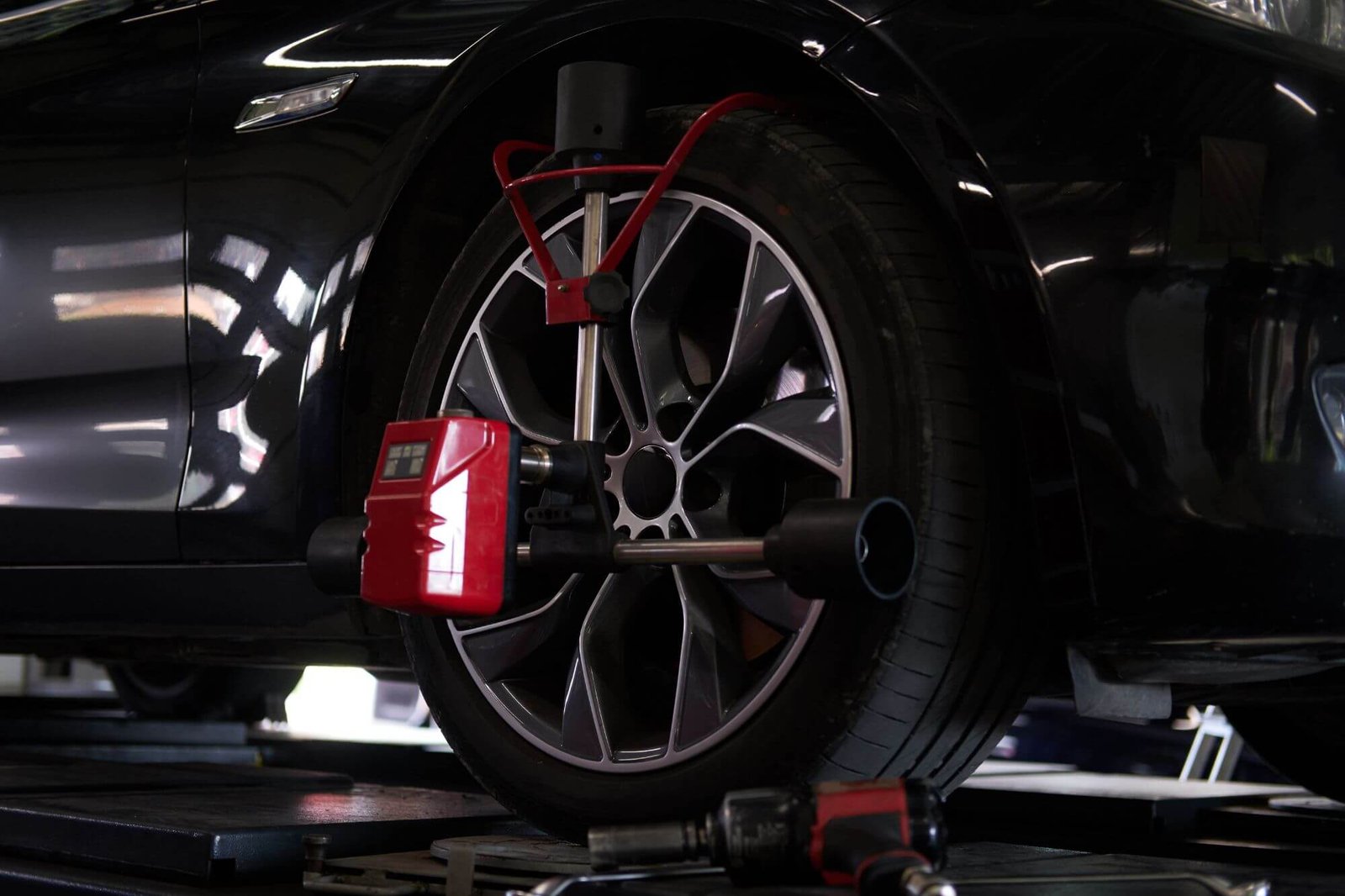
Wheel alignment and balancing also play a direct role in wet-weather safety. An alignment issue can wear one edge of the tire prematurely, reducing the tread depth you need to clear water. Vibration at speed may point to a balancing concern, tire issue, or other mechanical problem that deserves attention.
Rotation is another simple habit with a real payoff. Rotating tires at recommended intervals helps them wear more evenly, which can extend usable tread life and preserve consistent handling. If one or more tires are significantly more worn than the others, ask a tire professional whether replacement should be done as a set, pair, or single tire based on your vehicle and drivetrain.
When It Is Time to Replace Your Tires
Do not wait for visible failure to think about replacement. Reduced tread depth, cracking, bulges, repeated pressure loss, vibration, and longer stopping distances are all warning signs. Wet roads often reveal problems that dry pavement can hide.
The common penny test can give a quick visual indication of low tread, but it is not a complete safety inspection. Wet performance declines before a tire is completely worn out. If rain driving has started to feel uncertain, a professional tread and condition check gives you clearer information than guessing from the driveway.
For drivers in Toronto and across Canada, Migo Tire can help narrow the choices by vehicle or tire size and support the next steps with installation, balancing, alignment, and ongoing tire care. The goal is not simply to find a highly rated tire. It is to choose one that keeps your vehicle stable, comfortable, and road-ready when the pavement is at its least forgiving.
A good rain tire gives you more than a better drive through a storm. It gives you a little more time, traction, and control when you need all three.