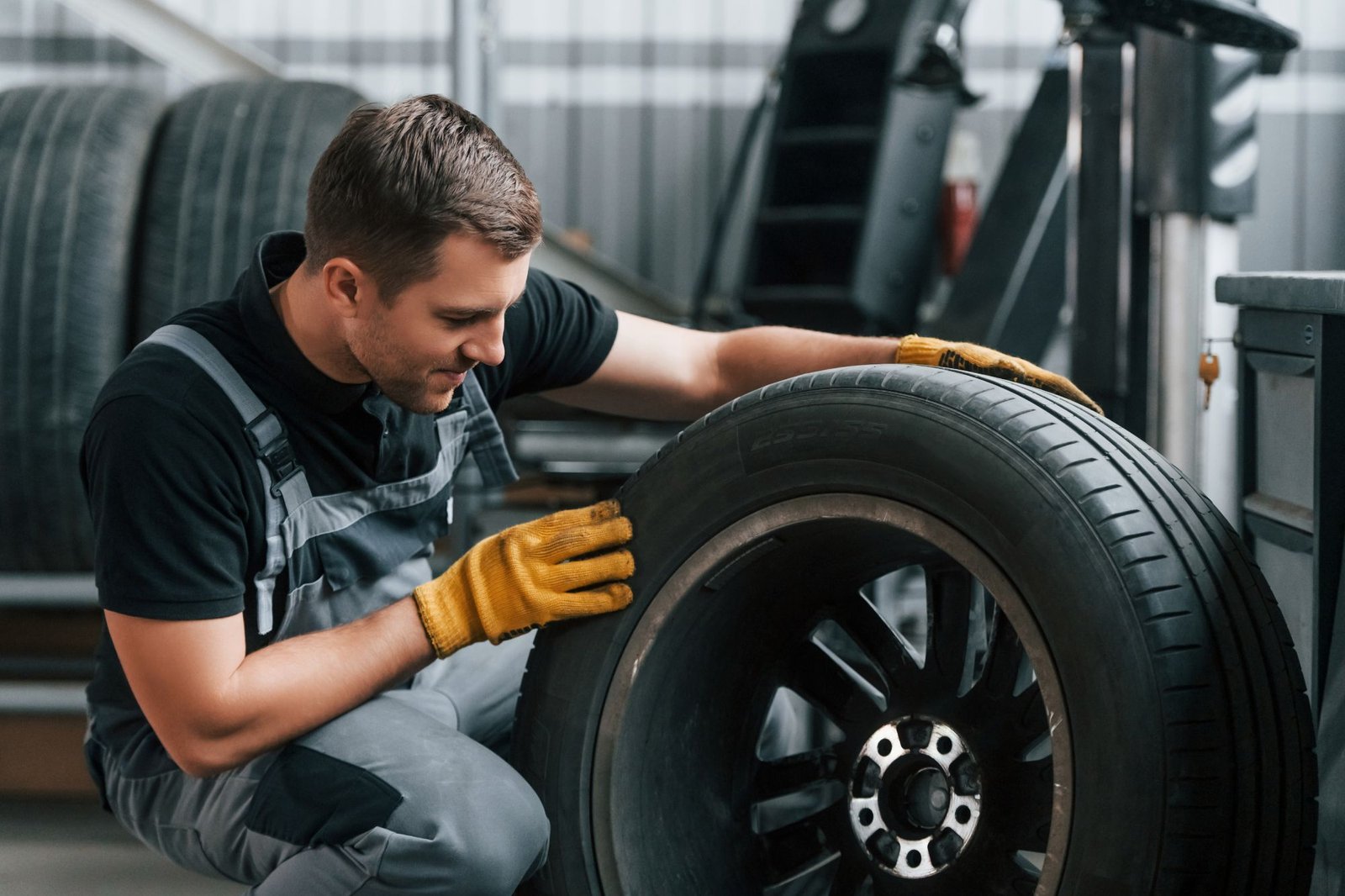
A tire rotation service is one of the simplest ways to protect the tires already on your vehicle. Your tires do not carry the same workload. Front tires usually handle more steering, braking, and weight, while rear tires may wear differently based on the vehicle, drivetrain, cargo, and driving habits. Moving tires to new positions at the right time helps them wear more evenly and keeps your vehicle safe and road-ready.
Why tire rotation service matters
Uneven tire wear can shorten the life of an otherwise good set of tires. On a front-wheel-drive vehicle, the front tires commonly wear faster because they steer, drive the vehicle forward, and absorb much of the braking force. Rear-wheel-drive and all-wheel-drive vehicles have different wear patterns, but rotation is still necessary.
Even tread wear supports predictable traction, braking, and handling. It can also help you get more value from the tires you purchased. Replacing one or two worn tires early is often more complicated than replacing a complete matching set, especially on all-wheel-drive vehicles that may require closely matched tread depths.
Rotation is not a repair for damaged or worn-out tires. If a tire has exposed cords, a bulge, a severe sidewall cut, or tread worn down to the wear bars, it needs professional attention and may need replacement. But regular rotation can help prevent normal wear from becoming uneven wear before you notice it.
How often should you rotate your tires?
For many passenger vehicles, a good general interval is every 5,000 to 7,500 miles. That often aligns with an oil change interval, making it easier to remember. Your vehicle owner’s manual should always be the first reference, since the manufacturer may specify a different mileage interval or rotation pattern.
You may need a tire rotation service sooner if you regularly drive in stop-and-go traffic, carry heavy loads, tow a trailer, travel on rough roads, or make frequent short trips. Aggressive acceleration, hard braking, and fast cornering can also speed up wear. Light truck tires used for work, hauling, or mixed on-road and off-road driving deserve especially regular inspections.
Electric vehicles are another case where timing can vary. EVs are often heavier than comparable gas-powered vehicles and deliver instant torque. Those factors can increase tire wear, particularly on the driven axle. Following the tire and vehicle manufacturer recommendations can help EV owners maintain range, traction, and tire life.
A simple habit helps: check tread depth and tire pressure at least once a month, then schedule rotation based on mileage and visible wear. If you are unsure when the tires were last rotated, an inspection can establish a practical maintenance schedule.
What a tire rotation service includes
During a professional rotation, a technician removes the wheels and moves the tires to different positions according to the proper pattern for your vehicle and tire type. The goal is to balance wear across the set without compromising performance or safety.
The service is also a useful opportunity to inspect tread depth, tire pressure, valve stems, sidewalls, and the tire surface for nails, screws, cracking, punctures, or irregular wear. A technician can often spot concerns that are easy to miss during a quick walk around the vehicle.
Wheel lug nuts should be tightened to the manufacturer’s specified torque. Correct torque matters. Over-tightening can damage components or make roadside service difficult, while under-tightening can create a serious safety issue.
Rotation does not automatically include wheel balancing or alignment, although those services may be recommended based on what the inspection shows. Balancing corrects weight distribution around the wheel and tire assembly. Alignment adjusts suspension angles so the tires meet the road correctly. They solve different problems, but all three services work together to support even tread wear.
Rotation patterns depend on your tires and vehicle
There is no single rotation pattern that fits every vehicle. The correct method depends on whether your vehicle is front-, rear-, or all-wheel drive, as well as the tire design and wheel setup.
Many vehicles with same-size, non-directional tires can use a front-to-rear or cross-rotation pattern. Cross-rotation moves tires from one side of the vehicle to the other as they change axles, which can help distribute wear more effectively. The exact direction of the pattern depends on the drivetrain.
Directional tires are designed to roll in one direction for proper water evacuation and performance. They generally move only from front to rear on the same side unless the tire is removed from the wheel and remounted. Tires with an asymmetric tread design have inside and outside markings that must remain correctly positioned.
Vehicles with staggered fitments, meaning different tire sizes on the front and rear, may have limited rotation options. Some performance vehicles cannot rotate tires front to rear at all. In those cases, side-to-side rotation may be possible if the tires are non-directional and the wheel setup allows it. A service professional can confirm what is appropriate for your specific vehicle.
Signs you should not wait for your next interval
Mileage is a useful guide, but the condition of your tires matters just as much. Schedule an inspection sooner if the vehicle pulls to one side, the steering wheel vibrates, or you notice one tire wearing faster than the others. Feathering, cupping, and excessive wear on one edge can point to alignment, suspension, inflation, or balancing concerns.
Pay attention after hitting a pothole or curb, too. A hard impact can damage a tire, bend a wheel, or affect alignment. Even if the tire does not immediately lose air, a quick inspection can prevent a minor issue from becoming a bigger expense.
Low tire pressure is another common cause of uneven wear. Underinflated tires tend to wear more along the outer edges, while overinflation may wear the center of the tread faster. Use the pressure listed on the driver’s door placard or in the owner’s manual, not the maximum pressure molded into the tire sidewall.
Tire rotation and replacing only two tires
Sometimes two tires wear out before the other two, even with consistent maintenance. When replacing only two tires, the new tires are generally installed on the rear axle. This helps the rear of the vehicle maintain better traction in wet conditions and reduces the risk of oversteer if the rear tires lose grip.
There are exceptions, particularly for some all-wheel-drive vehicles. Differences in tread depth between tires can place added stress on the drivetrain. The acceptable tread-depth difference varies by manufacturer, so check the owner’s manual and ask a qualified tire professional before mixing new and partially worn tires.
Matching tire size, type, speed rating, and load capacity is also essential. A tire that looks similar may not provide the same handling, braking, or load performance as the original equipment tire.
Make rotation part of routine tire care
Tire maintenance works best when it is consistent. Keep a record of installation dates, rotations, repairs, and tread measurements. That information makes it easier to spot unusual wear and plan for replacement before traction becomes a concern.
At Migo Tire Corp., a tire rotation appointment can also give you a clear picture of your tires’ current condition. Whether you drive a family SUV, commuter sedan, EV, or light truck, the right maintenance plan helps your tires deliver the dependable performance you expect. Schedule service before wear becomes visible, and you will have more confidence every time you head out on the road.